Olivia Rodrigo’s Third Album is Soundtracking Sad Girl Summer
If there’s any artist that can illustrate the intolerable ache of growing pains, it’s Gen Z superstar Olivia Rodrigo. Now with the release of her third album, she’s created yet another flawless scrapbook of the trials and tribulations of love, heartbreak and young adulthood.
After the massive success of both SOUR and GUTS, the 23-year-old’s shoulders have carried a weight of incredibly high expectations from the public. But with you seem pretty sad for a girl so in love, she’s surpassed all of them as she embraces the messiness of growing up, falling in love and experiencing heartbreak in a way that demonstrates her maturity not only as a performer, but as a woman. She expresses herself in a carefully nuanced manner that is strikingly unguarded, bearing it all to audiences without fear of judgement; instead, she is poignantly relatable even in the most specific of circumstances. She’s as confident and as open as she’s ever been, even if the lyrics are plagued with diffidence.
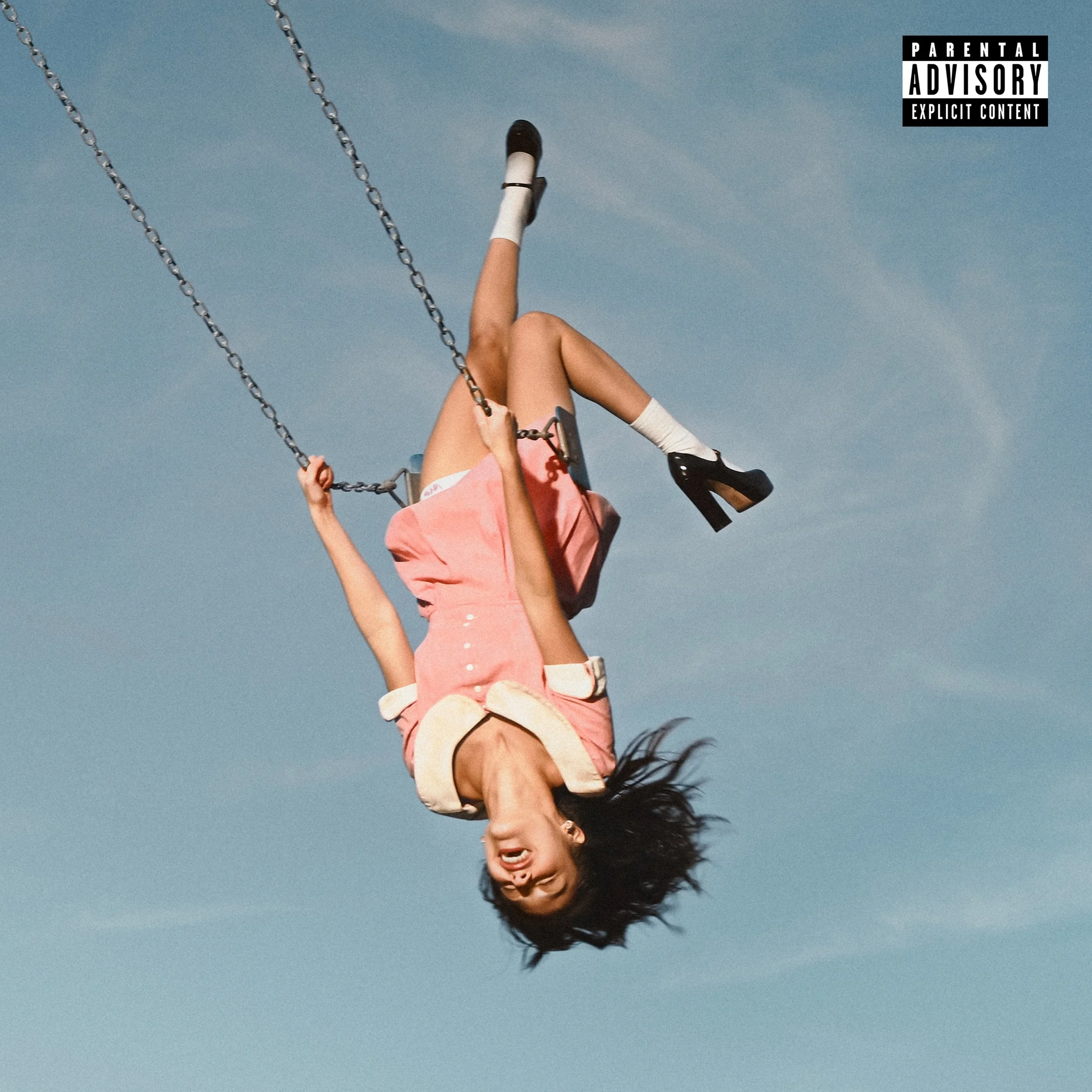
While Rodrigo channels ‘80s alternative influences — taking inspiration from classic powerhouses like The Cure and Talking Heads — the sonic contrast between her newest album and the pop punk sound of GUTS is not the most notable evolution in her artistry. Rather, Rodrigo’s songwriting has reached another level of excellence. Her prose frames even the worst of situations as poetically devastating, from an intense, aching longing in “stupid song” to her dark and vulnerable introspection in “the cure.” Whether madly in love or unbearably hurt, Rodrigo’s words are methodically bursting with emotion and sensitivity as she details the ups and downs in an almost painful manner, for both artist and audience.
The album’s lead single, “drop dead,” opens side A of the album, “girl so in love,” with high hopes and a fluttering heart. Rodrigo beautifully describes the feeling of developing a crush as she gleefully dances through the palace of Versailles in the music video for the track, singing,“It’s feminine intuition / Cause I always had a vision of us standing like this.” It’s a swift 180 from the opening of her previous albums — rather than an angry pop rock headbanger, “drop dead” is a delicate start to a bittersweet escapade, reminiscent of Wolf Alice’s “Don’t Delete the Kisses.” Rodrigo embraces the possibility of falling in love rather than the inevitable downsides.
She then dives headfirst into “stupid song,” a track characterized by warm piano that quickly transforms into indie pop with an explosive bridge. Her infatuation is bursting from the seams as she belts the chorus, using extensive metaphors as her emotions quickly reach a boiling point: “I’m a car speeding down the boulevard without a brake / And I want you more than any stupid song could ever say.” She’s enamored to the point of near self-destruction.
As the track builds to its emotional height in the bridge, Rodrigo passionately screams “Nobody’s wanted somebody more,” setting the scene for a romance that threatens to overtake her.
“honeybee” follows, a delicate ballad underscoring her ardent devotion and admiration — but it’s not without a brooding sense of dread, as she seems to anticipate the eventual heartache: “And I hope I never see what your face looks like going / A face I swear that I could spend my whole life knowing / Here's to hoping.” Rodrigo’s vivid storytelling truly makes the title of the album autological.
As the romance continues, “maggots for brains” is a study on codependence and anxious attachment. Rodrigo loses herself in the absence of her lover, demeaning herself entirely in the process: “I'm a sad shell of a woman / And I've got maggots for brains.” Her longing is palpable. Even when in love, Rodrigo is unable to escape her own pitfalls and obsessive tendencies, with melancholy washing over her without her lover to lean on. In the next track, “u + me = <3,” she yearns for permanence to satisfy her anxieties. While the song’s cheery tone is reminiscent of The Cure’s “Just Like Heaven,” Rodrigo’s outlook seems more desperate. She rejects change in any form, staking her claim forcefully: “Carve our names into the car seat leather.” Yet, she’s aware, singing, “Sometimes I get overwhelmed / And way too far ahead of myself / I often get the feeling that I’ll never want somebody else.”
Even with this self-recognition, it doesn’t dare diminish her yearning. Instead, it brings ferocious jealousy into the mix in “my way,” where Rodrigo grasps for control through condescension after another woman enters the mix. She aims to eliminate the threat to her relationship with possessive banter and a willful demeanor, saying “Maybe I’m a petty b*tch / but you made me resort to this.”
As the foundation of the relationship begins to crumble, “purple” unveils the fissures, although Rodrigo refuses to accept her reality. Her prose is sickly sweet, dreamily singing about the joys of sharing a life together through childhood photos, two toothbrushes atop the sink and charming adventures around her lover’s hometown — so much that it becomes blinding. Rodrigo’s worldview has shifted into something conflicting. Her love is so intense that it engulfs her unhealthily. Instead, she begins to orbit around him until it breaks down her own will. “I had big dreams ‘til I tied myself to you,” she chants, “Now I’m all consumed.” By wholly neglecting her own desires, the song tilts the love story off balance as instability rears its head angrily, ending side A on a strained note.
Lyricism and storytelling shine
Track 8, “the cure,” serves as the entry into “you seem pretty sad” (side B) and is the pinnacle of Rodrigo’s writing so far. Here, Rodrigo reflects on her own self sabotage and comparative nature, attempting to come to terms with her toxic habits as she recognizes that no amount of love can save her from herself; she resides in a constant state of doubt, trapped within the confines of her own inferiority complex.
With a slow acoustic build throughout the track, the bridge opens the floodgates as she pleads, “Why can’t you come stitch me up? / Why can’t it ever be enough?” Despite all of the affection, “it’ll never be the cure.” As much as she tries to heal herself by chasing love, she’s chained to her inner demons until they’ve orchestrated her demise. The loneliness clings to her like a second skin.
From here, Rodrigo spirals further downward until it feels like she’s questioning her sanity, paired with an utterly defeated self-esteem. “begged” unravels the fairytale, as she remains painfully accommodating even as her lover becomes stoic. Despite knowing this, it only pushes her to try harder, to push until her body and mind betray her. She forgives time and time again, punishing herself in the pursuit of avoiding solitude. Yet, the stagnation is lonely enough. “what’s wrong with me,” featuring one of Rodrigo’s biggest inspirations — The Cure’s very own Robert Smith — is a wake up call. Rodrigo and Smith sing “Say I’m in love, so it’s hard to admit / I can’t eat, I can’t sleep / I think you’re what’s wrong with me.” She’s reached acceptance of the problem, but it doesn’t resolve the ache. Rather, it only makes it worse, becoming physically and emotionally unbearable to deal with.
“less” is a contender for the most tragic song on the project, fully dismantling the romanticization of Rodrigo’s relationship. The train is swerving off the tracks, wheels sparking as the stray embers engulf her in dreadful flames. While not the conclusion to the story itself, it slams the door on the possibility of redemption, a difficult acceptance of a bound fate.
Nevertheless, Rodrigo can’t help but wish for a different outcome even if her love had always been doomed to fail. “If loving me means letting go and wishing me the best / Then I guess / I wish, I wish, I wish you loved me less.” She’s exhausted, spent from the constant cycle of deprecation and isolation until she’s been bled dry. The only thing left to do is mourn as the agony seeps in.
“expectations” is undeniably a stand-out track, with a comedic energy characterized by a dance-punk sound. Compared to the soft melodies and indie rhythms of previous tracks, “expectations” is miles upbeat in an insincere manner — what comes off as self-assurance through a confident tone mirrors Rodrigo’s facade in the wake of her heartbreak. While she tries to take the reins and convince herself that her standards have shifted, she cannot escape the circumstances that brought her to such conclusions, nor the disappointment she feels. She’s hopeful, but the optimism is still dimmed by sharp hurt: “But in a couple months / A man will be procured / He will be evolved / And I will be adored, adored, adored, adored, adored.”
While many believe “the cure” to be Rodrigo’s most experimental, “expectations” taps into a sound unlike anything she has done before. Here, her love for the new wave genre takes center stage.
Olivia Rodrigo’s new best
Her exit from teenage angst and her venture into adulthood emphasizes the inevitable longevity of her career. Unlike the fears she shared on her last album in “teenage dream,” a track detailing the fear of getting older and leaving your prime behind, Rodrigo shines in a new light in you seem pretty sad for a girl so in love. The 23-year-old is only beginning her journey, even with three albums under her belt, as she matures not only in music but in self. Her artistic vision is only gaining momentum as she ages.
The album’s closer, “cigarette smoke,” serves as yet another reminder of the power of Rodrigo’s pen. The acoustic power ballad propels her into an all-consuming state of misery. While she reminisces on her relationship, she expresses resentment coupled with deep depression; she begins bargaining to cope with the pain: “Give me back my time / And I will give you back your heart.” She begs for a form of honesty she can no longer receive, signaling that she has only started the healing process as the stages of grief eradicate her psyche.
“You’ll never know my sorrow / Why’d I try at all?”, she sings intensely, in a tone laced with regret and angst reminiscent of her SOUR days. Yet, “cigarette smoke” feels pointed, progressed and tinged with blood compared to its teenage counterparts. Rodrigo isn’t begging for another chance or trying to salvage the relationship, but rather attempting to make sense of her bitterness — although it’s far too early for the wounds to begin healing. They have not even started to scab over.
Rodrigo’s third project raises the bar for the entire industry. With seamless production, strong creative direction, impeccable songwriting and her best vocal performances yet, you seem pretty sad for a girl so in love is worthy of its title as an instant classic. The album’s influences from the past seem fresh and exciting rather than overdone and repeated, blending post-punk with modernity in a way that feels natural. Rodrigo’s vulnerability is a strength rather than a weakness as she connects with listeners in an earnest manner.
The album is more than her recapping isolated experiences — it’s a carefully crafted love story, a complete novel with a chapter for everyone to relate to. As audiences speed along the rollercoaster of Rodrigo’s love life, the butterflies are intense and often unforgiving.