“We are Finally The Montaines as They Should Be, As It Is”
Atop atypical methods of songwriting and unintentional French influences, The Montaines have found their footing. Fresh off of a tour with Lovejoy, they’re fired up to confront loftier peaks— be it getting back to the studio, elevating live gigs, or conquering their own merch table.
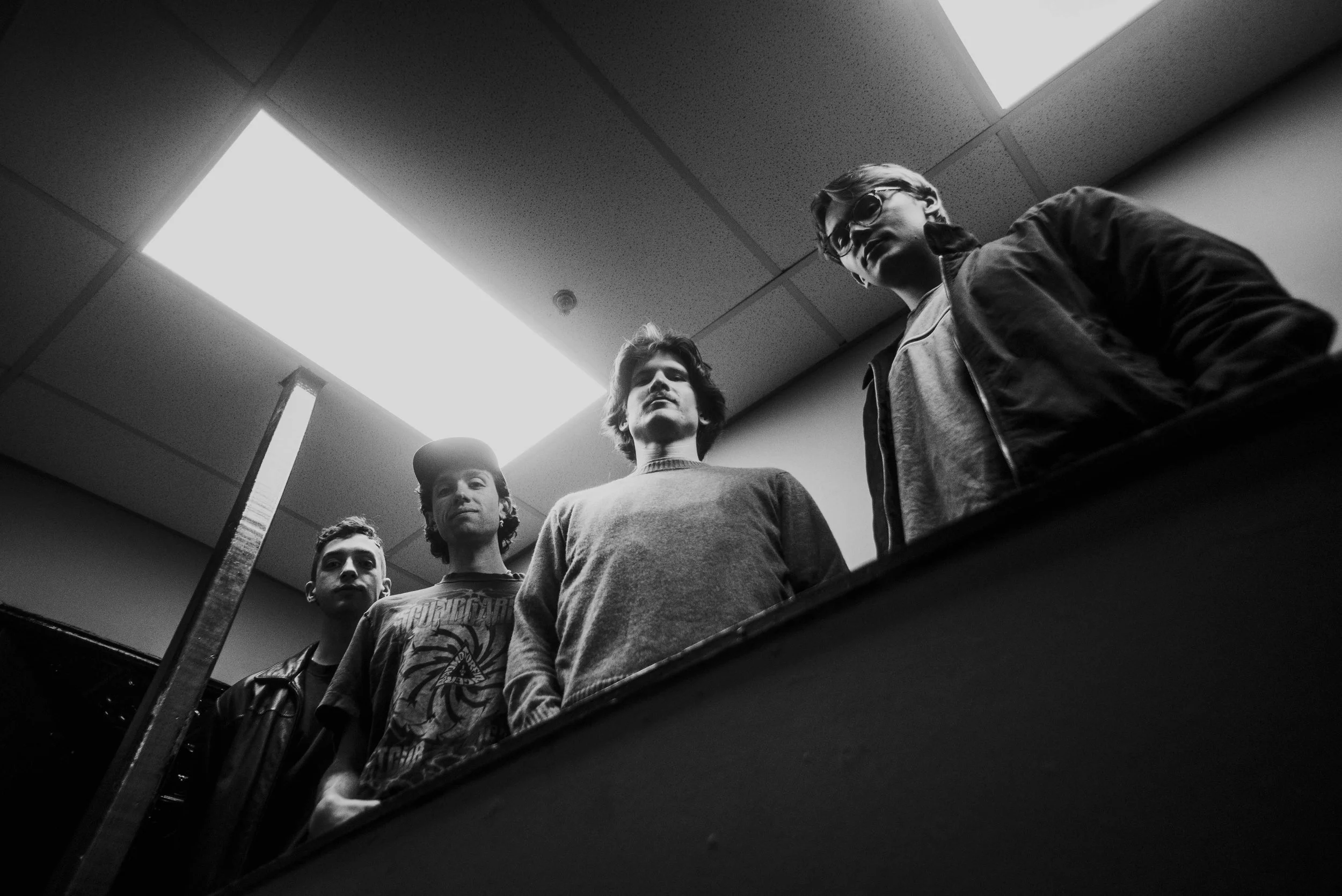
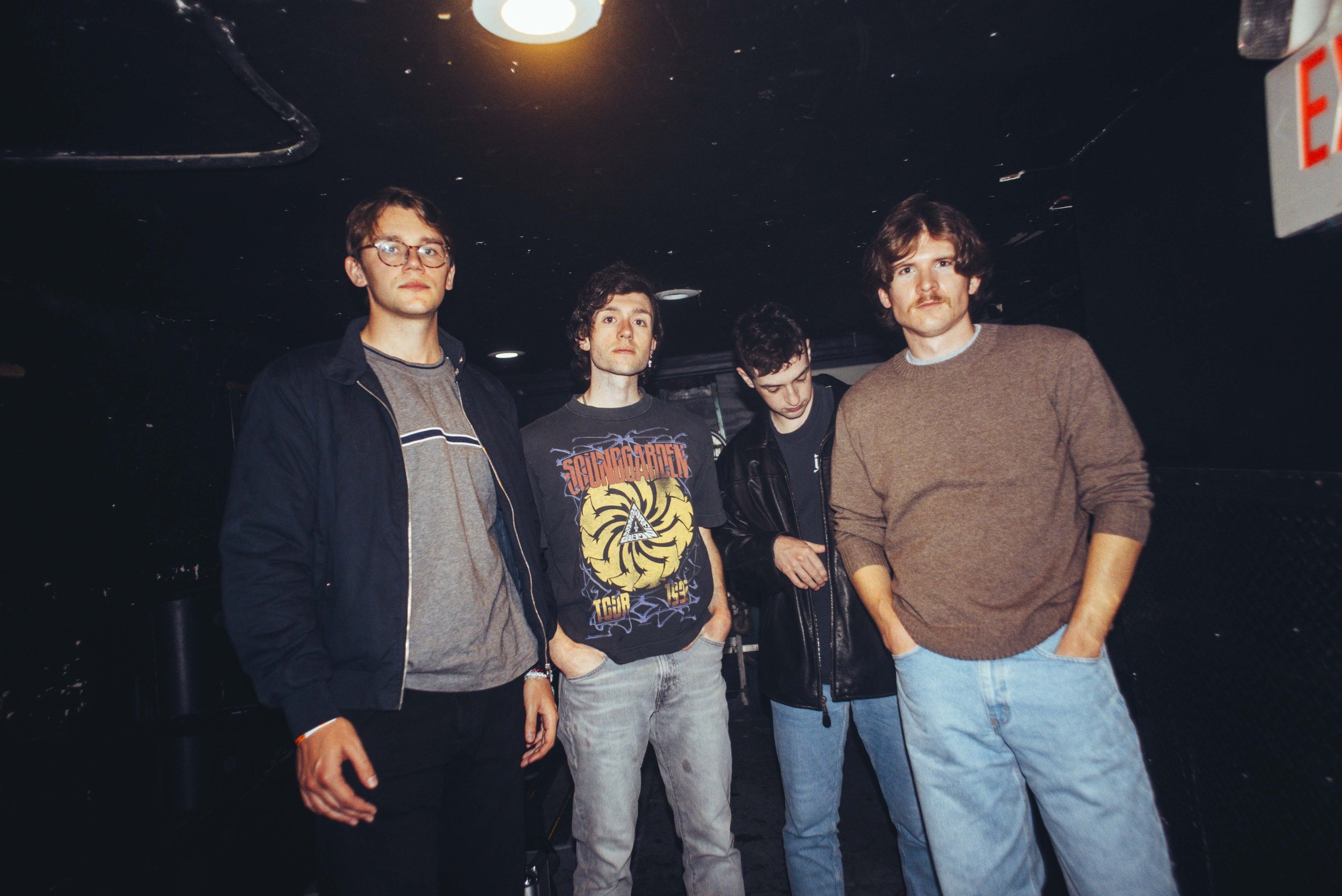
Anchored by siblings Alec O’Brien (vocals and guitar) and Jack O’Brien (guitar), The Montaines have contorted through a few forms since their initial founding in 2023. Since joining forces with drummer Charlie Christofferson and bassist Jack Flood in 2024, the D.C.-based 4-piece has reached their roster nirvana. Alec O’Brien affirms: “We are finally The Montaines as they should be, as it is.”
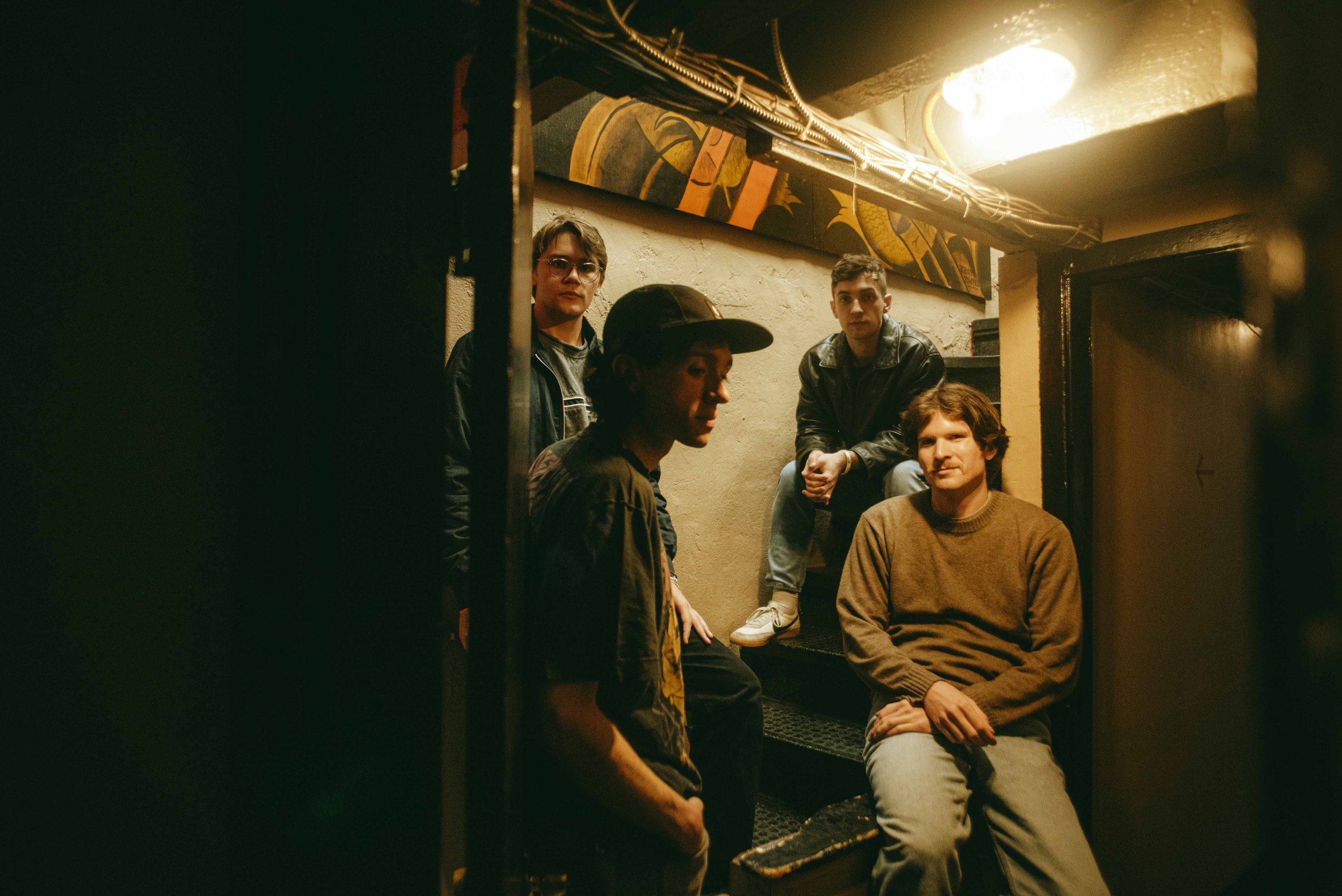
PHOTOS BY LINDSEY DADOURIAN
With pumping drums that project smooth layers of electric guitars, The Montaines build contemporary alt-pop tinged with just the right amount of nostalgia. Pulsing through lyrics that plead with tainted love stories, the songs produce a sort of sanguine melancholy, like a neon sign flickering in a rainstorm.
Their realm of genre may feel quite familiar, but what truly sets this band apart is their live-first approach, which they’ve put into best practice on their recent tour supporting Lovejoy. The Montaines develop their songs throughout performances, letting demos explode into anthems as they’re played from gig to gig. Their overarching goal is to curate an experience that is equal parts shared between the artists and the audience.
In the words of Flood, “At the end of the day The Montaines is not high art music. It’s not music for musicians who are going to pick out the time signatures and say, ‘What a clever chord progression you’ve come up with.’ We want it to be simple and share-able and intuitive to other people, and that’s been really validating that it has had that effect.”
Pleaser: I noticed your band name, as well as the lyrics that cinematically close out your first EP, Normal People, are in French. Where did these inclusions come from?
Alec O’Brien: We wanted a band name that was going to be different from anything else out there, so if you typed in “The Montaines,” no one else was going to come up. I got it from the French word for “mountains.” I kind of Americanized it a little bit, so it was easier to spell. I was actually supposed to be a French major in college and I couldn’t be bothered to take the last class in my last semester, so I dropped my double major down to a minor.
With the EP, that song [“The Montaines”] was originally not going to have any lyrics on it. We thought that part sounded kind of empty, so I just quickly came up with something in the studio. That was about it for the French inspiration, however, Flood’s mom is French, and he’s a fluent French speaker, which I didn’t even know until a few months ago. So while I thought that was probably the end of any sort of French influence we would have, there’s certainly a possibility…
Charlie Christofferson: We’ve only become more French.
AO: On the road Jack kept asking how to say different things in French while we were in the van, so everyone’s got a rudimentary knowledge of the language now.
Did you have any other ideas or sounds from the early days of the band that are kind of like “outtakes” now?
Jack O’Brien: Most of the first EP has become outtakes, not that we don’t like it, we’ve just evolved beyond it. Alec and I— Alec’s a huge 1975 fan, and I love The National and LCD Soundsystem, so I think we’ve definitely tried to take a more pop-y approach while still mixing in elements of electronic music, big guitars and more ambient noises.
What are some sound or performance elements you’re feeling inspired by currently?
JO: There’re some great bands I’ve been getting a lot of inspiration from, like New Dad just put out Altar. It’s really influential in my current playing, definitely some tones I’m chasing.
Jack Flood: Ever since I got into rock music, and I got into it so late in life, there’s just endless old music to listen to. If we’re talking about what's in fashion right now, I like a lot of the 90’s slacker rock sounds. I liked the new Wednesday album, the new MJ Lendermann album. I don’t think that that has a huge bearing on our sound, but I do wonder if there’s anything [reciprocal] with looking at slacker rock as being cool and we’re the opposite in a way. For us it's all, “We’re gonna go stand up there and wear ironed clothes and everything will be smooth,” whereas the slacker rock stuff is as you would expect— rumpled and fuzzy.
CC: I’m like Jack [Flood] in that a lot of the music I’ve listened to is older, but since returning to the drums a couple of years ago, I’ve noticed we’re kind of in a golden age of drums again. In a lot of the bands that are on everybody’s minds, the drums are a really big element. The drummer for Geese is really good, the drummer for Turnstile. In general, even locally in D.C., it’s hard to find a band playing big venues that doesn’t have a really good drummer. Which, I think is good for me, because I feel that there’s some competition. I usually leave shows thinking, “Man, I gotta practice.” We played a gig with a band from Charlotte called SOPHIA and they have a monster drummer.
(Cue Flood holding up the SOPHIA t-shirt he is currently wearing)
In regards to your recent tour with Lovejoy, what kind of inspiration has that bestowed upon The Montaines?
AO: We’ve learned that we really do our best work on a stage in front of people. We love to play our instruments, we love to practice, but there’s nothing quite like getting out there in front of people and owning things as we go while performing.
JO: We’re very fortunate. These shows specifically have allowed us to hone in on parts that we like and amplify things. These songs have become more of what they’re supposed to be than maybe a few months ago.
CC: I’m stuck behind the drum kit so I don’t factor into this, but I get to watch these other three and how their stage presence has changed over the course of the tour. The choreography, for lack of a better word, has definitely developed. I’m always struck by how confident the three of them look in a way that they didn’t maybe even six months ago. There’s a lot of movement from the stage and into the crowd and it gets a really good reaction.
JF: I need wireless rollerblades. Rollerblade around the stage and into the crowd. We’ve learned a lot about how one of these larger tours goes, how to carry yourself on stage, when to take photos, and all sorts of other things that it’s been cool to watch them [Lovejoy] do and take inspiration from. I think the songs— we just need to get in the studio. I think they’re in the best position they’ve been in since I started playing with the band. It’ll be good to get them recorded because they’ll probably get changed again inevitably.
JO: One of the things we didn’t talk about was the person doing their merch, or rather the people, as there were a couple throughout the tour. They taught us a lot about how to organize merch and how to help get sales. We are incredibly DIY right now, whether it’s recording or making t-shirts or organization-wise, but we are so fortunate to be able to run our own merch because we get to meet all these people who come to the shows and who have been incredibly nice and polite. It makes us all feel really good about what we’re doing.
If I caught that right, you’re saying that the songs you’ve been playing on this past tour’s setlist aren’t yet recorded and released?
JF: Like six of the nine maybe. Alec or Jack [O’Brien] will have a demo, like on Garage Band, some idea in their head that’s germinated a bit, and then they’ll bring it to the larger group. We practice in a storage unit in D.C. near Union Station. It is very strange, this building is built into the side of a cliff and is acoustically horrendous, which is amplified by the fact that generally there are two or three bands on the same floor practicing at the same time. We use that to work out if the harmonic frequencies are correct for the song, but basically we can’t hear anything. The real way we work out our songs is we play a ton of gigs, probably way too many. There are all these moments live where I’ll figure out a part of a song and decide that’s the part we’ll keep. There’s even one song Alec has been changing the lyrics to and maybe three shows ago he got it and we stuck with it going forward. That will lead to moments where someone will post a video of us playing live and I’ll go, “What song is that?”
JO: It is kind of a tapers’ sort of thing, the same way someone will say, “I heard this Grateful Dead song live in ‘74 in Amsterdam and that’s the version for me.” If you listen back to all of our shows you can kind of tell where it is in our career so far, but you can pick up on what’s been amplified over time.
AO: That in itself is what I think makes us such an interesting and unique band. A lot of indie-rock or alt-pop bands try to capture the song first and that’s how it’s performed every night. With us, we’re always going to give you something different. It’s a performance you’re going to see, not so much just something you’re going to hear. It’s something we’re all really proud about and I think it makes it more fun for us as much as the audience.
Now that the tour has wrapped up are there a lot more gigs on the horizon or will you be segwaying into studio time?
JO: A little bit of both. I think studio is a priority. Hopefully we’ve got some songs out in early 2026, and we’ll be playing shows to support those when they’re out. Studio is at the forefront but live will be ever-evolving.