Indigo De Souza and Mothé at Webster Hall: Total Popstars
Pleaser attended Indigo De Souza’s New York City show, opened up by Mothé, and reveled in the eclectic, nuanced sound the two created onstage. In interviews with both artists, Mothé and De Souza explored current trends in their music, touring and upcoming releases.
PHOTOS BY EMMA FISCHER
Webster Hall created a name for itself in a time before social media or influencer marketing. Opened in 1886, there’s an allure to its stage that both audiences and artists recognize upon entering. Lights shine and glint effortlessly while sound strikes and reverberates off velvet walls. In a city constantly pulled to be bigger and better, venues like Webster cement the importance of connecting to cultures that came before.
On a late-October Monday night, I had the privilege of watching Indigo De Souza and Mothé take the stage from the elevated second floor, a balcony that wraps the perimeter of the square standing room below. This was my first time in this section after a handful shows at Webster during my music-reviewing career. A birds-eye view of the crowd and performance was an experience I did not take for granted. The tide of the thousands of fans was pulled forward and back with each note, moments of sways and stagnance billowed and crashed towards the front of the room. Music takes its most special form in these moments, when what differentiates us dissolves and we blend into one androgynous being that feels, lives, breathes and loves together.
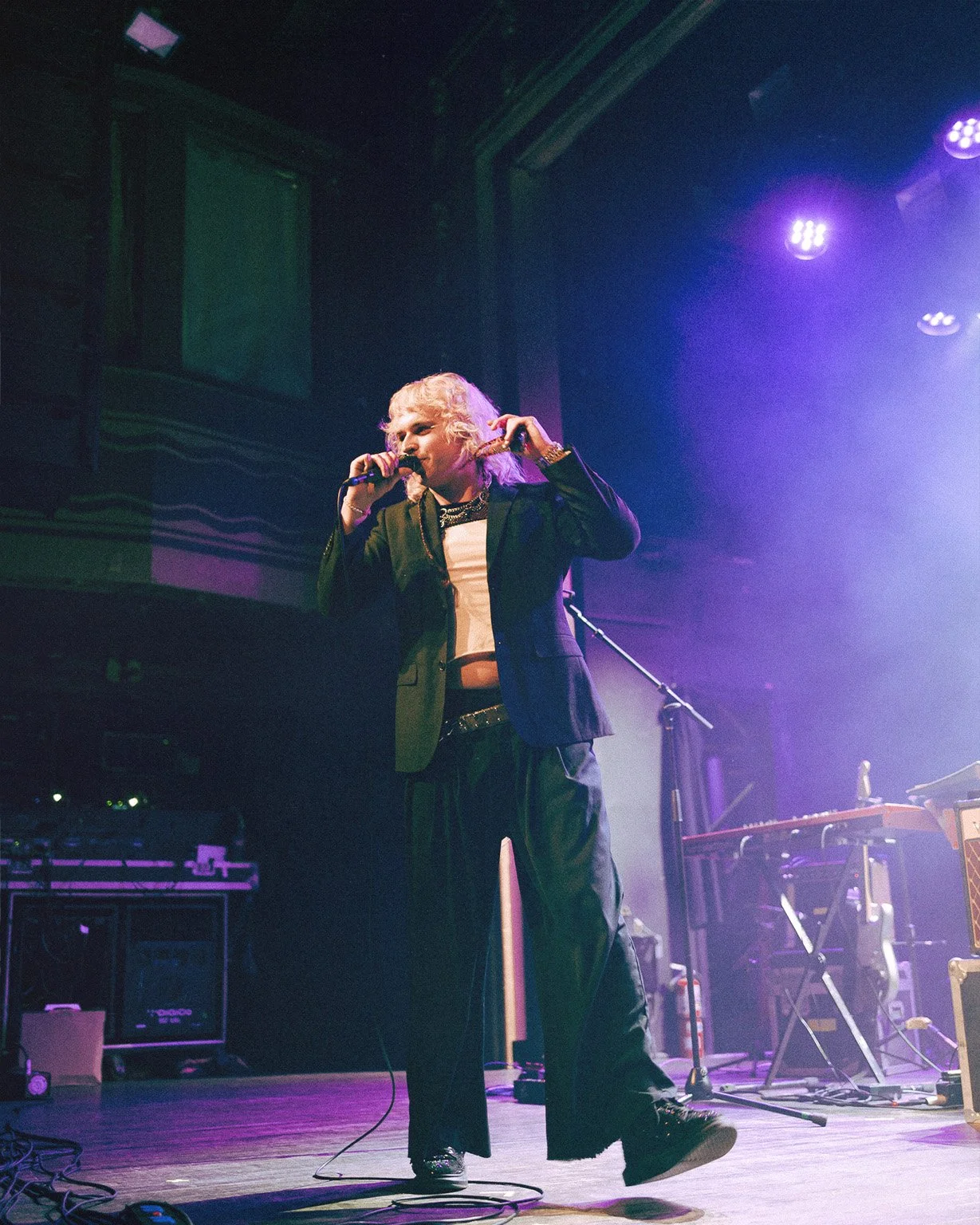
Mothé, an artist, DJ and producer based in Los Angeles, opened the night for De Souza in nine cities during the Precipice Tour, including New York. In an interview with Pleaser, Mothé said New York City is like a second home to them as they’ve developed a network of friends and musicians local to the area. Their performance with De Souza was their eighth time performing in the city and second at Webster Hall. During this run, Mothé noticed early on the culture of De Souza’s fans: sweet, intentional and energetic. “This tour has been so friendly, it sets an impossible standard for other tours,” they said.
While I watched Mothé's performance, I noticed De Souza standing in the crowd as a fan herself for a majority of the first half. She was only absent when she took the stage to background dance for Mothé, immediately boosting the energy of the room.
Mothé said De Souza watched them play from the crowd every night of tour. After one of the earlier shows, Mothé said De Souza commented that her favorite track off Mothé’s August album Total Popstar didn’t make the set list. After rearranging some songs, “Old Bar” was added in and Mothé was able to surprise Indigo.
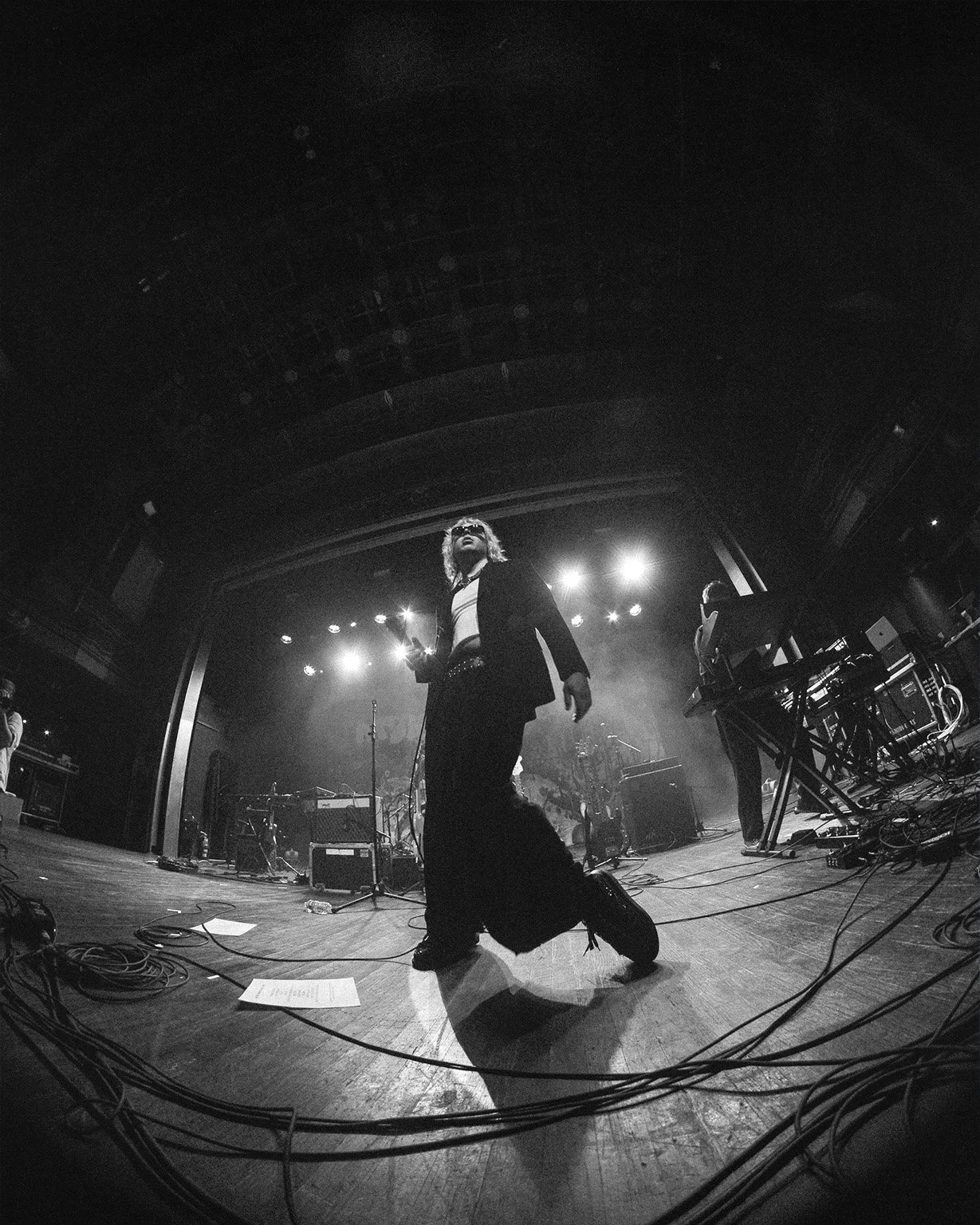
“She was sitting in the photo pit and I got to sing this song with her looking at me so close. It was such a warm moment,” they recalled.
“Old Bar” reminisces on an ended relationship resurfaced by returning to a place the couple once shared. This track is one of the slower songs off a record Mothé described as an ode to shedding the weight of the world and dancing with friends. “Old Bar” is a tribute to Mothé’s historically emotionally-driven catalogue, which was apparent on stage at Webster Hall. The performance of this track was nestled between boisterous bangers from Total Popstar meant for a club dance floor. This juxtaposition added to “Old Bars” quiet allure, allowing the audience to get a sense of Mothé’s voice without heavy production.
In describing the genesis of Total Popstar, Mothé said they got to a point in life where things were continuously falling apart (relatable). The only moments they truly could experience joy was when they found themselves dancing at the club with friends. “The big theme is get out of the house, go outside,” Mothé said. They also considered how the same piece of music can feel different when presented in various settings. A live and recorded version, a performance at 7 p.m. vs 2 a.m. or a small, intimate room vs. a big concert hall. The space in which you hear music changes how the song is perceived, and Mothé created this album with the intention of it being heard outside or in the club, always with friends.

Back on stage at Webster, one of Mothé’s final songs was “Debt Collector.” From their 2021 album I Don’t Want You To Worry Anymore, the track discusses a lopsided relationship. One person continues to let down the other, but letting go is a challenge they don’t want to face. The performance on stage was heartfelt and raw, but still infused with the flare and fire Mothé has become known for. With a keyboard player on stage, the duo were able to advance the recording by adding extra synth, keys and rhythm. They sang,
“So then how come you only ever want to bring me down /
How come it's every single time you come around /
When I'm waking up but only cause I have to now /
So how come you only ever want to bring me down”
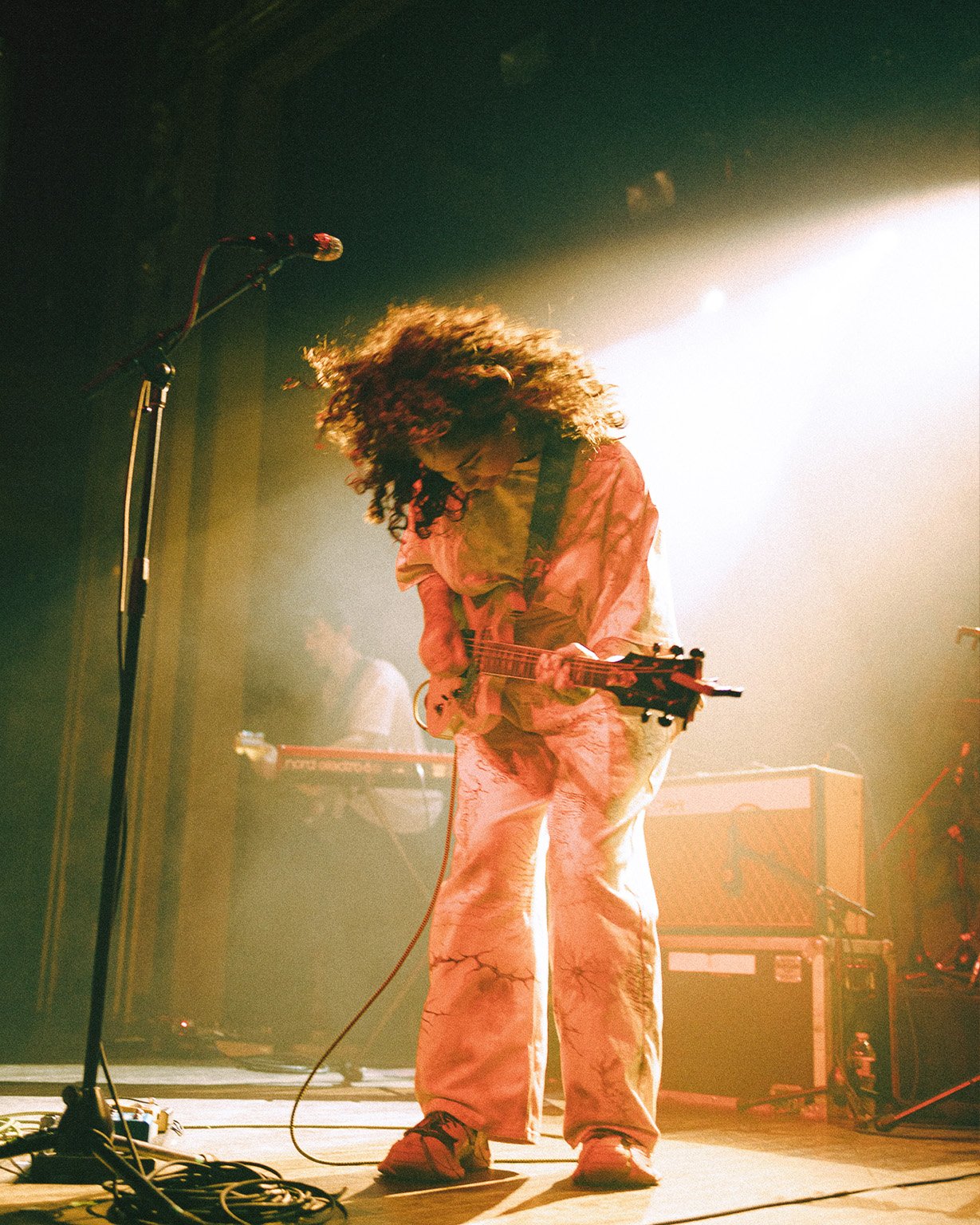
After Mothé’s set and a short break, De Souza took the stage with a five-piece band and a backdrop that reflects the album art from her recent release Precipice. If you’re a fan, you know the intricacy and attention to detail that each album cover holds. She played a collection of songs spanning her discography, but focused on showing her new album to fans. The tour is named from the July record, after all.
De Souza told Pleaser that to her, Precipice means being unafraid and embodying joy. “It means choosing to give pain less power over me. It means sharing my strength with the world in all directions,” she explained.
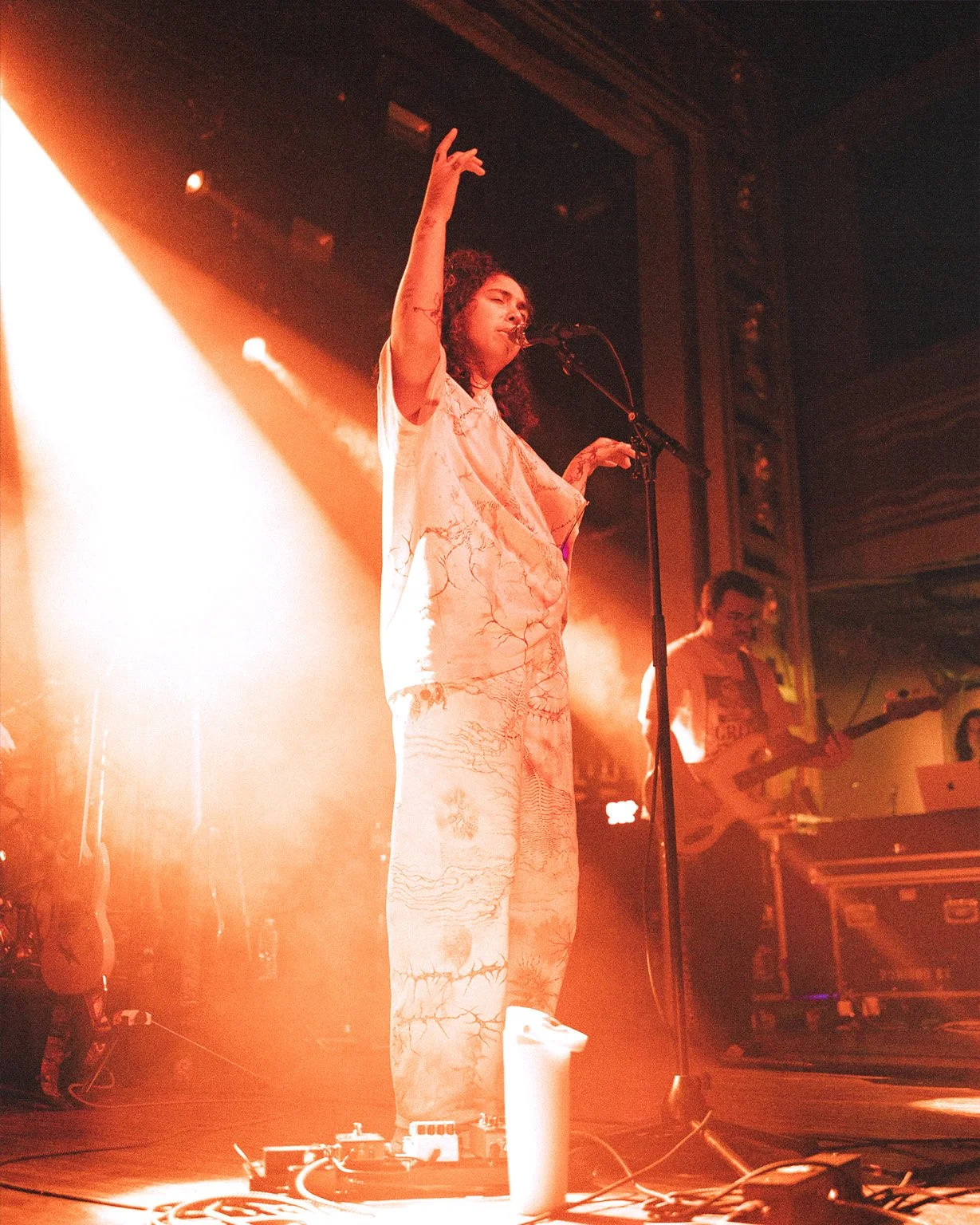
From my top-down view, fans were engaged and present throughout the show: singing with friends, swaying in unison and sharing in the present moment.
While she played many hits from Precipice, her performance of “Crying Over Nothing” was a highlight. The track explores a relationship that’s ended, but feelings of sadness and longing for what once was are still present. Sonically, it carries an up-beat melody with a playful sound that’s electronic and warm. There are, however, piano chords with a more somber disposition that both start the song and lay underneath for the remainder of the track. Those notes give this track its depth, the contrast between the freedom of an ended relationship and the despair of missing the person you’d built yourself with.
Can you tell that I'm missing you? /
I'm pretty sure that you can see right through /
I don't ever wanna sway you, babe /
I want you to do what you want to do /
I guess I gotta get on with it.
De Souza said during our interview that the themes she explores throughout her discography vary depending on what’s happening in her life. “I think albums are like vignettes, capturing seasons in my life,” she said. Moreover, she explained that sometimes, she’s so immersed in her feelings that processing the commonalities in her experiences comes later. “I don’t always see it all for what it is because I’m so busy embodying the feeling.”
Even though her first single was released in 2016, De Souza said she’s been an artist since 1997 (the year she was born). Her process has developed over time, and she’s started to trust herself in it. “Making art feels more about listening than it is about making. I have to learn to be open enough to listen to my own inner voice and compass, and follow the threads it presents,” she said. Collaboration has also been an important step in her evolution as an artist, with her home city of Los Angeles providing amazing connections. One of those integral relationships has actually been with Mothé, who shared on stage that they and De Souza are neighbors.
The result of one of their days working together was their joint track “Serious,” which dropped September 24. De Souza said she’s always wanted to try writing with someone, and this project came about so naturally. “They are an incredible artist, performer, human and friend,” she said of Mothé. The track is reminiscent of Clairo or Phoebe Bridgers, ethereal and light in sound while representing heartfelt messaging in its lyrics. De Souza said to her, “Serious” is about listening to an inner voice that encourages you to let loose.
“It’s also about how special it is to connect with someone who really sees you beyond your mask and gives you a sense of comfort in being vulnerable,” she added.
Listening to the track performed on stage at Webster was a special moment. The audience could feel the closeness between the Mothé and Indigo, highlighting the importance of connection described on the track. Similar to Mothé’s sentiments about touring with De Souza, she highlighted the magic the two were able to create during this tour.
The Precipice Tour has been extended to include more cities this spring. The first leg concluded in London on November 8, and the tour will pick back up in Phoenix, Arizona early March. Mothé won’t be opening during the second part of the tour, but they’re working on promoting Total Popstar this spring. Make sure to keep them both on your radar!