Waterbaby is Waiting for the Feeling
On waterbaby’s debut album, the music drifts to her like a memory
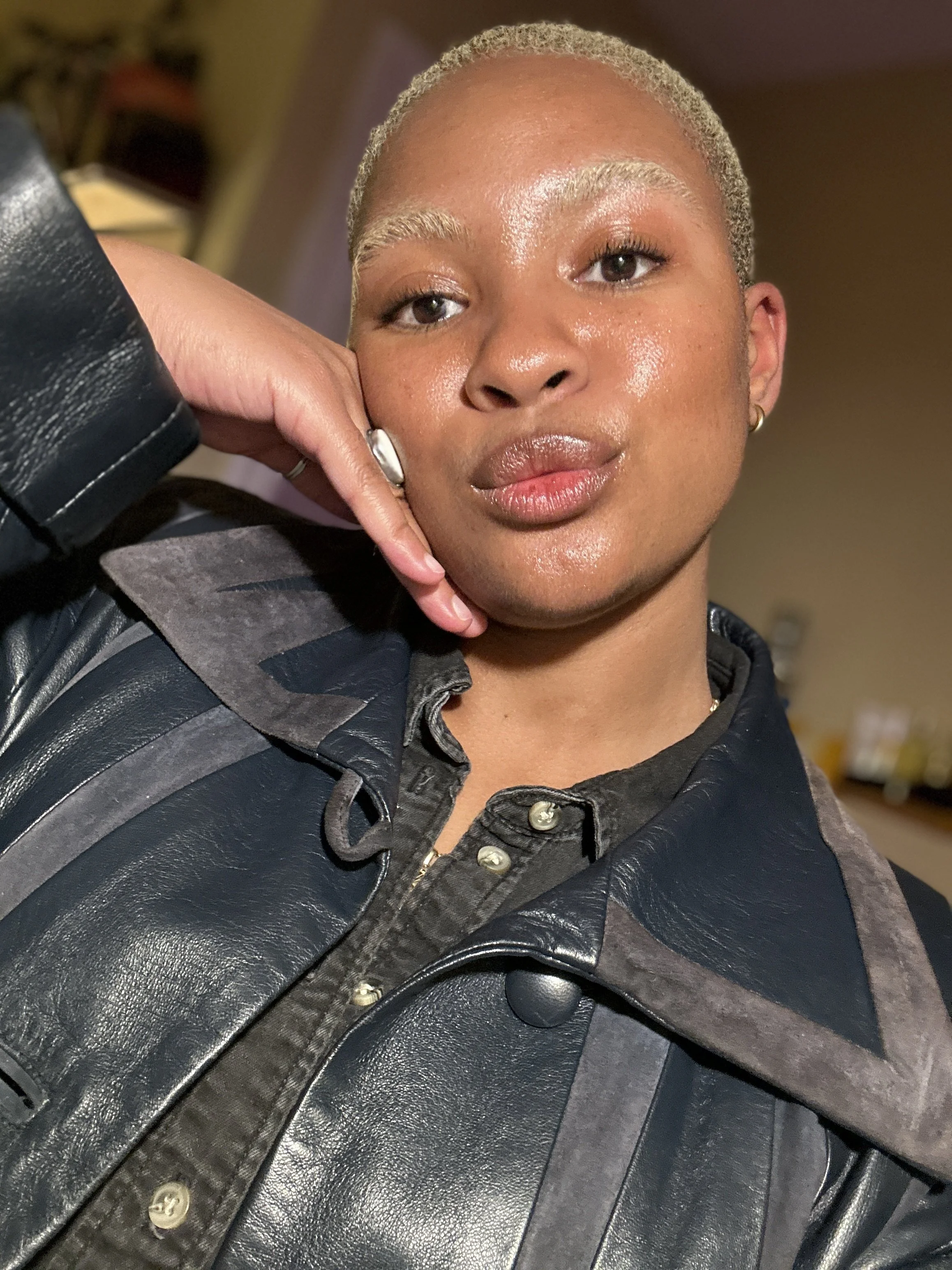
PHOTO BY LEVI AXENE
I can think of no better moniker for waterbaby than this one — she is undoubtedly a child of the water. On her debut album Memory Be a Blade, she slips through time like liquid, evoking the qualities that make nostalgia so hard to grasp in the hand and mind. With her collaborators Marcos White and Anton Fernandez she produced an album submerged in yesterday, with streaks from the light of dreams glittering through.
The album’s function is owed to its form. waterbaby’s writing process, too, flows freely, taking the shape of whichever vessel best suits the music. Born to a Ghanaian father and a Gambian-Swedish mother, waterbaby’s bedrock of musical influences is rich, deep and wide-ranging. As such, her work is soulful, delicate, and grooved with whichever musical elements dislodge from her subconscious and float to the surface. Pleaser caught up with her after the release of Memory Be a Blade to talk about what it means to definitively introduce the world to her music.
PLEASER: Some folks liken an album release to giving birth — it can be a labor of love. Memory Be a Blade is officially out. How do you feel now that your baby is in the world?
waterbaby: Very trippy. I started getting separation anxiety the weeks leading up to [the release], just because it's something you do once. It’s a debut album, and I'm happy with it and I put in a lot of time and effort. So having it as my baby, locked and loaded, I don't know, it became a safe feeling. And now it’s just out there floating around. But I'm so happy. I've been waiting for so long. And I feel really good about it, still.
Can you walk me through your album-making process? What’s that journey like for you?
W: I've only done an EP before this, which was only five tracks, so I don't have that much experience putting projects together in that way. Most of these songs came about during a one-and-a-half to two year period. I think “Clay” is the one that we wrote way before and had a couple of years on its neck when we finished it.
But [when creating] I'm very much like, “when you know you know,” so I've been waiting for that feeling. And thank God it came. And then it was just about dynamically figuring out which of the songs belonged in the Memory Be a Blade world. And I was kind of fighting the idea of it becoming an album at all. Because I take it very seriously and it's such a huge thing, and a real milestone in one's career. So, it was supposed to be a double single, and then it became an EP, and then it was like, oh, maybe it's like a mini album. But what's a mini album? Like, it's an album. And now I’m like, “it’s an album,” but it's too much pressure to be like, "I want to show all of me with this one project.” And now that the album’s out I can just say, “I have so much more to go.”
And I don't have everything in it, but this feels like the ultimate introduction to my music.
You mentioned Memory Be a Blade being a world. I love thinking of albums as worlds — as contained universes. Memory Be a Blade is a universe of memories, dreams and nostalgias. How did these motifs end up becoming the focal point of the album?
W: When we wrote “Amiss,” which was one of the first songs that we were talking about putting on the album, it just set the tone, a really, really clear tone and feeling,to me that I just wanted to continue building on. When I'm writing, I don't have a very clear concept going into it. I just do. And so the memories and the dreams and the in between kept coming up all the time. It really just showed itself, that that was going to be a thread throughout the album.
Speaking of dreams, do you have any dream collaborators? Anyone that you would be eager to work with now that you’ve made your debut?
W: I have a really hard time imagining, and I don’t know how to explain it,but I’m like, “Who knows if someone would be a good collaborator?” I do have artists that I really enjoy listening to. But I'm so open and excited to try collaborating more. I also haven’t done much of that, I haven't brought a lot of people into my own music. I have joined on other people’s projects. So I think that's definitely something I want to do more of, but I don't have any specifics of who I’d want to work with. I'm open. And I think I could also be happily surprised.
It sounds like your process is all about letting the music decide what happens to it, which could make sense for collaborations too, because oftentimes you never know who you'll end up in the room with. Rather than saying, “I want to work with this person,” you let the opportunity unfold in front of you.
W: Yeah, exactly. Or it’s like, what would be the best for this song? What would elevate this song? And if you hear something specific, like my brother joined on two of the songs and that was…I tried filling that function [myself], but it just wasn't hitting. And then when he did it, it was like, oh, obviously this is what we needed. So, it's like the song calls for it.
Which two songs were your brother on, and what was it like working with family?
W: He was on “Clay” and “Beck n Call.” And it was great. Both [songs] were written and recorded aside from his parts, and then he just came in and put his verses down, and it was so much fun because we haven't written music together before, but we both love music. And he's the one who puts me on to new music. So getting to watch him write was really fun. And also hearing him sing it live,I was so…I was just crying. He's just amazing. It was a really lovely experience getting to collaborate in that way.
What role did music play in your lives as siblings as you were growing up?
W: A huge, huge, huge one. Everyone in our family loves music, but it’s also a very wide range. My dad was into garage, Ghanaian folk music and Dolly Parton. Like it was very wide. And my mom was into New York hip hop, neo-soul and R&B. And then my little brother widened our musical input growing up, finding more synth pop or a bit more alternative electronic stuff as well. He had a period when he was Michael Jackson, and then he was Usher, and that's what he would introduce himself as. And I was [into] Destiny’s Child, so there was always something happening.
I've seen people compare you to other bedroom pop artists like Clairo, for example, and I'm wondering how you feel, especially with this being your debut, about being compared to other artists. Do those comparisons have any impact on you?
W: Yeah, they do, they do. I feel the same way when people name my genre and it's something I don't agree with. Before when people would call [my music] flat out pop, I'd be like, “You're erasing so much of it,” because to me, it's alternative R&B as well. That's what it is to me. I think that's why I feel a type of way about that. But then there's also people who will say I’m Afro-beat inspired, and I'm like, what? What are you talking about?
So, I don't take offense at all [to being compared]. And sometimes I don't agree. But not necessarily bad feelings. But also because I know that sometimes I don't hear, or I can't pinpoint, what I'm referencing sometimes. I'm very much subconsciously incorporating stuff into my music. So sometimes once people point it out, I'm like, yeah, that's so true. I just didn't clock it until that's been made a bit clearer.
At Pleaser, we have been talking about albums that we consider a perfect ten, no skips, just a perfect album from front to back. Do you have an album, or albums, that you consider a perfect ten?
Confessions by Usher. That's a perfect ten album to me.
You can find Memory Be a Blade wherever you listen to music.