The House That Edgehill Built
Chris Kelly reflects upon Edgehill’s Ode to The Greyhouse, sharing stories of frustration and friend dynamics that culminate into a remarkable debut album.
PHOTOS BY OLIVE JOLLEY
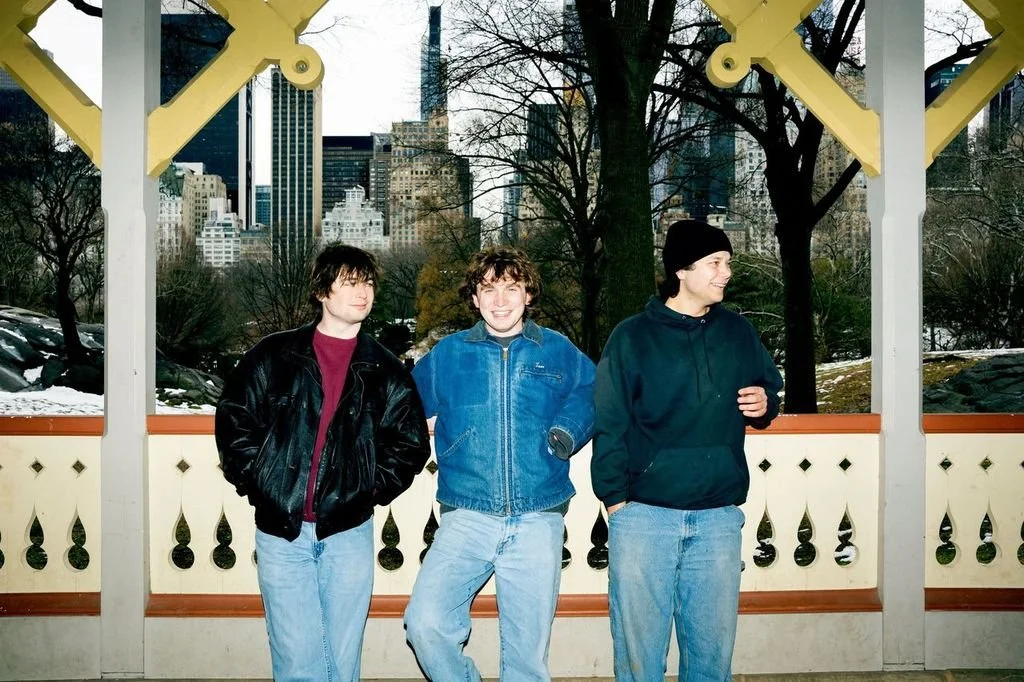
As many great bands do, Edgehill came as a hail mary. Lead singer Chris Kelly had taken a gap year from university, while lead guitarist James Zimmerman was postponing his surrender to a corporate day job. The two of them had already been jamming together by the time Kelly connected with drummer Aidan Cunningham while they worked together at a local coffee shop. Cunningham officially joined the band in late summer of 2023, marking the start of Edgehill as we now know it.
Since then, the trio has scaled momentous peaks in the realm of alternative rock. Just a few years ago, they were shedding every drop of sweat into back patio performances, riling up their first fans in the Nashville house show scene. They steamrolled forward, seemingly unaware of the potential of their electric guitar-driven anthems that sit somewhere between the moodiness of Radiohead and the catharsis of The Backseat Lovers.
Since the release of their debut album Ode to the Greyhouse in February, Edgehill has proven their staying power scales far beyond local living rooms. “Doubletake,” the first single off of the new record, cracked the Top 3 on Alternative Radio. Amidst the achievement, the band embarked on a North American run of shows supporting fellow indie-rock rising stars, Winyah, including stops at major festivals like SXSW.
Ahead of releasing the deluxe edition of Ode to the Greyhouse, Kelly filled Pleaser in on the project’s personal touches, and how the band is acclimating to new eras outside their home.
PHOTOS BY OLIVE JOLLEY
Pleaser: Based on your come-up story, I’m getting the sense that this is a “fly by the seats of their pants” kind of group, you’re not really 5-year-plan kind of people?
Chris Kelly: Not really. I mean, Jake has good foresight. We’re really a year-and-a-half plan kind of band.
Do you guys play by a map of what you want Edgehill to be, or is it more that you put on blinders and push forward however possible?
CK: We definitely have ideas of what we don’t want to do. Things happen and change so fast, you have to adjust so much, so it’s hard to have a super strict idea of what we want. Do as much as you can and try not to be dumb about it is really the way that we go about it.
It’s worked out for you though! You’ve picked up so much traction in a relatively short time. Are you feeling overwhelmed at all?
CK: It feels more like a slow burn. It’s going really well.
Nowadays it’s just so easy for your life to be changed in a day. It hasn’t been that. It’s felt like a culmination of work and our team supporting us and being really intentional about the whole thing.
We’re super stoked with where we are, it’s further along than I’d ever thought we’d be at this point.
Have there been any aspects of releasing a full record or tackling larger scale tours that have been hard to get used to?
CK: Getting yourself on schedule is really hard, especially when you’re home, especially when your task is creative. It’s not like a scheduled thing where you can sit down and write the song and suddenly it’ll be on the album. It’s been an adjustment to ideate on song and content ideas. I’m a procrastinator for sure, and that’s hard to be sometimes when you’re sitting there like, “I don’t know if I can come up with something good.” And also, you have no boss or anything that’s like, “you’re late.” Being on tour…I think we’re all still learning how to exist on tour.
It seems you’ve been able to tackle these adjustments, as Ode to The Greyhouse presents a stunning debut. I’m very curious about mentions of this album being created in a “6-month period of isolation.”
CK: It wasn’t like we wanted to lock ourselves up. At night we’d hang out with friends and on weekends we’d be touring, but a lot of the days were spent from 9 or 10 a.m. to 8 p.m. at our house all together. We were not really leaving because we had things to get done, but those things were creative so we couldn’t always come up with them. It was tedious, and we were in this bubble of hanging out with each other and very proximal people. That was the isolation aspect. We obviously could get out and do things, but we wanted to be as productive as possible by being together and writing and trying to produce and make demos. The natural way it went was that at times we were discouraged or we weren’t inspired, so it felt like we were stuck in the house just losing. It was an interesting period — not bad at all, but we’re going to do it a little differently this time, for sure.
PHOTOS BY OLIVE JOLLEY
I notice you invite listeners into the house with you using audio clips from your real lives. Were these recorded for the intention of the album, or did they all come from found footage?
CK: All of them are old videos actually. None of them were recorded for the album. It started because I made the “Doubletake” demo, and put this video of Riley [Whittaker] on there, who is Aidan’s girlfriend.
As we were recording, we were pulling clips from our phones and voice memos, and wanted to invite people in and make it a little casual, and actually sound like that time period.
Do you have a personal favorite clip?
CK: Ooo. “Ode to the Greyhouse” I love, there’s a couple in there. There’s like a train breaking sound. There’s a train right next to our house that is always on go mode and so loud. And at the end there’s the sound of putting your finger on a wine glass like a sound bowl. That was in the studio, but wasn’t recorded for the album necessarily. we were just f*cking around. And Josh [Weaver], who’s one of my favorite people [was there].. That ending is really special to me because it was just Josh having fun and being himself. It goes right into “Innocent” which is something Aidan made, so it’s this cool mixture of things; I wrote “Ode to the Greyhouse,” Josh is there in the middle, and then Aidan and Riley wrote “Innocent.”
I appreciate the “Ode to the Greyhouse” mention, since that was one of my favorites. Most of the album covers outside relationships, but that song felt more internal. Would you concur?
CK: Yeah, definitely. That one is literally about our relationship with each other, us writing the album and where we were during that period. That feeling of losing all the time and not changing things when you could — willingly ignorant, I guess. There’s an element of hope in there, like we know we all can if we just want to. That [song] kind of just came out. It wasn’t a planned thing for the album.
In all the feedback you’ve received for this album, what words or responses in particular have meant the most to the band?
CK: When people interpret “Ode to the Greyhouse” in the way that they do it means a lot to me, because it’s so representative of that time. People seeing that and understanding that has felt really important. I’ve been looking a lot at Albumoftheyear.com. The reviews are cool to look at because they’re not always positive, but it’s cool to see how the music is recognized and how different people interpret it. I think one of the best pieces of feedback we’ve gotten is, “This feels like an album.” The fact that it feels like a consistent project, that’s the goal.