AmericanaFest
September 9-13 - Nashville, TN
Words by Grace Braswell
Photos by Zayne Isom
AmericanaFest Part 1: Grimey’s chats with Emily Hines and Florry
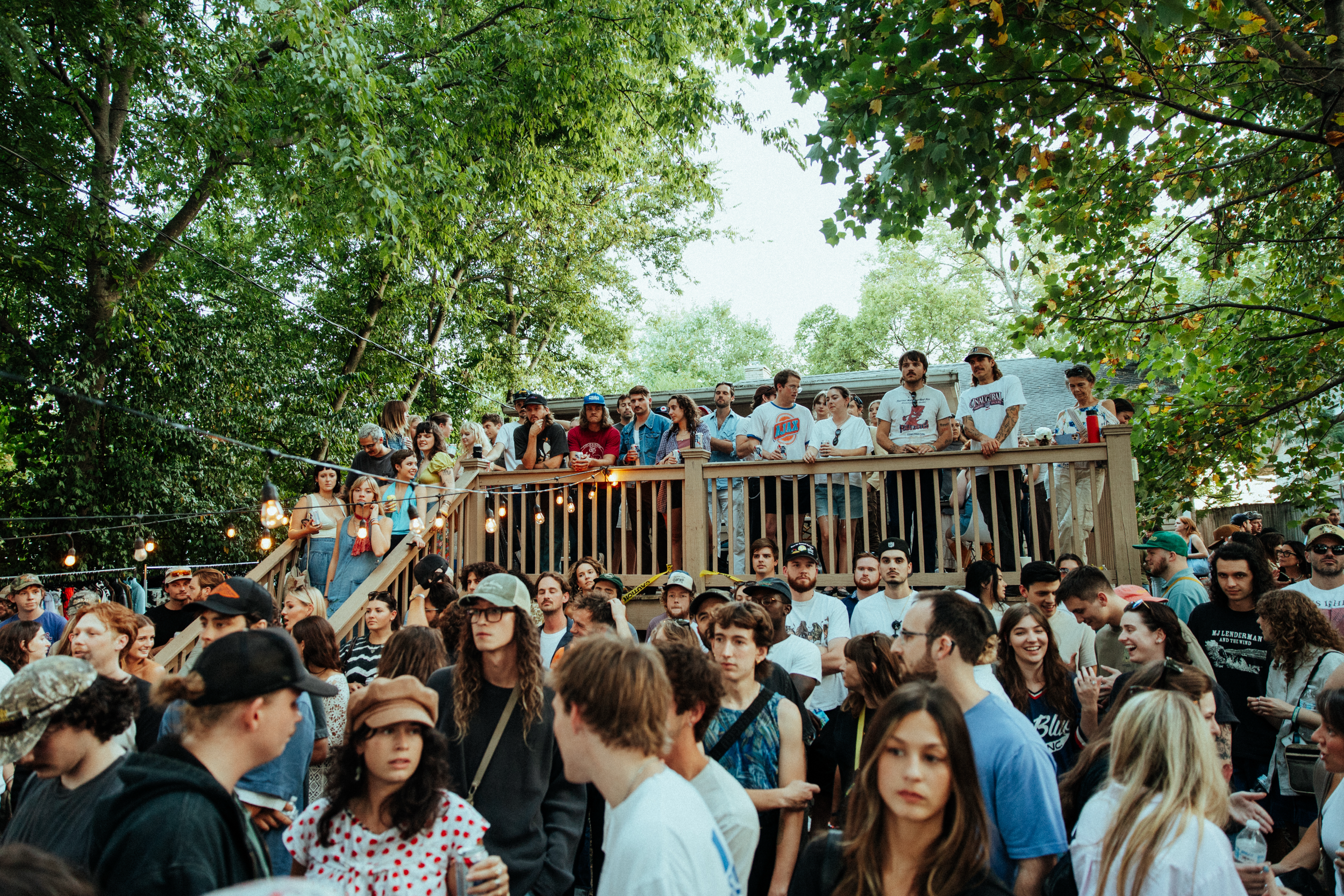
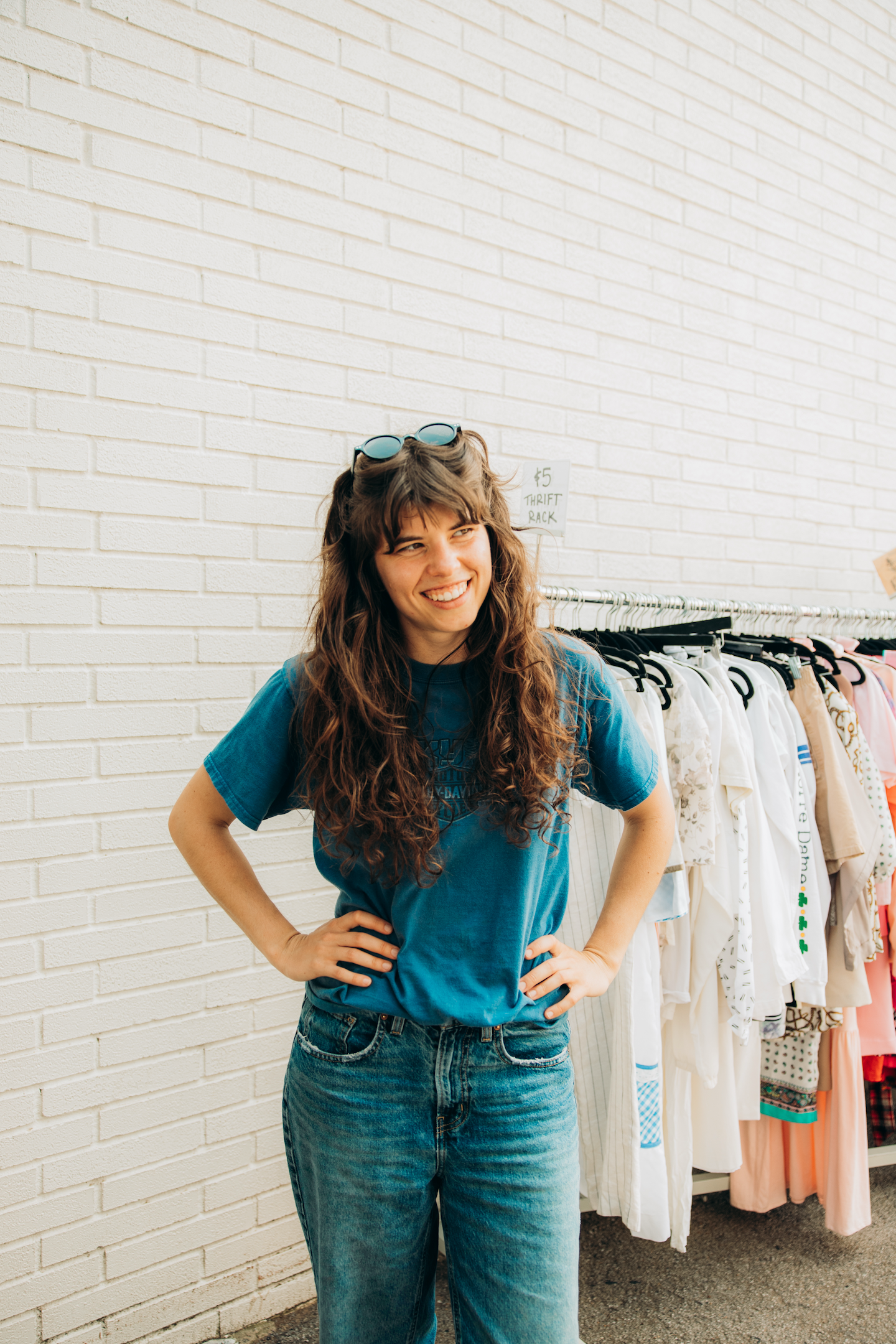
During AmericanaFest in Nashville, TN, “Music City” truly lives up its name for an entire week of unforgettable musical experiences. Vintage clothing stores transform into a home for songwriters, coffee shops with PA systems allow for musicians to surprise crowds with secret sets, and record stores host some of the coolest artists in music this year (IE Wednesday, Fust). People were even opening up their houses for shows, where artists such as Medium Build, Sydney Rose, Jack Van Cleaf, Clover County and Emma Ogier played in a backyard off of Mckinnie Ave in East Nashville. It was truly a special experience, and we were stoked to bring Pleaser fans along for the ride. There was no shortage of shows, and we went to as many as possible to tell you all about it.
Put on annually by the Americana Music Association, AmericanaFest is a celebration of artists, songwriters and musicians that fall loosely under the “Americana” category. Under the umbrella of the genre, titles like folk, country, roots to singer-songwriter pop up a lot as descriptors, showing how much the Americana bracket holds space for a diverse lineup of artists. From Joy Oladokun to Maggie Antone to Ron Pope, there was an eclectic lineup of over 200 artists that played around the Nashville area during this year’s festival.
Throughout the event, Pleaser sat down with several artists to talk about their experiences at the festival, the creative processes of their new music, tours, collaborations, tramp stamps– you name it, we probably talked about it. Here’s a little bit of our AmericanaFest experience, some of the artists we talked to and the events we covered.
Emily Hines
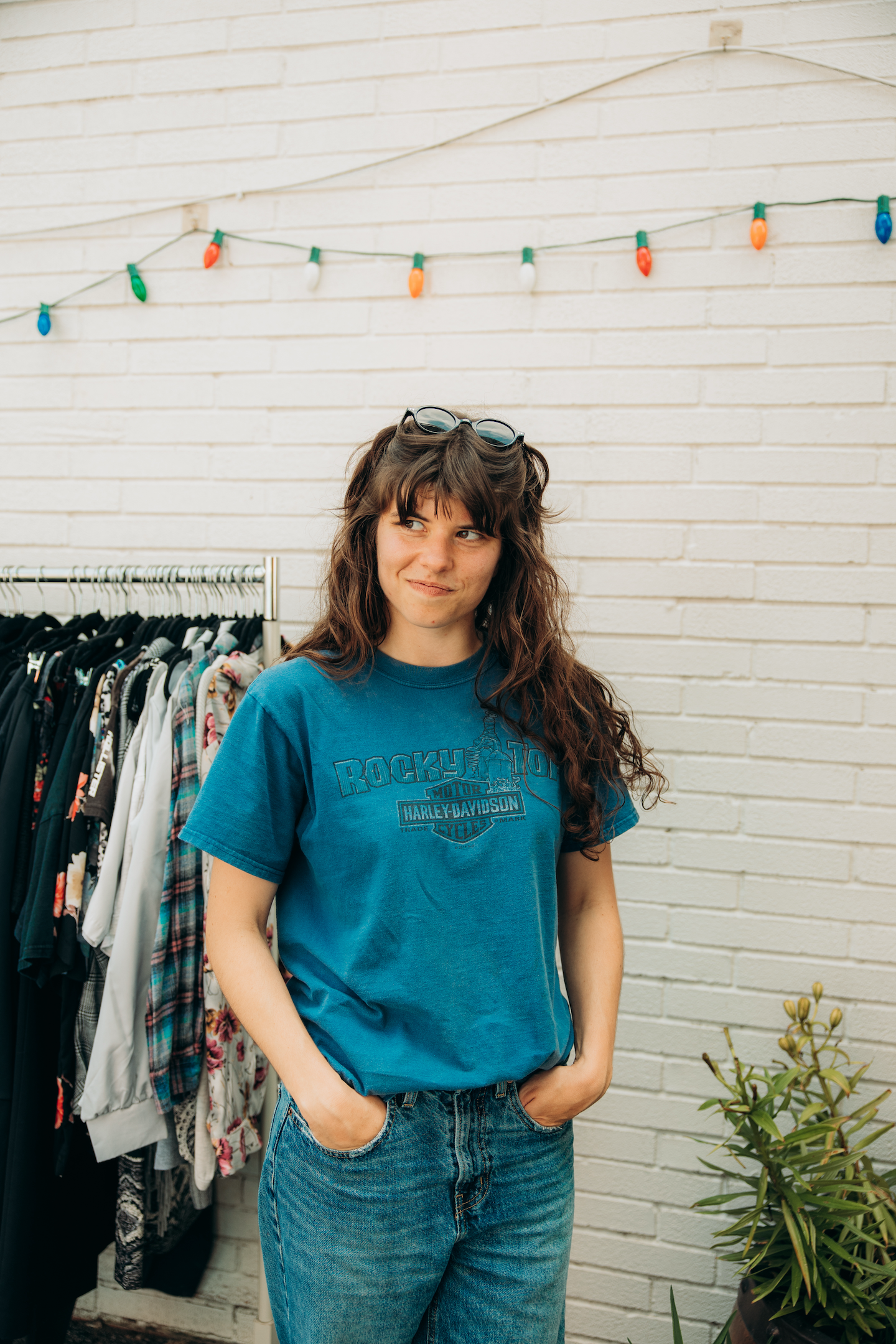
Emily Hines moves through music the way she’s moved through life– with an overwhelming sense of purpose. We were sitting on a seemingly half-rotten bench outside of Living Waters, the coffee shop that lives directly across from Grimey's in Nashville, when Hines told us she grew up in a community full of shoulders to lean on.
“I grew up with a big family, and my family was the type that, if someone in our community needed a place to stay, we would always just find room and help them,” she said. “So when I was five, this family moved in, and the mom of the family taught me how to play piano. And then my brother and I started writing songs when we were like, seven.”
For Hines, everything had a story. Even at such a young age, she found herself writing about things as mundane as the concept of electricity. She believed that even if something is ordinary, it doesn't mean it isn’t worth talking about. She’s carried this love of writing into her adult life, using her songs as a vessel to hold onto her emotional intensity.
“It doesn’t always suit me or serve me well, but certainly in music, it helps me,” Hines said. “It was a place I could go and just communicate and be honest with myself. It was a way for me to share things. An important detail of my brother and I writing songs was that we wrote them because my mom had cancer and she was given a 25% chance of living. She’s here now, but we didn’t think she was going to make it. When we were kids, she went into surgery, and we wrote those songs for her while she was in the hospital. When she came back, we would present them to her.”
There’s a certain immutable sound to Hines’ work that can be heard in her album These Days, a project she recorded with her producer Henry Park. The album is a gentle reminder of what it’s like to connect to your own heart, recorded with a timeless warmth on a cassette recorder from the 1980’s. She played a few songs from this album during her Grimey’s set at AmericanFest, such as the soft yet sturdy All of our Friends, a song she describes as the “beating heart” of the album.
“It’s the most produced, and it’s a song that a lot of my friends have touched. It’s one of those songs that I wrote about feeling dissonant and unsure, so it’s a composition of different band members figuring out different ways to articulate that dissonance of having really strong feelings one way or the other simultaneously back and forth,” Hines said.
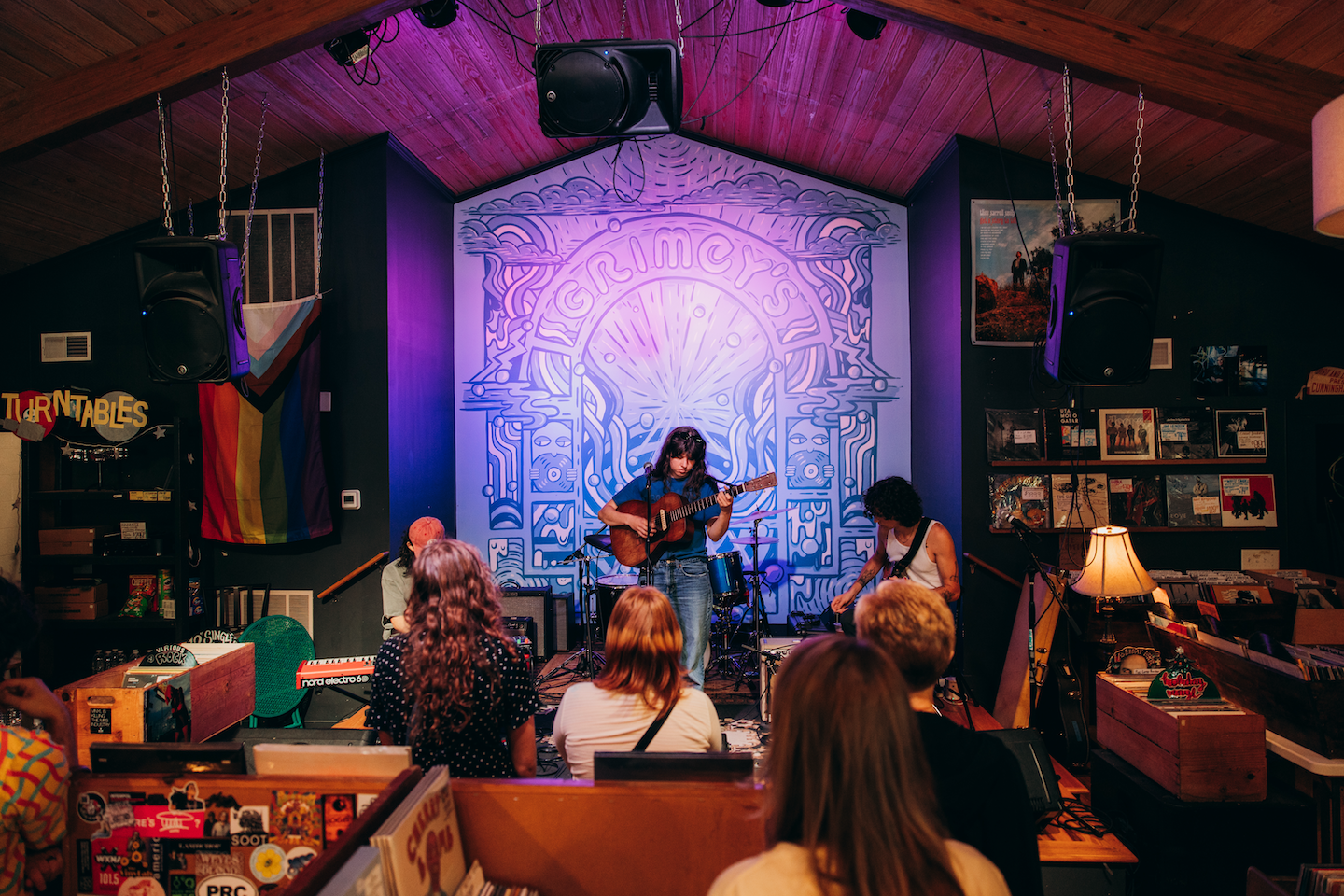
Hines’ AmericanaFest set at Grimey’s felt like a release, like jumping off a waterfall, like a homemade gift on Christmas Eve. A quiet hush fell over the crowd as soon as she began her set, and the patrons of Grimey’s paused their perversions of the rickety wooden shelves lined with new and pre-loved music to turn their heads and listen to the delicate set that Hines delivered.
Florry
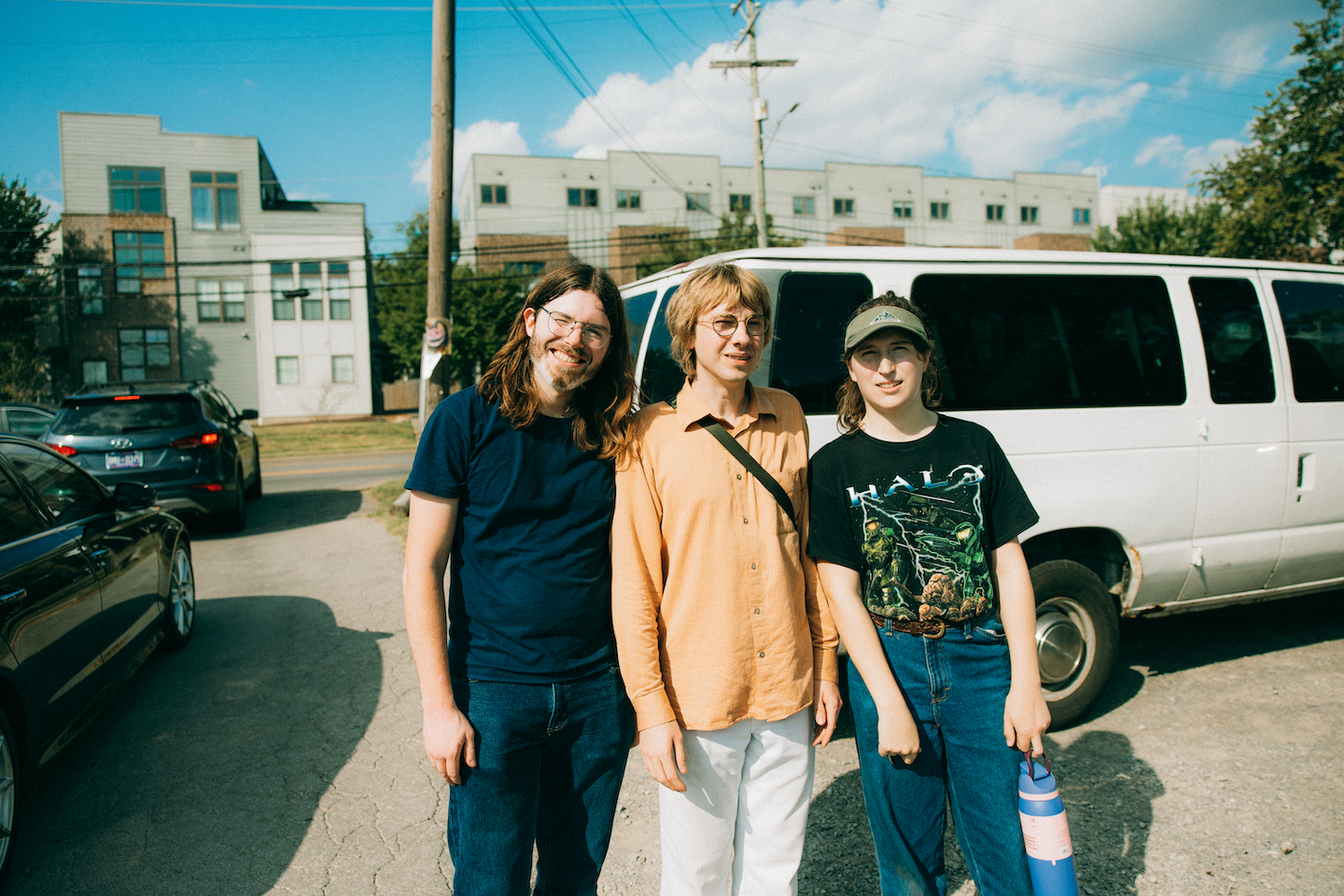
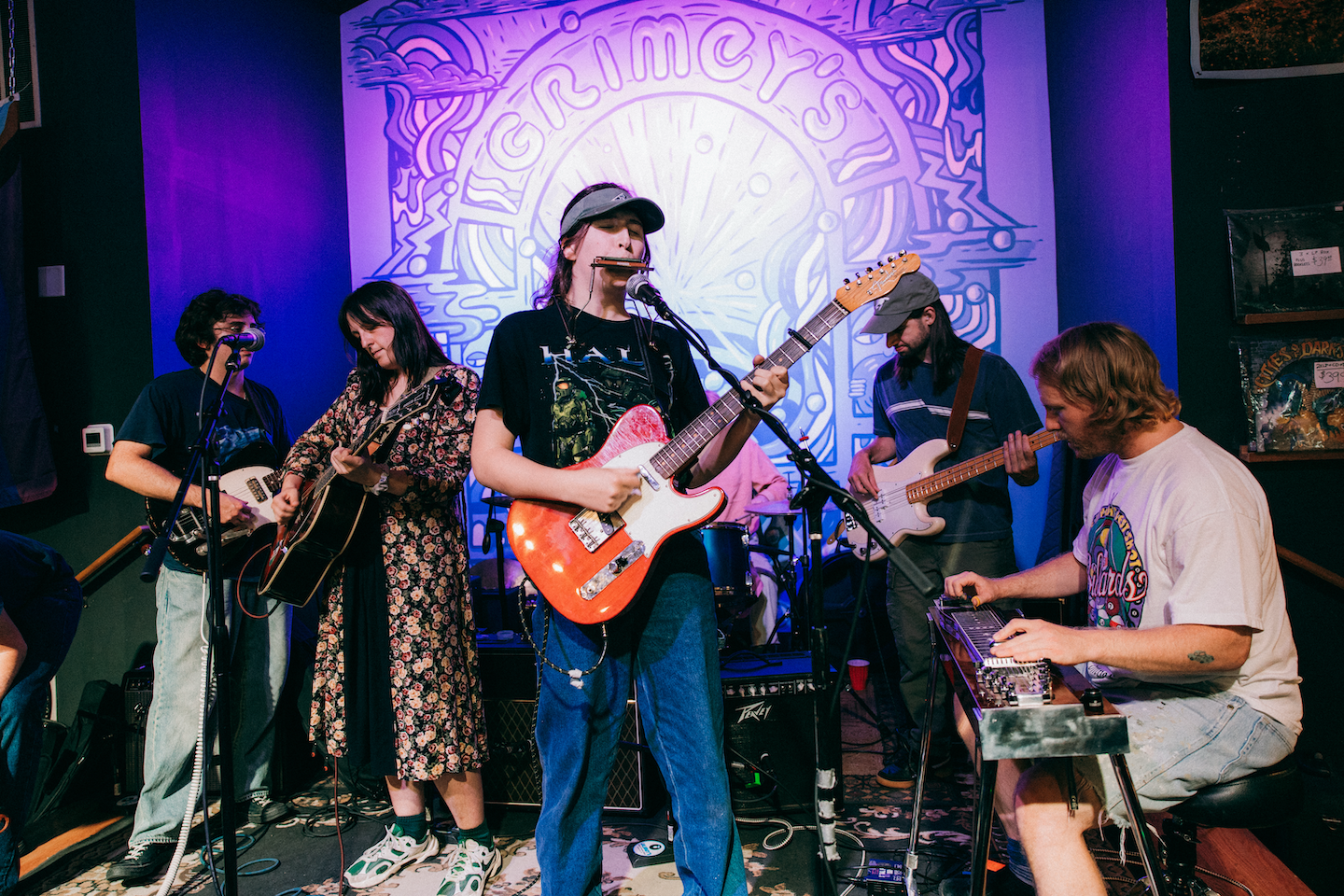
Philly-based band, Florry, delivered energetic joy to the makeshift stage at Grimey’s, playing shortly after Hines’ set earlier that day. The seven-member band is an eclectic reflection of friendship, laughing with one another as they rip through their set of country-rock tunes that had the feel of a garage band jam with the homies.
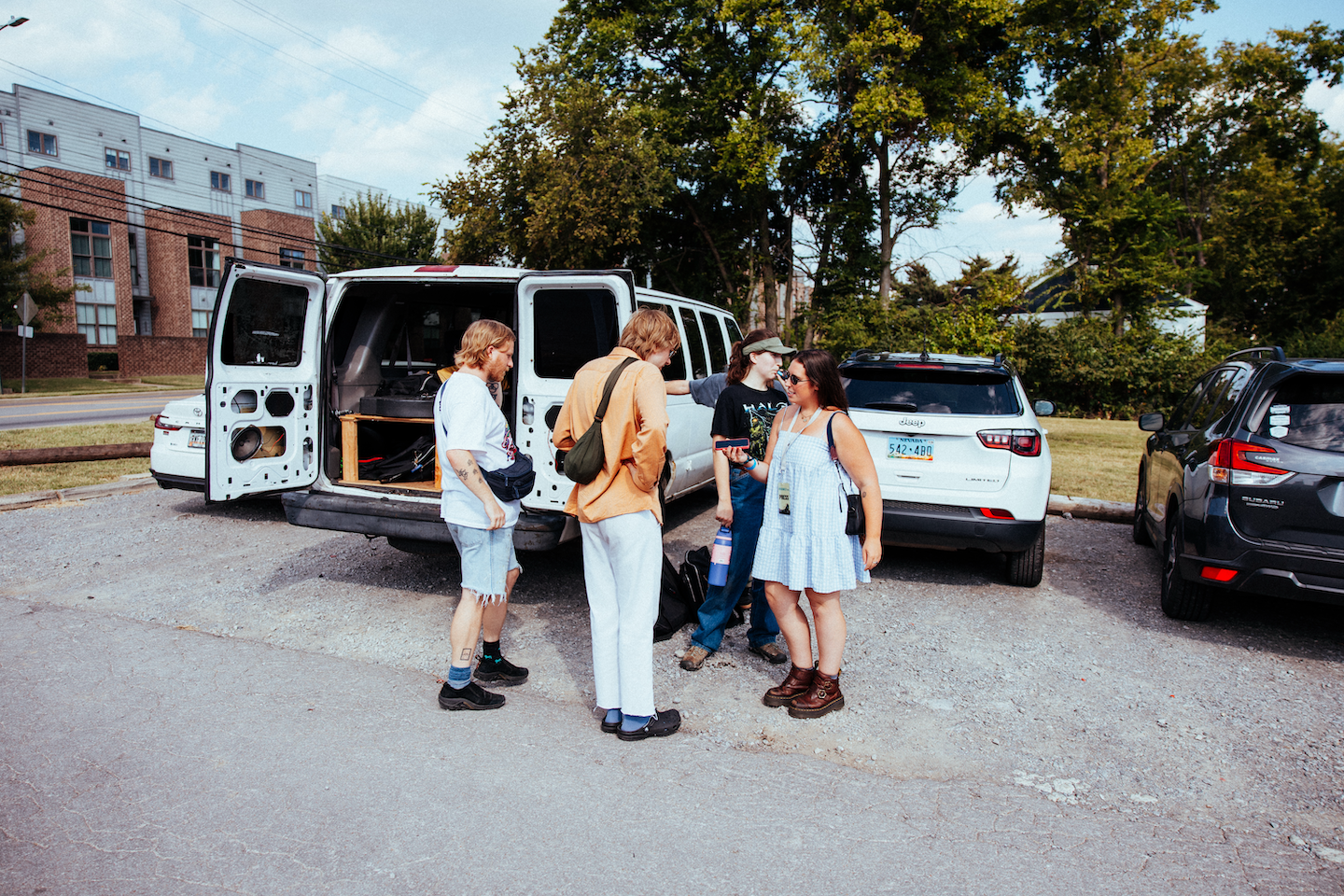
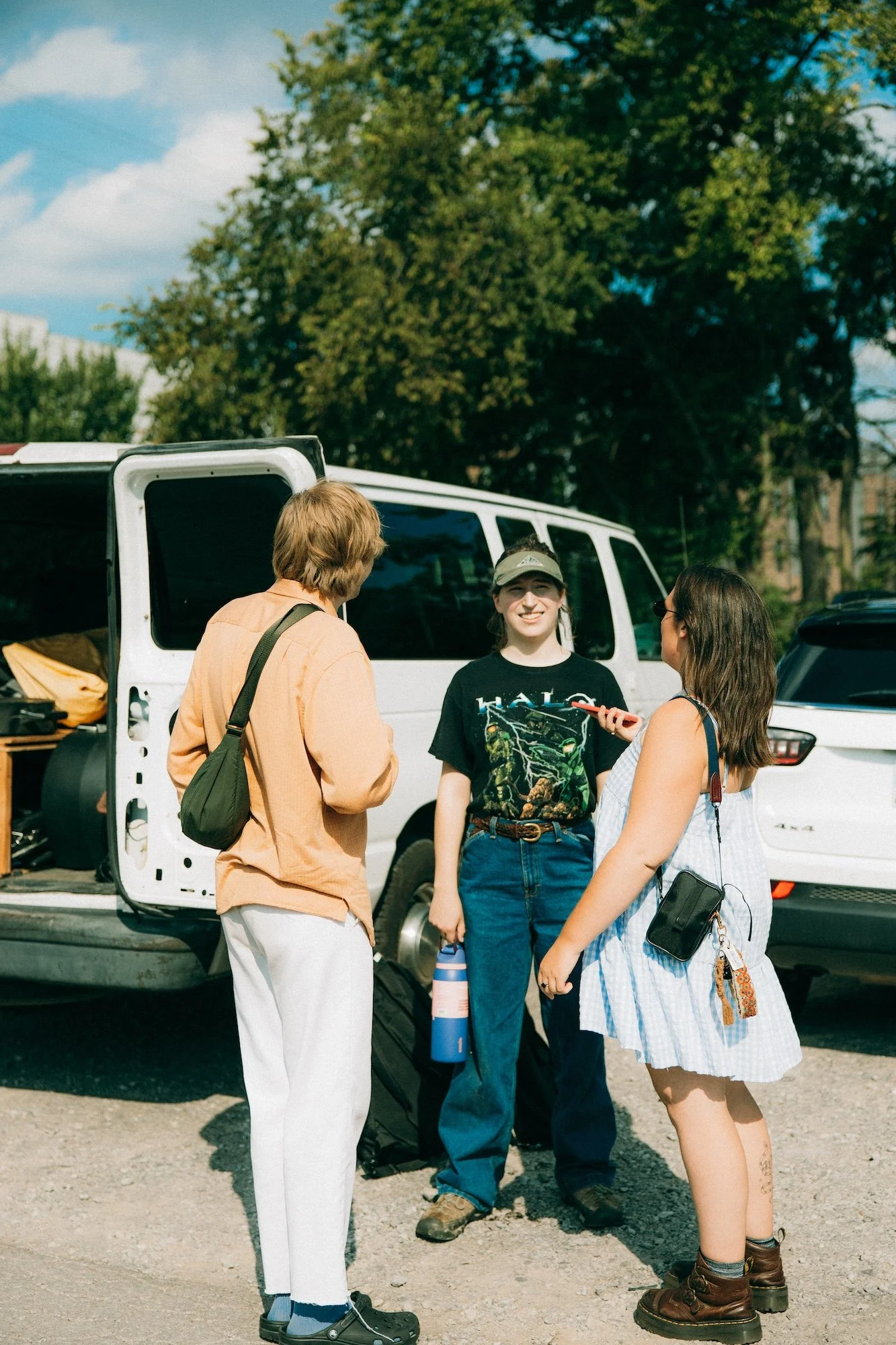
Before heading to their next set of the night, we stopped to chat with the band for just a moment outside of their van to talk about what they’re most excited about for Americana Fest.
“We’re excited to be playing with Fust four times,” said Joey Sullivan, drummer for Florry.
Francie Medosch, lead singer, chimed in to say jokingly, “We don’t particularly like their music… No, we love Fust, they’re one of my favorite bands.”
The band has a pretty laid back demeanor both in conversation and onstage. They’re loud and unapologetic, exuding authenticity that’s hard to dislike. Their second full-band record Sounds Like… is full of big guitar riffs and intentional lyricism. Before the end of our chat, the band left us with a silly yet tactical send off.
“Eat some food, watch TV, maybe have some kids,” Medosch said.
“Breathe well, go to the movie theatre, go alone, maybe meet your spouse,” Sullivan chimed in.
“Meet the love of your life at the movie theatre,” Medosch continued. “And listen to Florry.”
AmericanaFest Part 2: Breakfast Burritos with Boy Golden and Chats with Joelton Mayfield, Briscoe, Jack Van Cleaf and Presley Haile
Boy Golden
When we got an email telling us to show up to a random hotel room in the Gulch with the promise of breakfast burritos, mimosas and “magical” new music, we knew we couldn’t turn it down. Pleaser showed up at 9 a.m. to be pleasantly surprised by Boy Golden and his team hosting the most lovely breakfast, where we caught up with the Canadian alternative-country artist on his journey in Buddhism, recession indicators and the announcement that his album, Best of our Possible Lives, will be releasing in February 13, 2026.
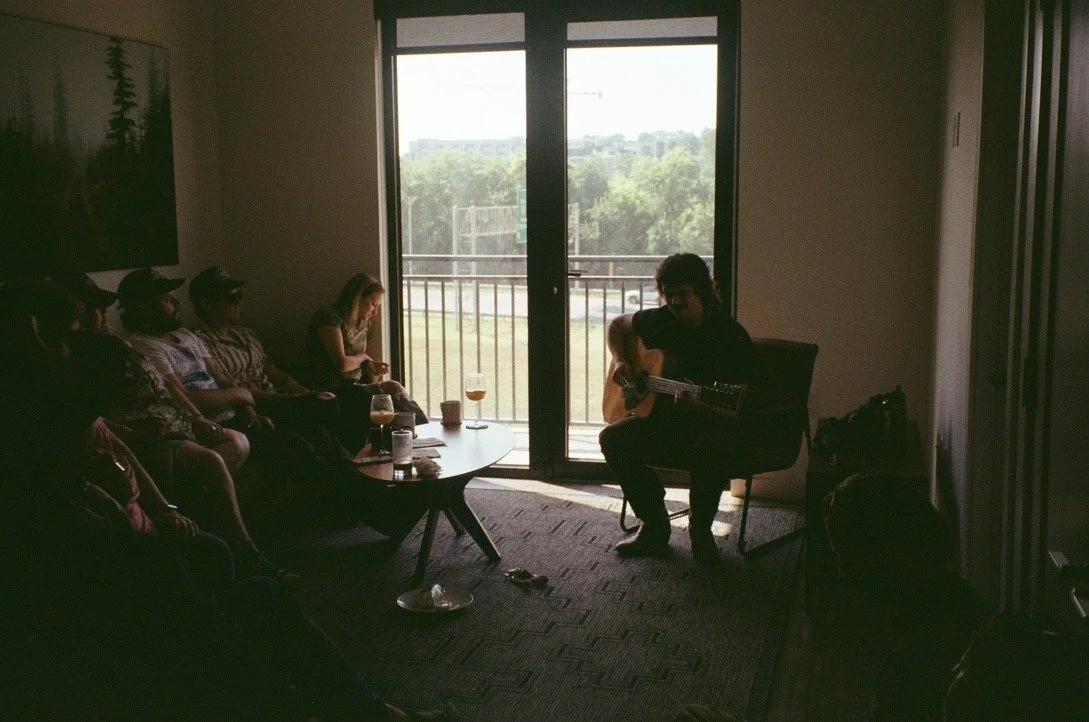
While I sat cross-legged on this random carpeted hotel floor munching down on a ginormous burrito and making small talk with Boy Golden’s band members, his team plugged in an iPhone to a speaker and played some of the unreleased tracks from the album. If that wasn’t magical enough, Boy Golden and a few members of his band performed for us in true Nashville fashion, with an acoustic guitar and texturized harmonies in a crowded living room– classic.
They weren’t lying when they told us this hotel excursion would be magical, though. It was easily one of my most memorable AmericanaFest experiences, filled with genuine hospitality, meaningful music and a shared pause in the midst of a wildly busy week.
One of the songs Boy Golden played for us on his acoustic was “Suffer,” a track from his forthcoming 2026 album. There are political undertones in a lot of the track, with lyrics outlining global issues, such as the rising cost of merely existing. In the song, he talks about how it costs 40 dollars to even hang out with your buddies, and how inflation has even affected the “cheap” groceries such as white bread and bologna.
“The cost of living and inflation have been two driving political factors, and it presses down on people,” he said, sitting on the edge of the hotel bed after he played. “It presses down on working people, and it presses down on us as artists and musicians on the road. I’ve been touring since I was 17, so I’ve seen the hotels go from like 80 bucks a night to 200, and it’s not getting any better.”
For Boy Golden, his main wish for this new album is that when people listen to it, they’ll feel some spark of inspiration. As an avid meditator in a long-term relationship with Buddhism, the Canadian songwriter’s favorite feelings are when he listens to an album, or reads a piece of literature, or sits in a particularly beautiful part of nature, and it inspires him to create something.
“If someone listened to this record and they were like ‘holy shit, I need to go write a song’ or ‘I need to go practice’ or ‘I want to go make a painting’ or ‘I want to write about that’ or whatever it may be, that to me is the highest compliment,” Boy Golden told Pleaser.
As AmericanaFest shows go, this one might not have been the most conventional, but it was certainly an unforgettable experience. We’re stoked for Best of our Possible Lives to release in 2026.
Briscoe
A brief moment after our breakfast with Boy Golden, I hopped on a call with Austin folk-rock band, Briscoe, as they made their trek from Athens, Georgia to Nashville for their second leg of AmericanaFest shows. The duo, consisting of Truett Heintzelman and Philip Lupton, started out their AmericanaFest journey performing at a rooftop shindig put on by BMI as a kickoff to the busy week of music ahead. (Which we attended. It was awesome.)
Although Briscoe had a packed week of travel and music, their conversation with us was high-spirited and lighthearted as they passed a phone back and forth in their van, telling us about their journey as a band, the joy tied to songwriting and their excitement for AmericanaFest.
“Truett and I met in summer camp when we were middle school age,” Lupton told Pleaser. “We were both there learning guitar at the time, and we became friends because we would see each other every few years until we were both looking to go to college. We ended up at the University of Texas. I had started Briscoe as an outlet to record original songs, and Truett and I made it a duo to record music.”
Briscoe is jubilant in sound and lyrically pictorial, and their latest album Heat of July is reminiscent of a fresh summer day, a field in the Texas Hill Country or a band full of best friends making music together that truly makes them happy. The album is a great option for those that lean into the “granola” aesthetic, taking after folk legends like Willie Nelson with the modernity of artists like Noah Kahan (which the duo has toured with in the past.) As the duo has grown both as people and as musicians, they’ve expressed that they’ve leaned more towards expressing vulnerability in songwriting.
“I think that the more we’ve gotten comfortable writing songs, the more comfortable we are expressing ourselves," Heintzelman said in our over-the-phone interview. “I think songwriting is a vulnerable activity, and I think that’s scary, for lack of a better word, to share your personal self with the greater public through recorded music. A lot of our favorite songwriters are personal like that, and we try to emulate that.”
Briscoe was stoked for their quick return to Nashville to play a few sets during the remainder of AmericanaFest. When we asked them what their favorite part of playing life was, they both agreed that one of the most connecting and gratifying parts of their set was unplugging their guitars, making their way into the crowd and performing a couple of songs with just themselves, their instruments and the audience singing along with them.
Joelton Mayfield
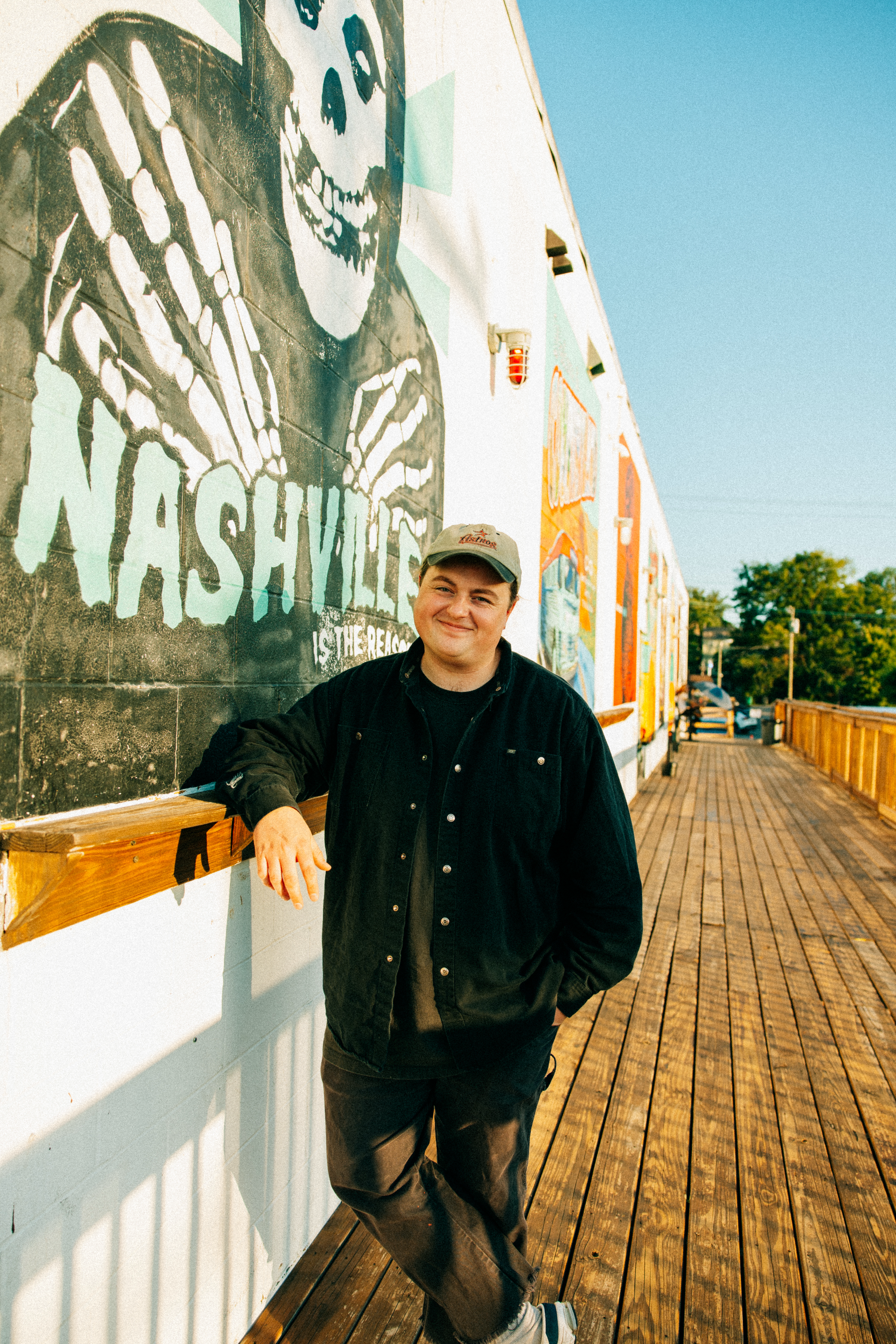
Joelton Mayfield has been working and reworking the tracks of his very first full-length album Crowd Pleaser, over the course of about fiveyears, and if you really sit with his lyricism, you’ll find his work to be soaked with heavy metaphors, witty wording and genius storytelling tactics. Every track on the album is masterfully crafted and lyrically powerful, circulating a wide range of topics that often come back to certain themes. Mayfield is a steady writer, always jotting down lyrics in his notes app whenever they pop into his brain.
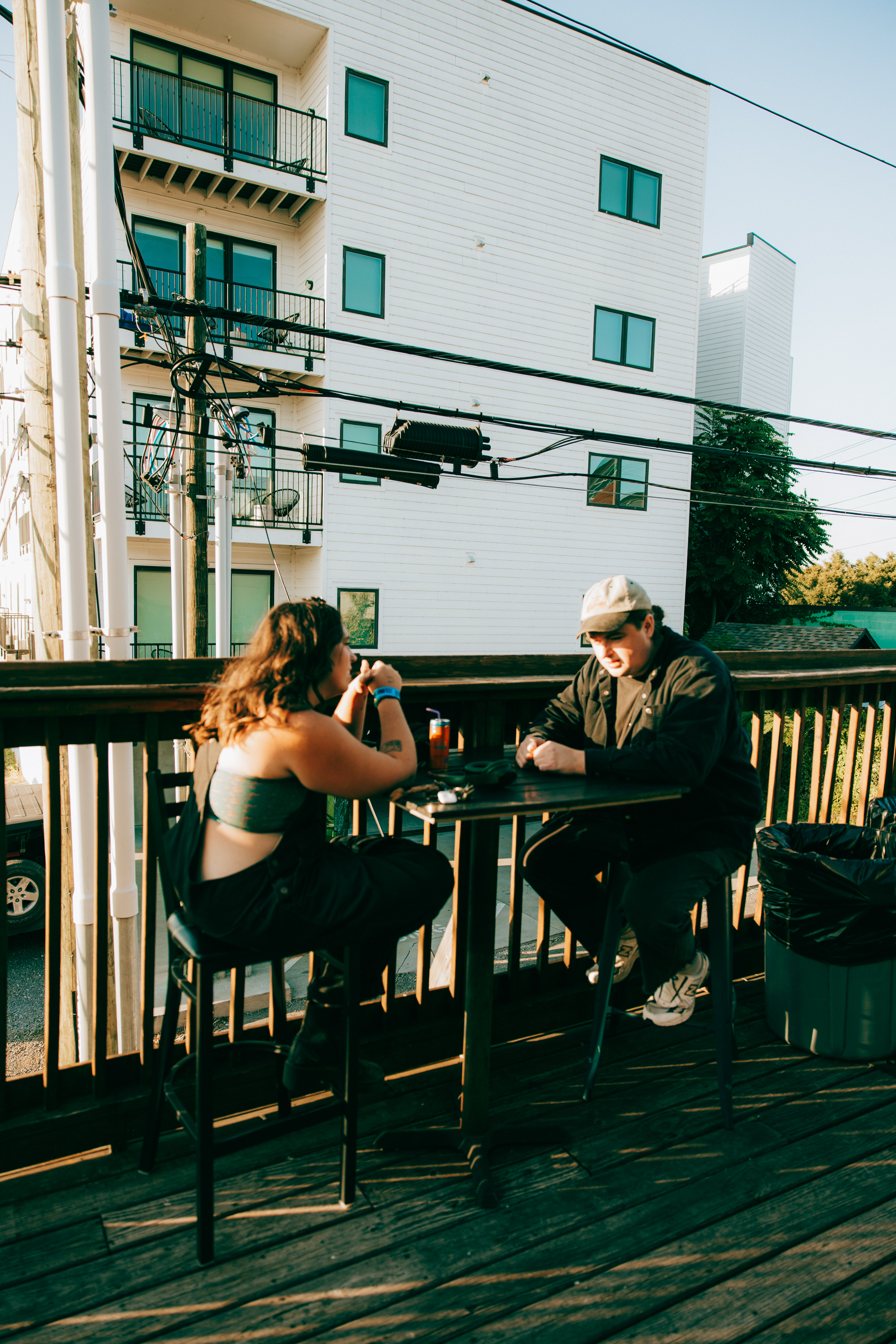
“I have trouble with motivation, but I’ve never had trouble with inspiration,” Mayfield told Pleaser while sitting on a metal chair set on the patio outside of Basement East, right before his AmericanaFest set. “When I’m on the road, and just in everyday life, I’m always in my notes app. It’s just a matter of finding the time to sit down and sift through it all and turn it into a song. You’re trying to tie it all together, and it can be maddening.”
The unequivocal bounce of “Speechwriter,” a single that narrates tales of never-ending fabrications in the government and a fathomless sense of alienation, is told through lines such as: “when you think nobody’s listening / remember the government / thought all I needed was to forgive him / didn’t know I had to keep doing it.”
“Speechwriter” is the type of song where you can be blasting it in your car at full volume, screaming along and having a great time without fully realizing the weight of the lyrics. But once they hit, all you can do is sit with them like they’re part of some grand mystery, trying to decipher what each one means on a larger scale. That’s what makes Mayfield’s lyrics so engaging– they truly make you think. His words are concepts we all know, in phrases we’ve never heard before. Each song feels like its own universe of metaphorical conceptualization seasoned with themes of hope.
“I would say a common thread on the album is like interrogating hope and trying to find it,” Mayfield said. “Or, you know, trying to find what will work as a stand-in for hope. Or brushing that off for a second and not being as serious, there are a few moments of that as well.”
When I asked what Mayfield wanted people to take away from the album, he paused for a moment, and answered in one word– “Understood.” After listening to the album, which came out about a month after our conversation, it’s safe to say he was successful in his mission.
Jack Van Cleaf
It’s been a hell of a year for Jack Van Cleaf, with the release of his highly-anticipated sophomore album, JVC, paired with a nation-wide tour and viral internet success, the Nashville songwriter has truly made a name for himself in 2025.
JVC was born from a place of dismal reality that comes right after graduating college. No one really knows what they’re doing with their life as soon as they graduate, and if someone tells you they do, it’s probably false confidence. Like most of us do in our early 20’s, Van Cleaf had a moment of post-college, but he found a way to work through that within his writing. He didn’t know it at the time, but that work would eventually come to life in the album he released earlier this year.
“I graduated from college and just felt like I knew what I wanted to do, I just didn’t know how to get there,” Van Cleaf told Pleaser. “I was waking up every day and having a hard time finding motivation to get out of bed in the morning. I was trying to discipline myself to write because I felt like I had to, and that whole existential struggle was like, all I have to do is write now, and it’s all up to me to make sure it happens. I wasn’t prepared to create my own schedule at all because I’ve just been marching to someone else’s beat my whole life, you know, in school. Yeah, that was a dance for sure. Still figuring that out.”
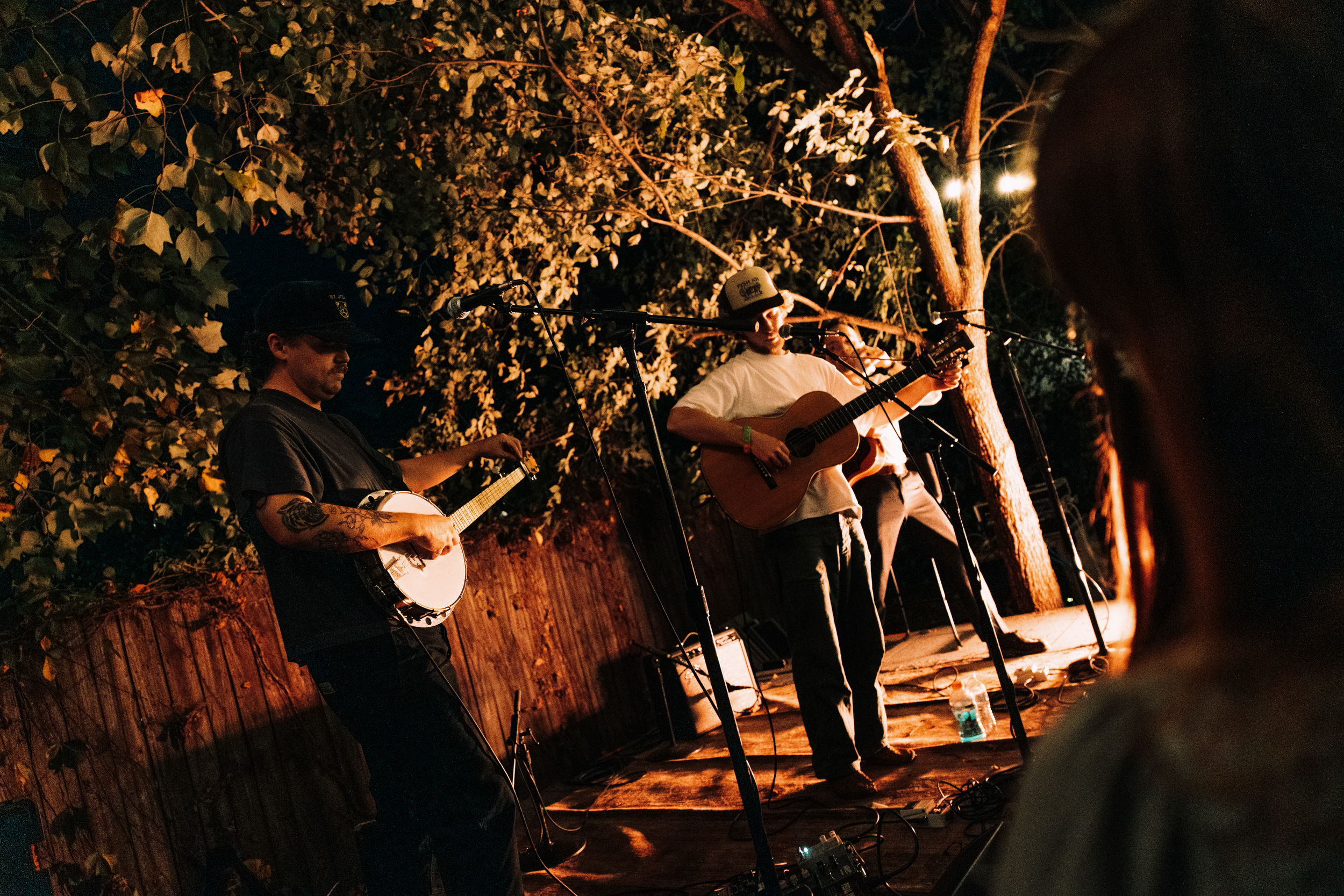
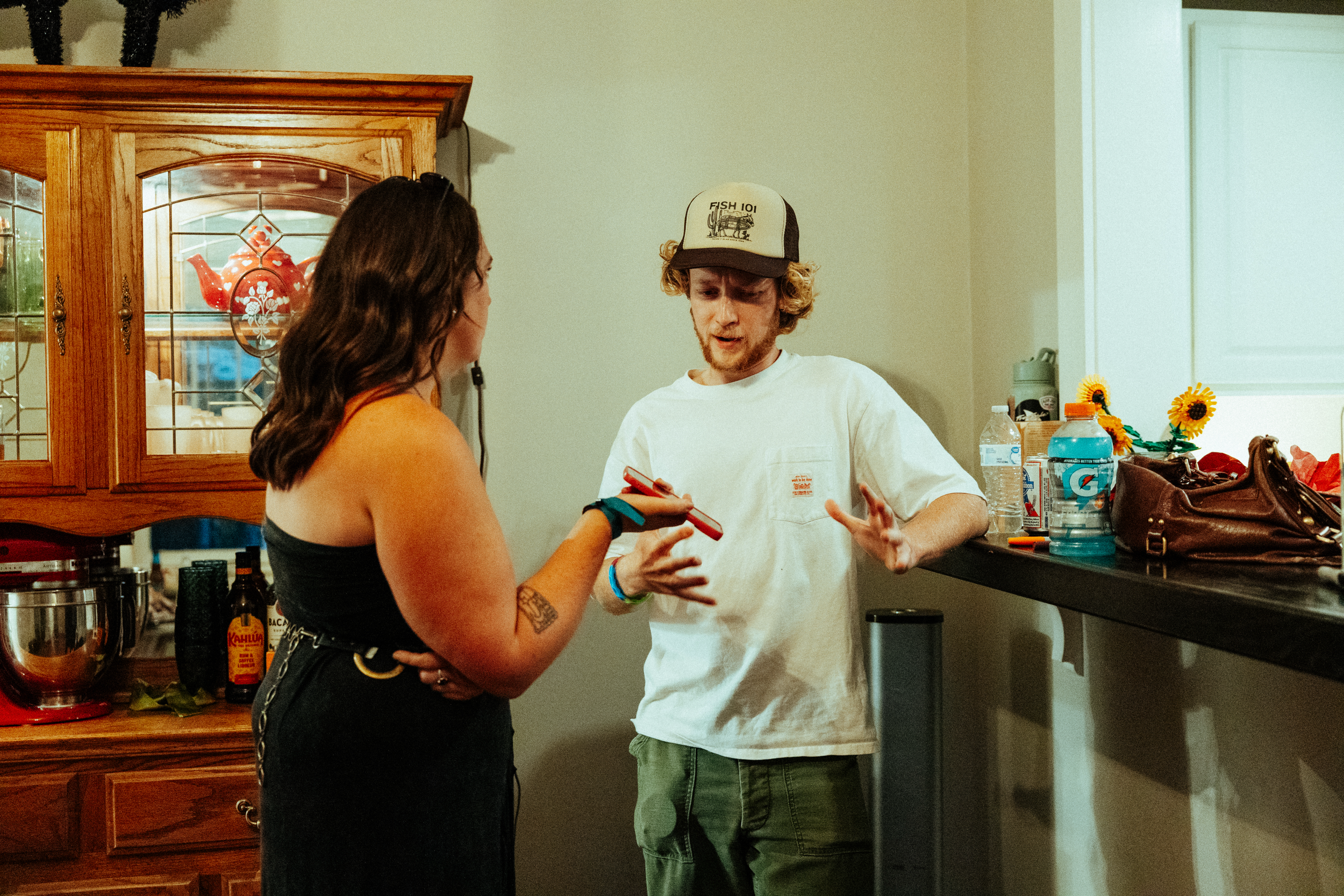
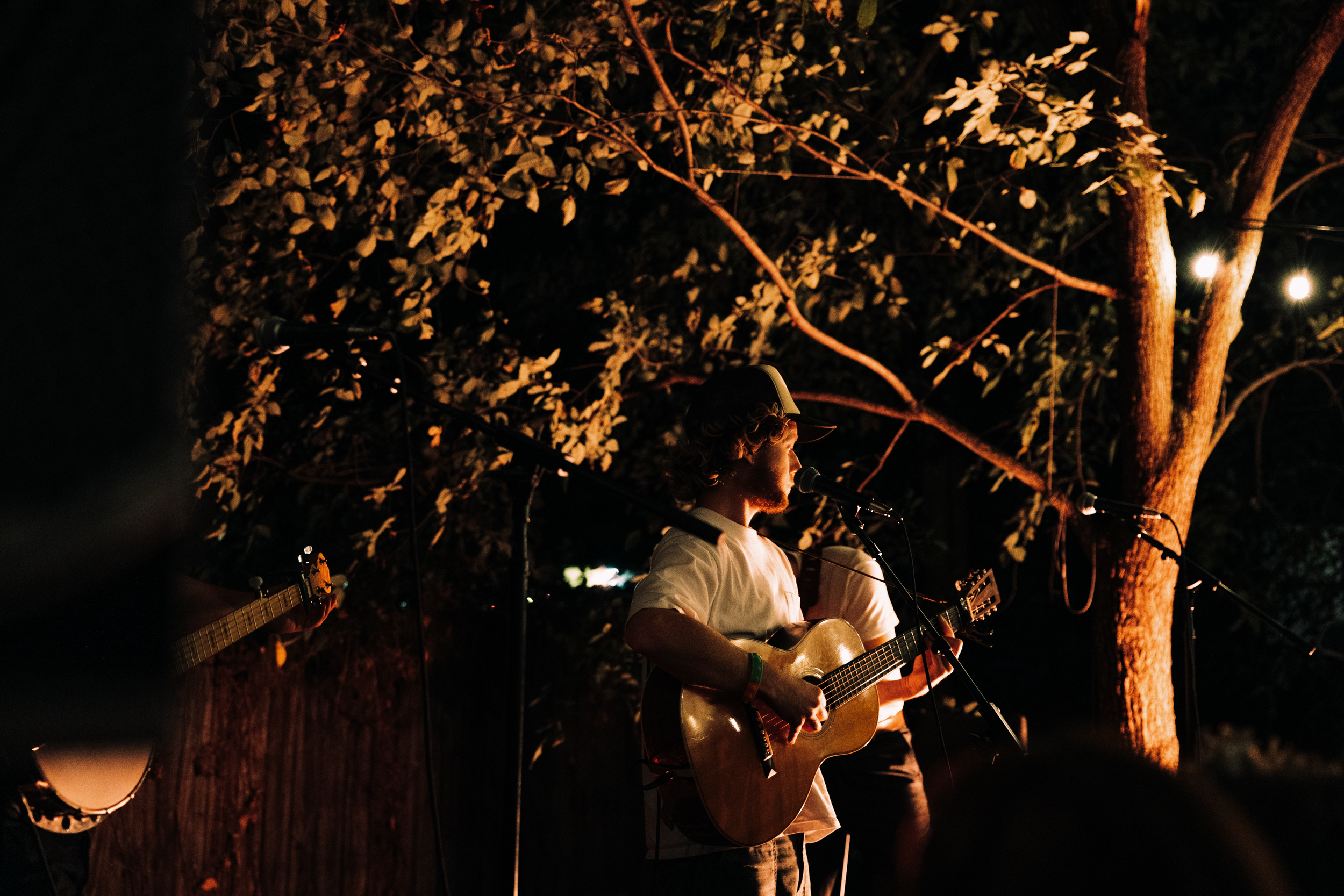
At AmericanaFest, Van Cleaf was one of an eclectic lineup of artists playing at AmeriKinda Fest, held at a friend’s house in East Nashville. The whole backyard was packed with music-enthusiasts, and it kind of looked like my entire playlist was just hanging out in the space (lots of familiar faces, in true Nashville fashion.) We stepped away from the crowd for a moment and hung out in the kitchen with a few friends to talk with Van Cleaf about the album, AmericanaFest and existential woes that resulted in one of my favorite albums of the year.
“Every time I would sit to write, it didn’t feel like I was getting anywhere. I was just really down on myself, and then months down the road, I would look back at some of the stuff I wrote and be like, ‘ya know, I’m really glad I did that,’” Van Cleaf said. “There’s actually something there. There’s something to work with. Quite a few of the songs on the record, “Hikomori” and “Using You,” were voice memos that were just buried, and I didn’t think I would ever use them. But I just sort of brought them out. So yeah, these songs were born from a place of self-discovery.”
While a lot of the album came to life in a place of discomfort, songs like “Green” came to existence in a lighter way. After coming off of a shift at a boutique in San Diego, where Van Cleaf resided after college, he came up with the idea to write something that circled around the word “Green.” Turns out, there’s a lot to be said about that one little word.
The song, to me, feels like one of those serial killer boards that have the pictures pinned together by different colored strings. The song dances around the word green, and it’s quite clever, with lyrics like: “Green is for the bugs in the bayou / Green is like a cannibal / Green has got a tongue and wants to try you / Green was in your ears as a small child / When you walked a green mile / Green is in a big smile / Sticking in between your teeth.”
“I got off from work, and it was in my head. I came up with the first few lines, and then I was like ‘Damn, this is really fun. I could keep it up with this kind of fast-paced thing,” Van Cleaf said. “It kind of poured out. It’s hard to sing, too.”
From songs like Pinata, which was inspired by the relapse of a disposable vape addiction, to the reimagined “Rattlesnake” that was on Van Cleaf’s first album, Fruit from the Trees, to bops like “Teenage Vampire” featuring Gatlin, JVC is an album that holds a lot of power in the sense that it is so wildly relatable to a wide variety of people. Graduating college is one of the stickiest parts of life, but Van Cleaf managed to capture the feeling in a way that feels all too familiar.
Playing his AmeriKinda set right before the ethereal Sydney Rose and sincere honesty of Medium Build, Van Cleaf gave a performance that felt special, genuine and real, spilling his guts (emotionally) over the backyard on McKinnie Ave.
Presley Haile
Presley Haile’s soul is plastered all throughout her songwriting, her down-to-earth lyricism being a focal point of her alt-country sound. The small-town Texas songsmith is extremely inspired by fellow Lone Star writers such as Townes Van Zandt and Nanci Grifith, which makes sense when you listen to her poetic stories soaked in heartfelt emotion.
Haile began writing songs when she was about 16 after her stepdad encouraged her to pick up the guitar and start getting into music. The first song she’d ever written, a breakup song titled “Distressed,” felt a bit dramatic, but the song opened a door to write about the things she was truly interested in. She wrote her second song, “New Mexico,” about the mountains and being out in nature, and that shortly became her theme. The natural world is something that Haile feels calls to her in her writing. “Mountain Daughter,” a single that navigates similar themes to “New Mexico,” felt like a breakthrough for Haile. She wrote the song with her boyfriend during a trip to Colorado.
“I love the mountains so much, and “Mountain Daughter” felt like kind of a breakthrough song for me lyrically,” Haile told Pleaser. “I started writing that song after a trip to Uncompahgre National Forest out in Western Colorado with my boyfriend [Nick] and our mutual friend. During the day, he would be out elk hunting, so Nick and I would just be left to our own devices. We’d go fishing and hiking and stuff, but one day, we found this lone aspen tree in the middle of this wooded area. I didn’t realize it until later, but someone at a show had told me that it’s pretty rare to find a lone aspen tree, because they share a root system. That made it extra special, and we carved our initials into a little heart into that tree. That meant a lot to me, I’d never done that with anybody.”
There’s a distinct melancholic sound to Haile’s music that leaves listeners pondering their own lives, her words leaning into that lust for self-discovery we all fall into at one point or another. “Dog in the Cold,” one of Haile’s most lyrically impressive tracks, was written alongside cowriters Race Ricketts and Erica Hamilton.
“We were in the process of moving back to Hamilton, and it shouldn’t have been a difficult move, but it was. I was going through a really weird space in my life, and there’s just a lot of growing happening, a lot of shifting,” Haile said. “When I started writing that song, we were leaving a show in Fort Worth and headed back to Hamilton. We had a camper down there to stay in, but we were just in this open area. I saw a falling star, and I was like, ‘Oh gosh, I wish I was on that star. I wonder where it’s going. I wonder where it’s going to land.’ And I just started writing.”
The lyrics beautifully frame the feeling of being stuck, along with the death of your old self as you grow and transform into something that’s bigger than the version of yourself that you are now. The last line of the song, “I laid some white roses on my grave today / said goodbye to the girl with the smiling face / Hello hardened heart of mine / I hope you can keep me safe this time,” reflects on a feeling of loneliness that comes from the freedom of individualism. Haile writes words that are powerful sentiments to not only herself, but to her audiences, and it was a joy to hear her play these songs at AmericanaFest.
AmericanaFest Part 3: Cabin Sessions and Conversations with Ramsey Thornton, Melanie MacLaren and DUG
Ramsey Thornton
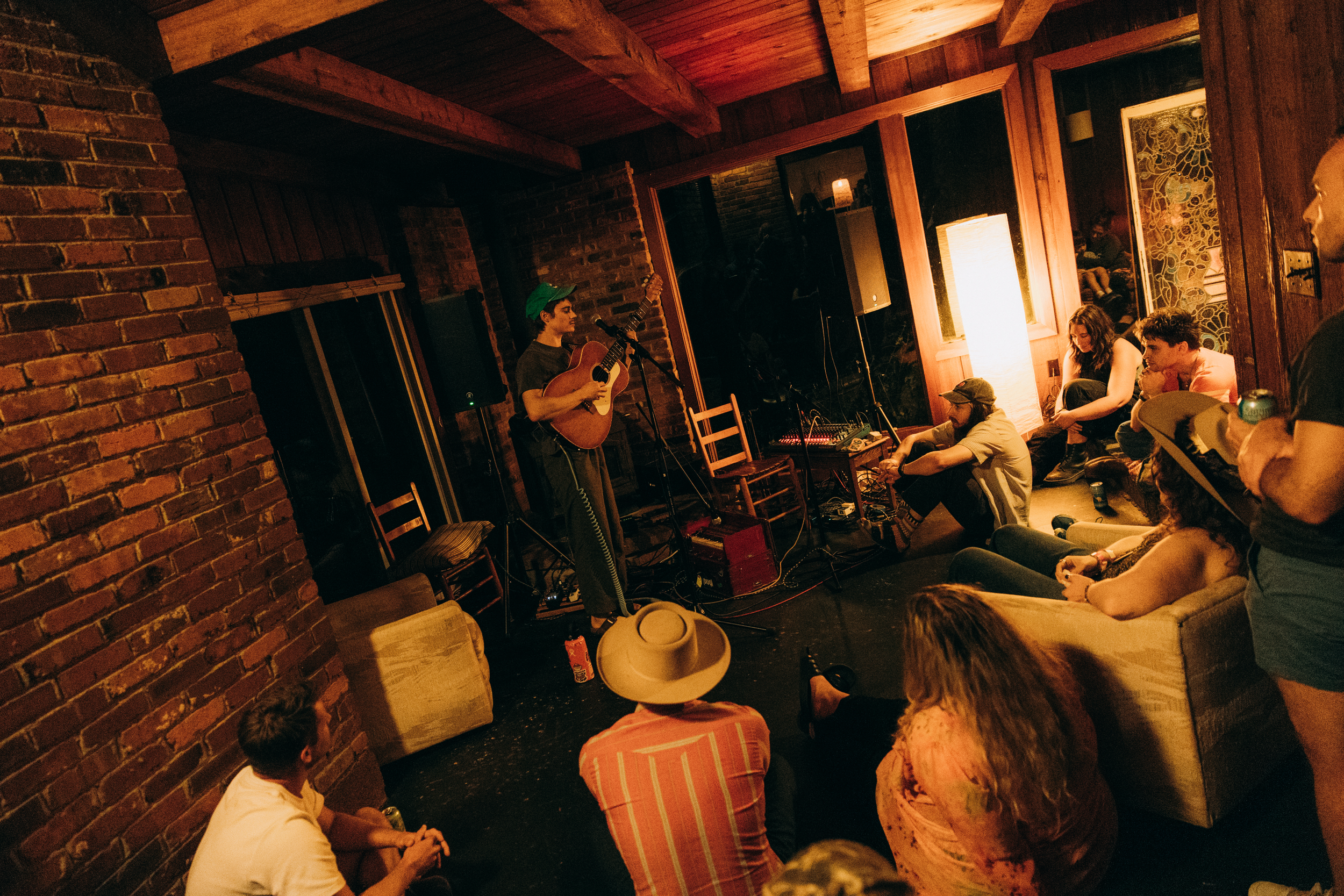
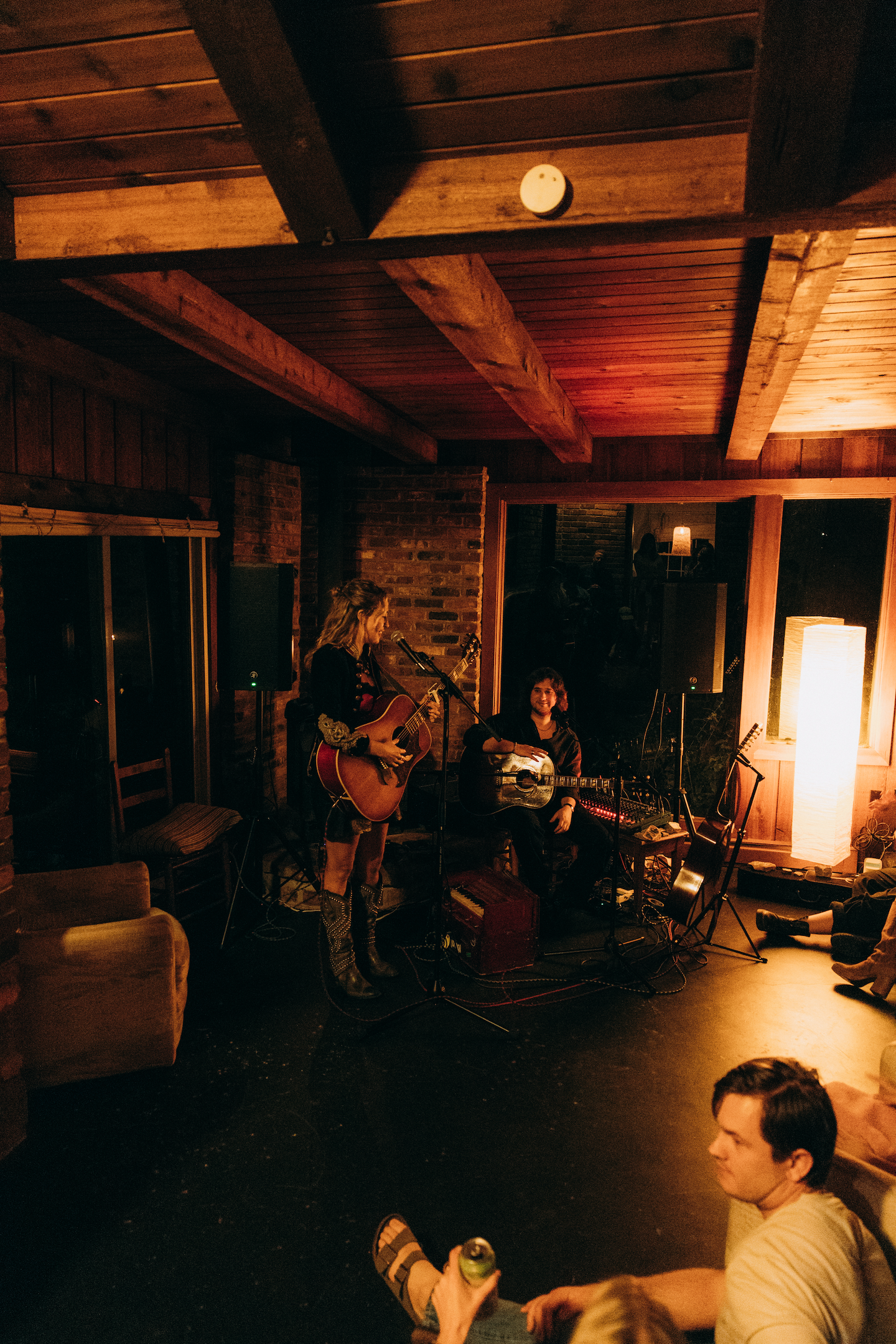
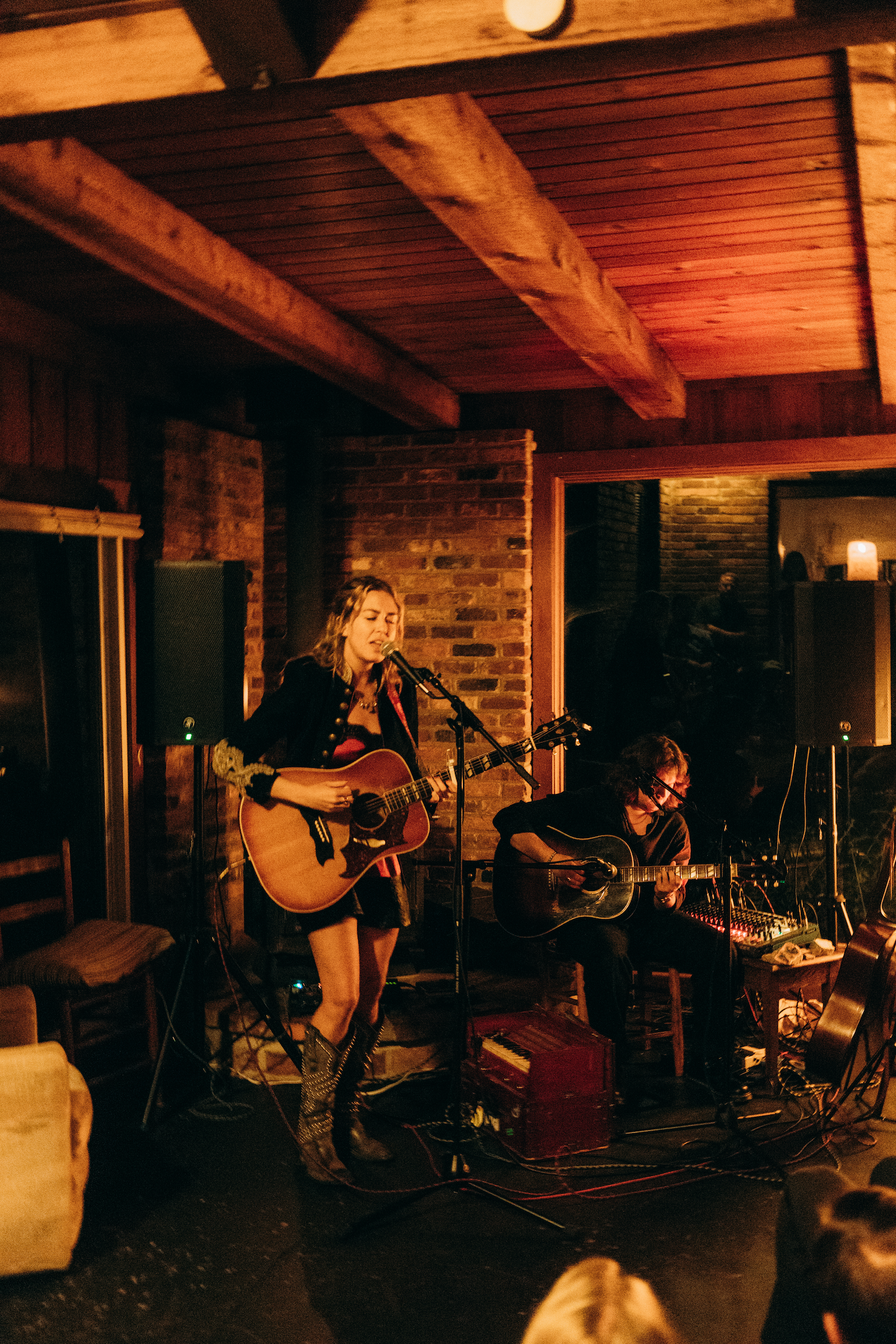
One of AmericanaFest’s best kept secrets took place in a house that was once a spot for meditation retreats, but is now occupied by guitarist and songwriter Jack Schnieder, who graciously opened his home for a couple of hours of pure magic. “Cabin Sessions,” an off-AmericanaFest house show in East, was the softest place to land after a week of intensity. After running around all week to catch all the sets, do all the interviews and attend all the panels, Pleaser ended up in a place of warmth and tranquillity, surrounded by a patronage of mostly musicians huddled in an intimate brick-walled parlor that felt like the epitome of home. We wouldn’t have wanted it any other way.
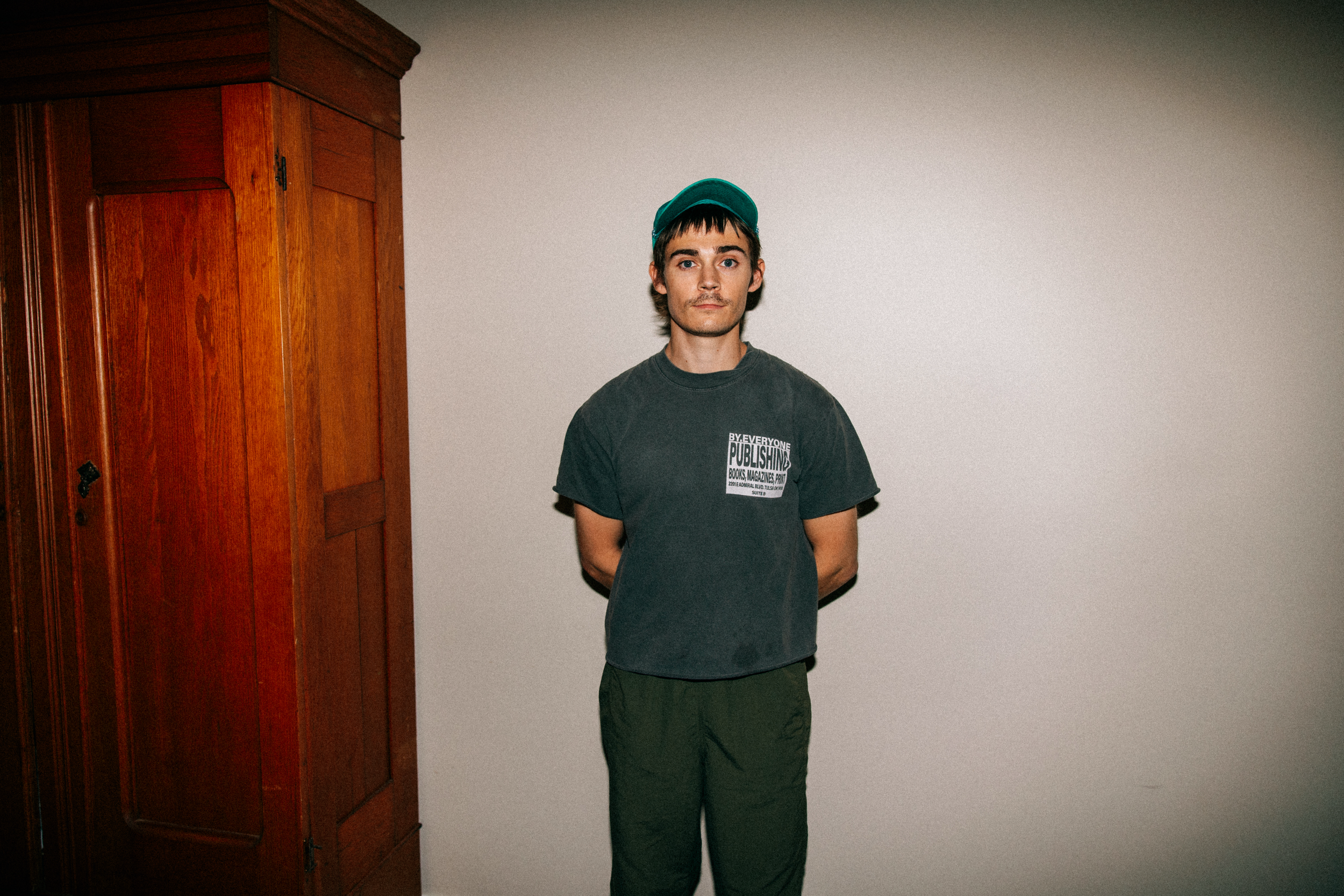
The first to play at Cabin Sessions was Oklahoman banjoist and guitar player Ramsey Thornton, whose bustling AmericanaFest week consisted of dueling as both rising songsmith Ken Pomeroy’s banjoist and as a solo artist performing songs from his own project. Thornton’s music is so rich in imagery, it feels like all five senses are activated when he plays the songs he writes. Intertwined with delicate guitar picking and storylines that use little flecks of ordinary significance to create an overarching narrative.
“Little lines of something that I see will poke out, and I will try to write into something that fits into that one mood. I would definitely say everything is connected. I think I just cringe really easily at things, and so I have to pass my own meter of, like, don't want to make me or someone cringe in a weird way, but I also want it to be worth writing down. I’m not trying to just write something a thousand other people have written.”
At the show, Thornton played songs like “Riverside,” the first single off of an album he’s working on that will be out sometime around next April. The song feels like a pause for breath, and there’s a sense of stillness in the way that he moves through the guitar. The opening lines, “I had no choice in riverside / Saw it in the last few moments of life / There's no way I could have stopped / But now I am frozen” are poetic on their own, but paired with the way the guitar moves like flowing water, turning the song into an earnest piece of art.
During his set, the Tulsa-reared writer sang one of his untitled tracks that will appear on that Spring album, which details a man who runs a recording studio about 40 minutes outside of El Paso, Texas.
“He is truly like, the most interesting human being,” Thornton said. “The whole song is just about having conversations with that guy, but in the best way. I’m not trying to make him a spectacle, but he is like the most interesting dude. That song is a special one to me.”
Thornton’s debut album is set to release in April with Garo records. Following “Riverside” that was released last month, he plans to take a brief pause and then continue to start releasing singles again in January.
Melanie MacLaren
Melanie MacLaren is a lyrical sorceress, enchanting audiences with tales of her time spent in New York, broken-hearted anecdotes and the pure joy of a 2 a.m. drunk hot dog. Her gift for the English language alongside a classically trained ear for music makes for songs that are full of lyrical depth and an honest sound that’s a true rarity in today’s world. After Thornton’s set at the Cabin Sessions, MacLaren took to the stage with the ever-so articulate guitarist Schnieder to play what was one of the most magnetic sets we watched throughout the duration of AmericanaFest.
Starting out the set with her haunting yet witty-worded track “Bloodlust,” the songsmith reminds us that everything in life comes to an end. The opening line, “Bloodlust is a river / All things must wither / You can’t stop a killer / Everybody knows” alludes to the notion that death is inevitable– a factor of life that no one has any control over.
MacLaren wrote her first song after she graduated college, a western murder ballad that changed her perception of songwriting completely. Her love of the past twisted with a fascination of the concept of death drew her to the prompt, and once she finished the song, she realized that for the first time, she’d written something musical that was good.
“It wasn’t just me saying my feelings. I was writing good lines, and that matters to me,” MacLaren told us after her set at Schnieder’s house. “It changed everything because I realized I could approach songwriting like you would approach any other kind of writing. I’ll think of a line, or I’ll think of words I like together and then I’ll just build a song around the words. It’ll be a really zoomed in picture, and then I’ll just zoom out from there. I think the strongest example is my song ‘Summer in Sweden.’ I started with the line ‘feels like Summer in Sweden / Feels like an endless feeling’ and then built around that.”
“Summer in Sweden,” a true example of summer existentialism, is full of vivid depictions of life in motion. The line, “Do you remember what you said to me / In that bus seat next to that girl asleep / With her hand in a bucket of KFC / Because I don’t remember a thing / Unless that thing is funny to me / But you weren’t being funny / I thought maybe you could love me if we tried” is a perfect example of MacLaren’s magic, leaning into wit while also saying something that’s truly devastating. She’s a master of verisimilitude, capturing all aspects of humanity through her writing.
Songs like “Thing of the Past,” an unreleased love letter to the passage of time, acknowledges nostalgia in a way that feels about as vast as time itself. Get it Back, a grief-stricken narrative of loss, alludes to a lot of MacLaren’s childhood growing up in New York, talking about losing sparks on the FDR and wuffle bats in Central Park. For MacLaren, writing isn’t just about putting words on a page. Writing is worth lifetimes. It’s just as much a childhood memory as it is cavalry in battle. It’s the weight of losing a family member, but it’s also the rereading of the words of your favorite author, or a woman falling asleep while eating fried chicken in London. MacLaren lives a life worth writing about, and she puts it down on paper once the dust settles.
“If I’m not writing, then I don’t know how to show up in the world. I don’t really know how to be in conversation with people. I don’t really know what my interests are. I don’t know what’s moving me,” MacLaren said. “I need to write to be an active participant in the world. I think you can write a song about anything. Anything can be noteworthy. Just observing the world is significant, and there’s just so much meaning in everyday things.”
DUG
In between MacLaren’s set and DUG, there was a spontaneous outburst of song in the living room. I didn’t even realize how many patrons of the house show were musicians until we were all gathered around a piano, several guitars in tow and 3-part-harmonies of “Hey, Good Lookin’” by Hank Williams bellowing through the once-been meditation sanctuary. The moment made me proud to be human, and I couldn't contain my excitement for the next act to grace Schnieder’s makeshift living room stage– Dublin-based Americana-folk duo Lorkin O’Reilly and Jonny Pickett of DUG.
I first discovered DUG from Gems on VHS when they first became a band about a year ago, where they performed their first ever single “Jubilee” in an abandoned warehouse overrun by squatters on the northside of Dublin.
“The warehouse was at one time a movie theatre, and then a skating rink,and then it was a mattress warehouse. There was a big fire there during COVID, and it was abandoned,” Pickett told Pleaser after their set, our last one of AmericanaFest. “There were a bunch of squatters in it, but it disappeared like two weeks after we filmed there. It’s all torn down and gone now. It’ll probably be some big hotel.”
“We were with a friend and he’s a squatter, and he was showing us like, every squat in Dublin,” O’Reilly chimed in. “It’s a whole community, like a whole network of squats. There’re so many people living in these amazing Georgian houses that no one’s claimed. They’ve gerry rigged electricity from the main rigs, and they just live there. Rent free. Communities of squatters, and they have like an arts center and shop fronts where they do gigs, and there’s like art installations everywhere.”
O’Reilly and Pickett, although not fully squatters, started DUG outside of a Burger King on Grafen Street in Dublin, where they spent hours on end busking (playing out on the street). That was the beginning of their friendship, meeting through mutual friends while Pickett was in Ireland studying for a PhD.
“They told me I could teach a whole load of classes to pay for my PhD, but when I got there, they were like, actually no,” Pickett said. “They were like, figure it out man. So we started busking instead. And I was unemployed regarding a PhD.”
Maybe it’s a good thing that PhD didn’t work out, because DUG was born out of that situational misfortune (thank God). The Americana-folk duo’s intricate picking patterns and magnetic sound intertwines the rust of old American roots with the chilling mystery that lies beneath old Irish folk. Their music is inviting and warm, wrapping listeners up in stories told both by mouth and through instrumentation. It was almost as if they were talking to each other in that living room using only their banjo and guitar, the music conversational. We were all pulled in, like moths to a flame.
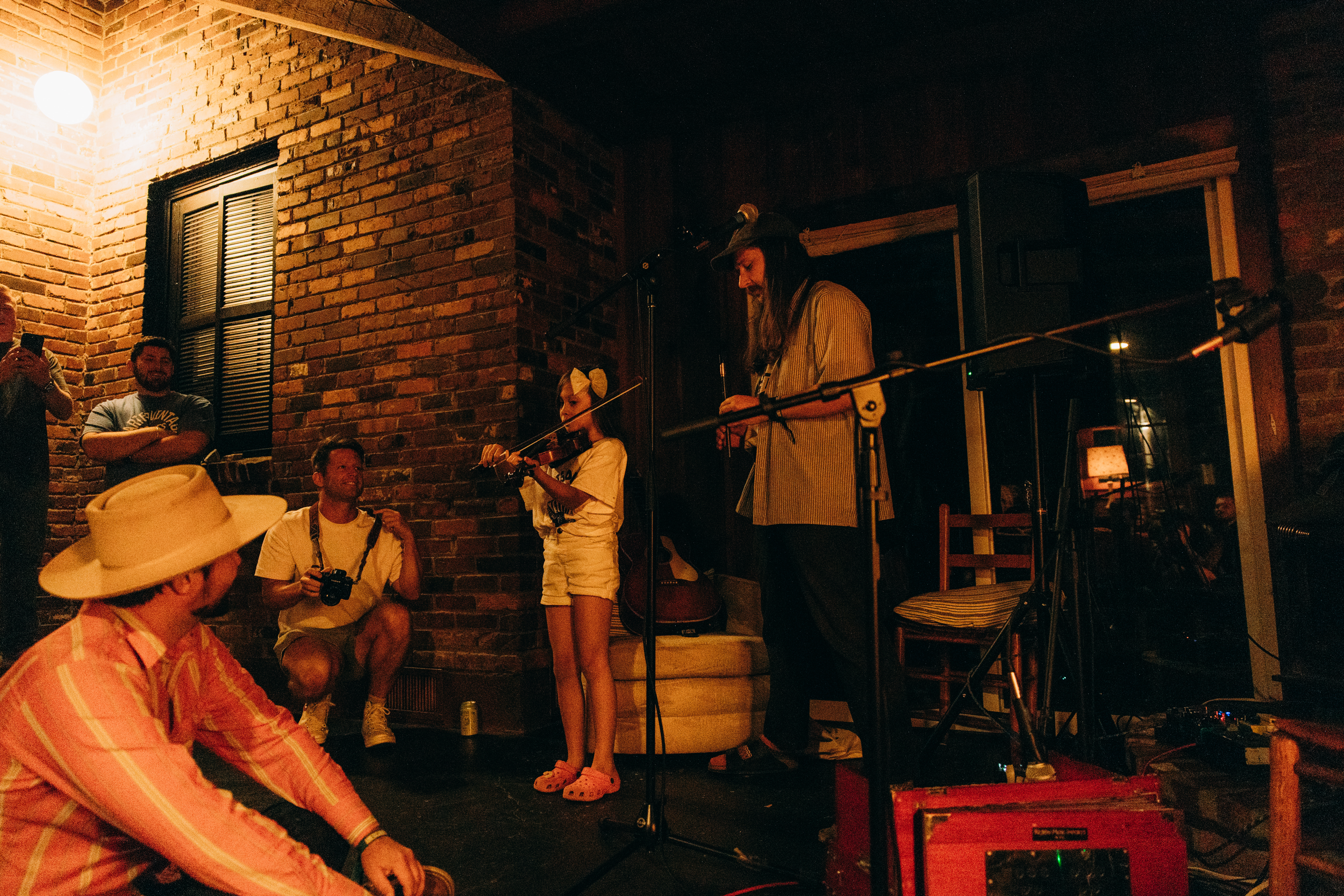
To start off their set in Schnieder’s parlor, Pickett’s 7-year-old niece Joy, from Columbus, Georgia rang in the night with a fiddle tune she’d been working on learning, accompanied by her uncle on the pan flute. Earlier that day, Pickett and O’Reilly ended up in Shelby Park to pick out an array of rocks that they proceeded to decorate with paint pens to sell as merch at the house show. I bought a rock about the size of my palm for 10 dollars, and it’s probably my most prized possession. I still have it sitting on the windowsill of my living room next to an aloe plant.
DUG’s set was a perfect conclusion to AmericanaFest, and it was beautiful to be a part of such a special house show. When we looked around the room at all the attendees at the show, there was an overwhelming sense of connection, smiles plastered on every face in the room. Americana music holds decades of stories from people of all walks of life in every song written, and that’s what makes the music so incredibly important. So much history weaved through the narrative songs performed at AmericanaFest, rooted in honesty, emotion and the beauty of human connection.