Saburnia on Their Album, Coachella and New Americana
The genre-bending brother duo has channeled their broad taste and talents into an assortment of singles
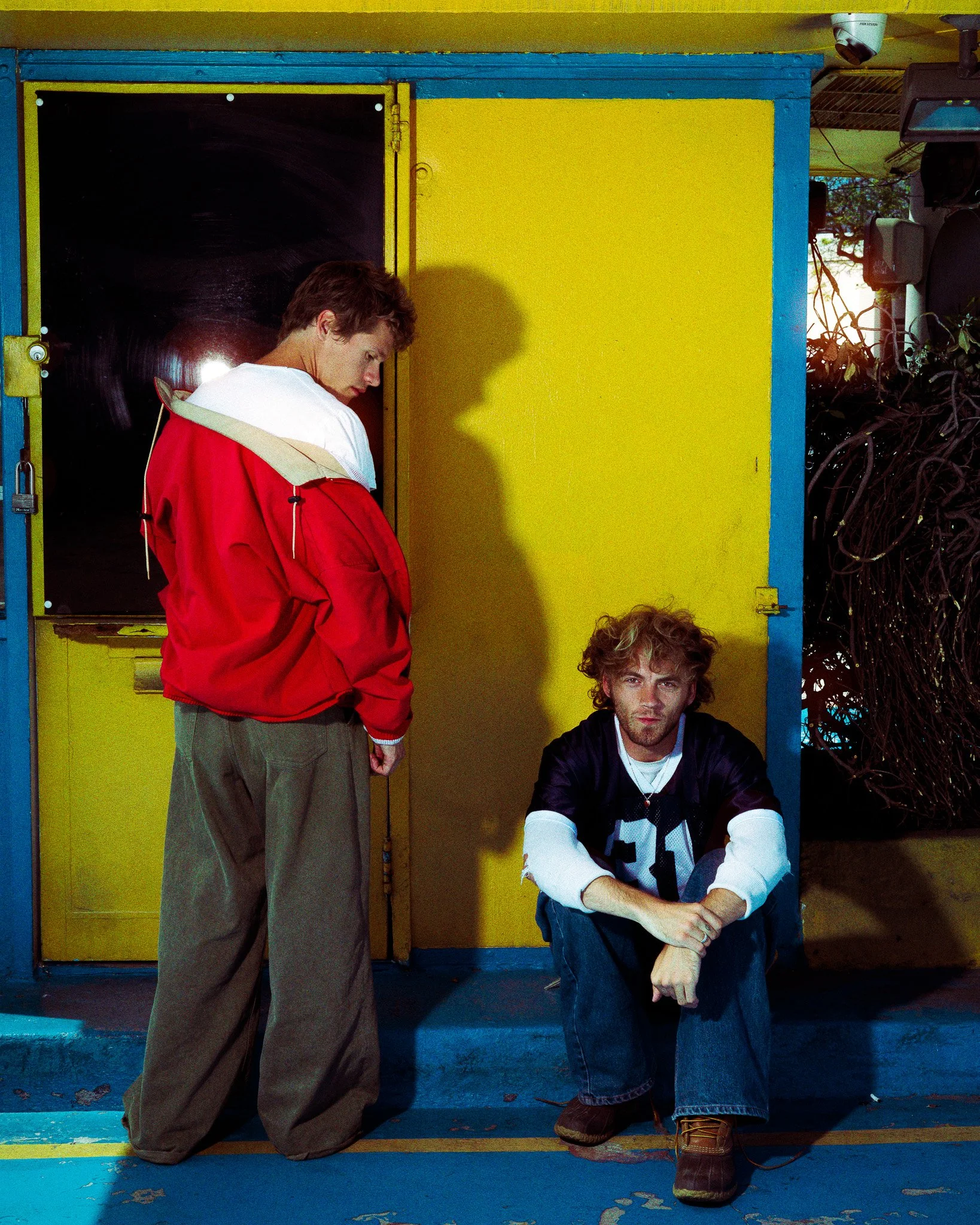
PHOTOS BY EMILY ENTZ
Artistry, for Saburnia, is not a botanical science. It is not a matter of cultivation — the pruning and manicuring of music into genre — but of stewardship. Saburnia nurtures an ecosystem of song, sound and style. On the strength of four singles alone, the Los Angeles band has already accumulated a sizable following and played a set at Coachella. Comprising brothers Devin and Cameron Thistle, Saburnia has managed to avoid anchoring themselves to a singular sound for their debut album by refusing the premise of genre altogether.
“What I've learned is music can be a performance, but music, to me, is not as much a performance,” Cameron mused, gesticulating over the steel grey table of a Glendale coffeehouse. “It's more of a conversation.”
On the face of it, there is not much connective tissue between Saburnia’s discography. Formally, they accept the stylistic prescription of “New Americana,” — having borrowed from each corner of American music, they find the label acceptable. Yet sonically, each of the band’s five songs exist in its own little world, and very intentionally so. “Run It Back” is a stripped-down reverie, with warm guitar arpeggios braided into vocal runs that flutter and soar like butterflies. “Even” is an achy slow jam buoyed by a thumping tempo and swoony lyricism. “Justice” is twang-infused devotionalia at the fulcrum of folk and country. “April Shower” is a soulful abstraction that spirals off into variegated vocalization and harmonies, with a dreamy chorus that tenderly descends upon the lucky listener like raindrops.
The self-titled “Saburnia” is a finger-plucked, 39-second melody that can best be described as a jingle, a theme song, or, better yet, an invocation. Despite the diversity, there is a common nerve in a Saburnia song. Percussion that swells and recedes, timbres that somersault into piercing peaks and tumble down vertiginous corridors, and genre traits that dissolve into spontaneous, compulsive synchronicity. The variety is vital, and vitality is the point.
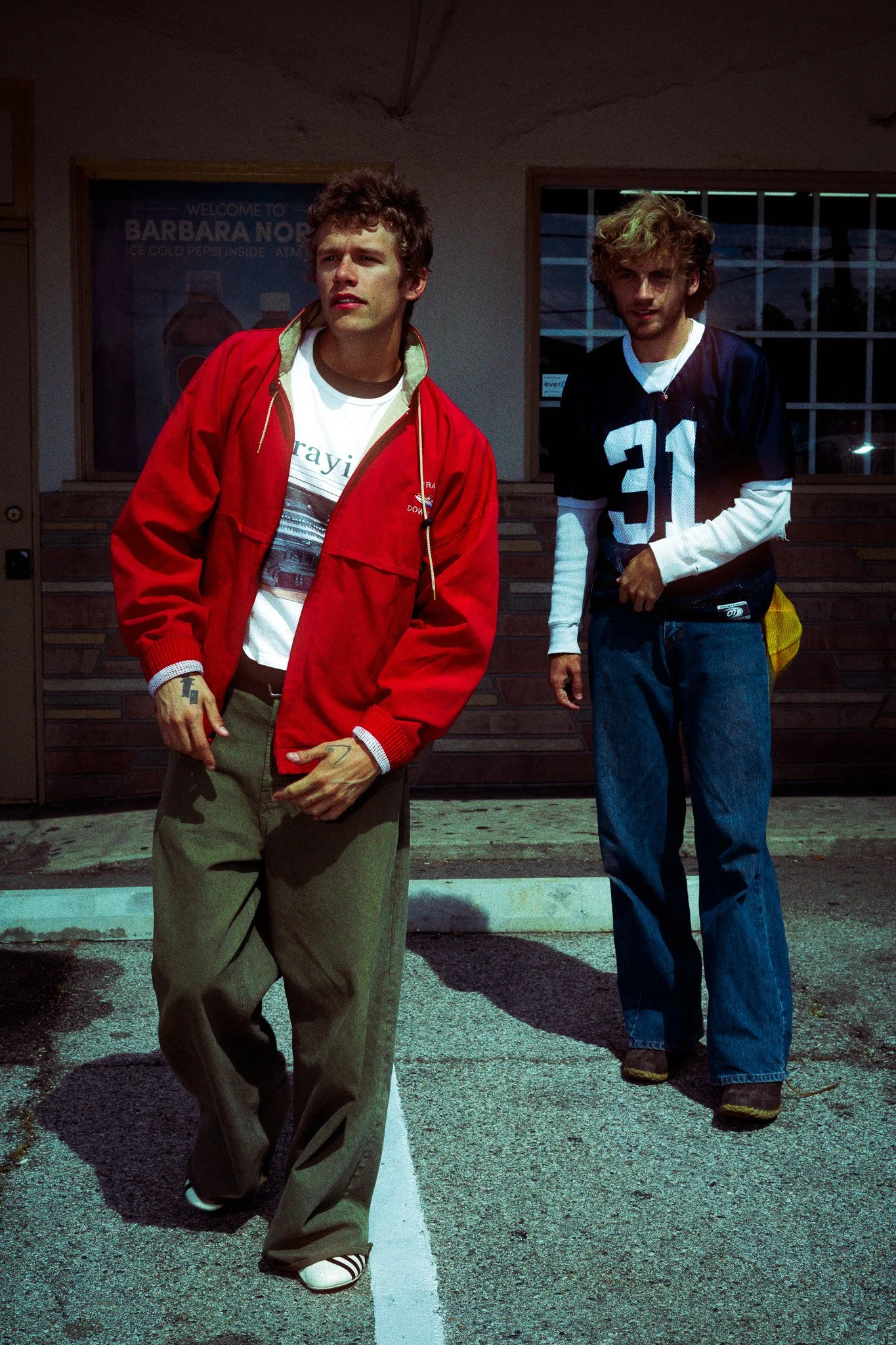
PHOTOS BY EMILY ENTZ
“I mean, we're inspired by a lot of music,” Cameron said. They named a smorgasbord of inspiration from 1970s funk to classic rock to R&B, finding threads of compatibility in each musical styling. He continued, “We’re trying to… build worlds around these singles and these songs that all sound very starkly different, which I think is the vision for the project. We share bonds with each other through so many different genres.”
The Thistles described a household and a lineage where music was an atmospheric presence — grandparents who played trombone and sang in the church choir, a home with instruments all about. Though the brothers have talents in a range of instruments, generally for Saburnia, Cameron sings and plays drums and Devin sings and plays acoustic guitar.
Their bond is brotherly, but it’s also a work of accretion achieved by the circumstance of two lives spent making music together as one. They’ve been the Thistle brothers in Kindergarten and first grade, with a precocious musicality and their parents’ blessing to inflict it upon drum kits. They’ve been the teen-aged Thistle Brothers (who had, by then, advanced to guitars and matching outfits) playing Stevie Wonder and Chris Stapleton covers on restaurant and bar stages in their hometown, Haymarket, Virginia. For a time, they were students at Berklee College of Music, where they produced and featured on their colleagues’ tracks, recording in improvised studios arranged on dorm room floors. Devin graduated and Cameron dropped out, and somewhere amidst that meandering period of self-actualization that follows a recent college graduate (or dropout), the Thistles acquired a white pickup truck and ploughed westward. In the time it took them to cross the Mississippi and settle into Los Angeles, an alchemic change occurred, and the Thistle brothers became Saburnia.
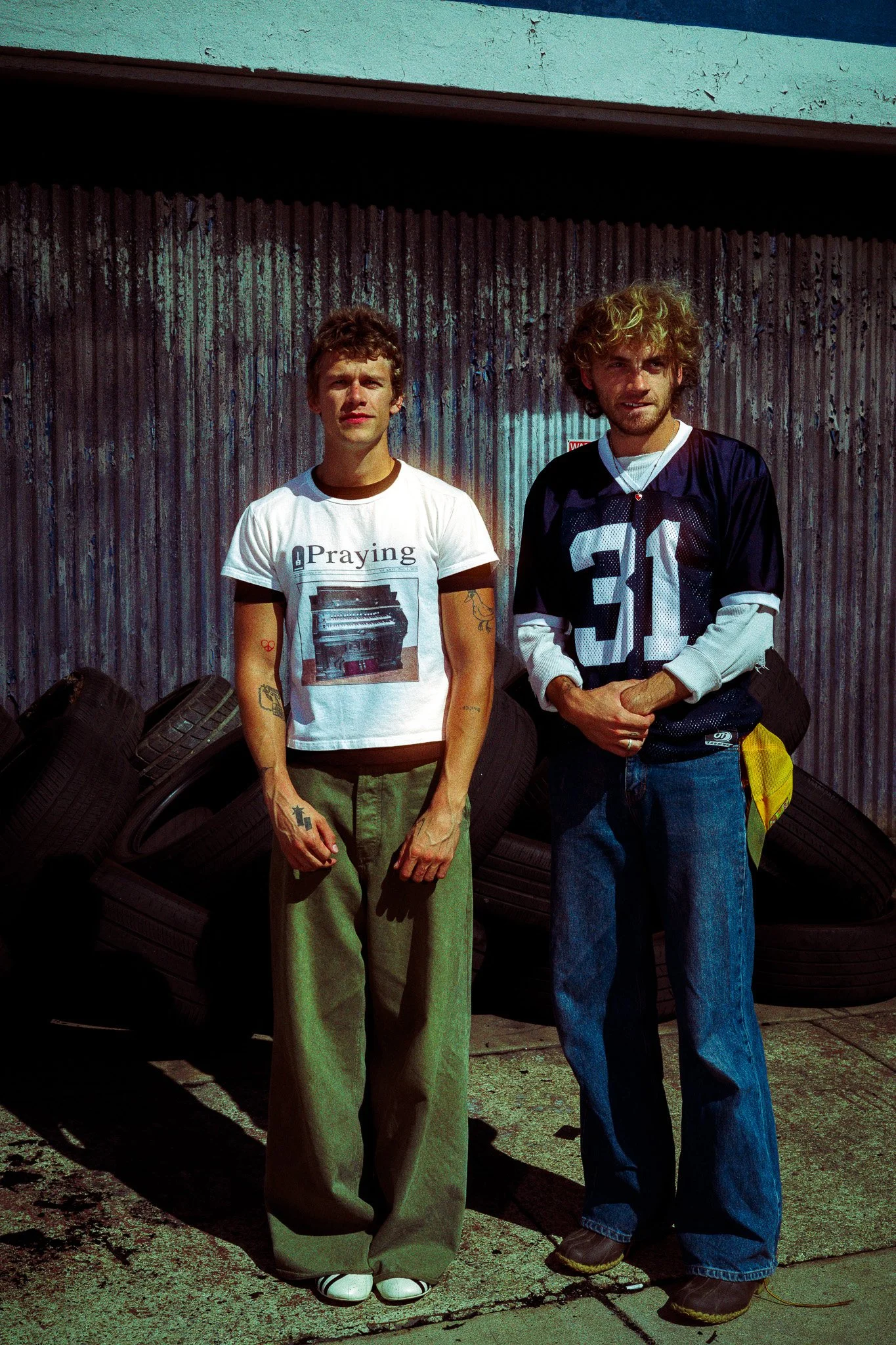
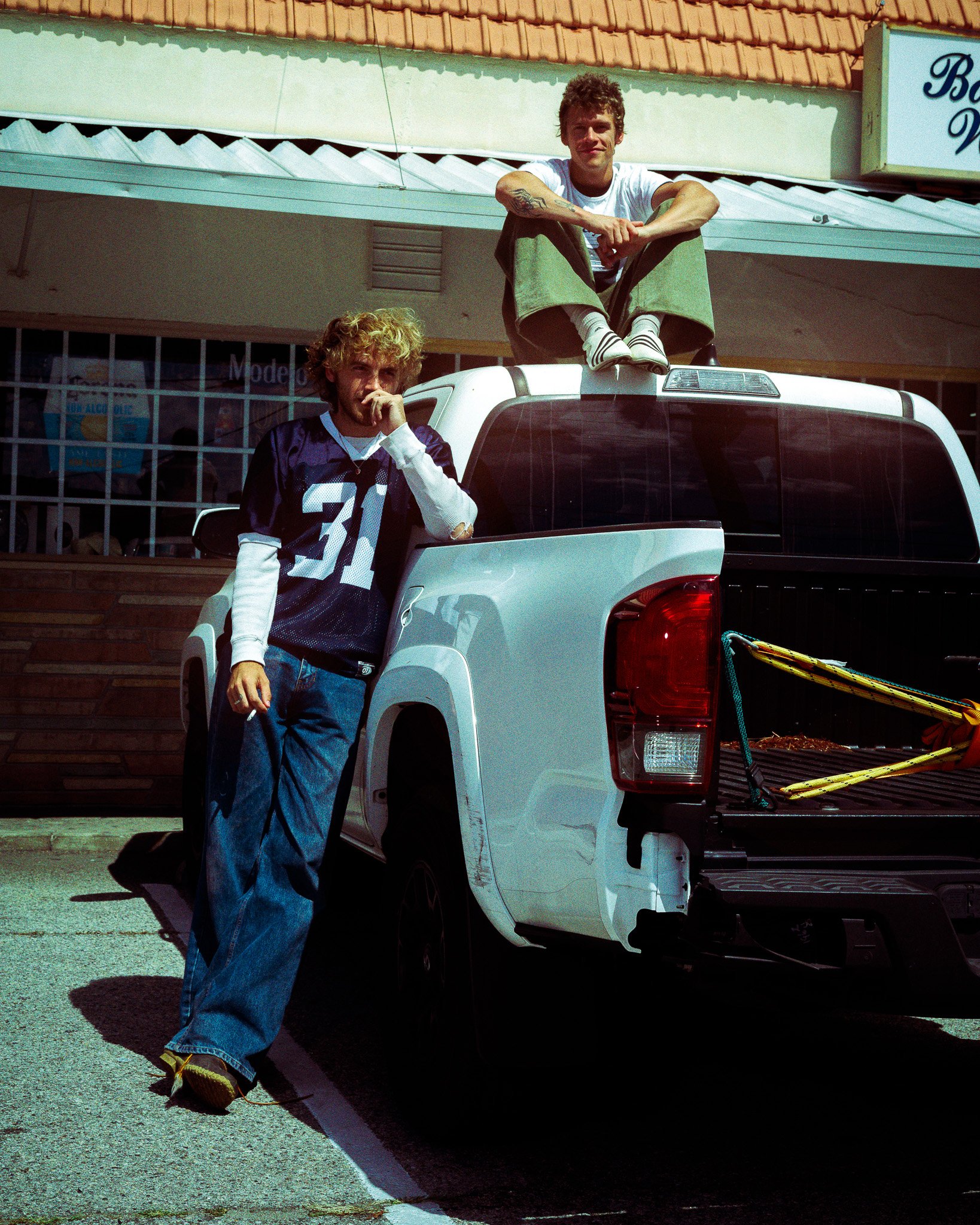
“We drove out here and have just been bringing this album together,” Cameron recalled.
“And as we did that, we began to realize that we weren't the Thistle Brothers anymore. And we felt really detached from that. The Thistle Brothers, to us, were the two kids that played cover songs in a bar and it was like, ‘Let's let's separate from that. Let's do something new. Let's rebrand for this debut album.’”
However far removed, the traces of Saburnia’s former lives remain in the soil. The band's history surfaces throughout their catalogue in small disclosures and melodic inheritances, some obvious and some nearly imperceptible. For a more overt example, Saburnia is their mother’s name, and the refrain of the eponymous jingle/theme song/invocation chimes, “Saburnia / Mother of the, mother of the sun”. Most of the references, however, are primarily melodic ones. A folk progression here, a melismatic soulful flourish there. These are the genre features the Thistles found kinship with from an early age.
“I think live music is our everything,” Devin proclaimed. “We base pretty much everything that we do off of our live show, and that's why we do live videos for all the songs.”
At house shows, they prefer to play in a round — a raised stage with the audience encircling them from every angle. “Instead of being in the audience and seeing the back of everybody's head, you're watching the music happen,” Devin continued, elaborating on the amoebic affinity one achieves within an intimate live show.
“It feels like we're all playing this instrument in the middle of the room, and we're all sharing this one experience. And I think it's so beautiful to be a part of that moment.”
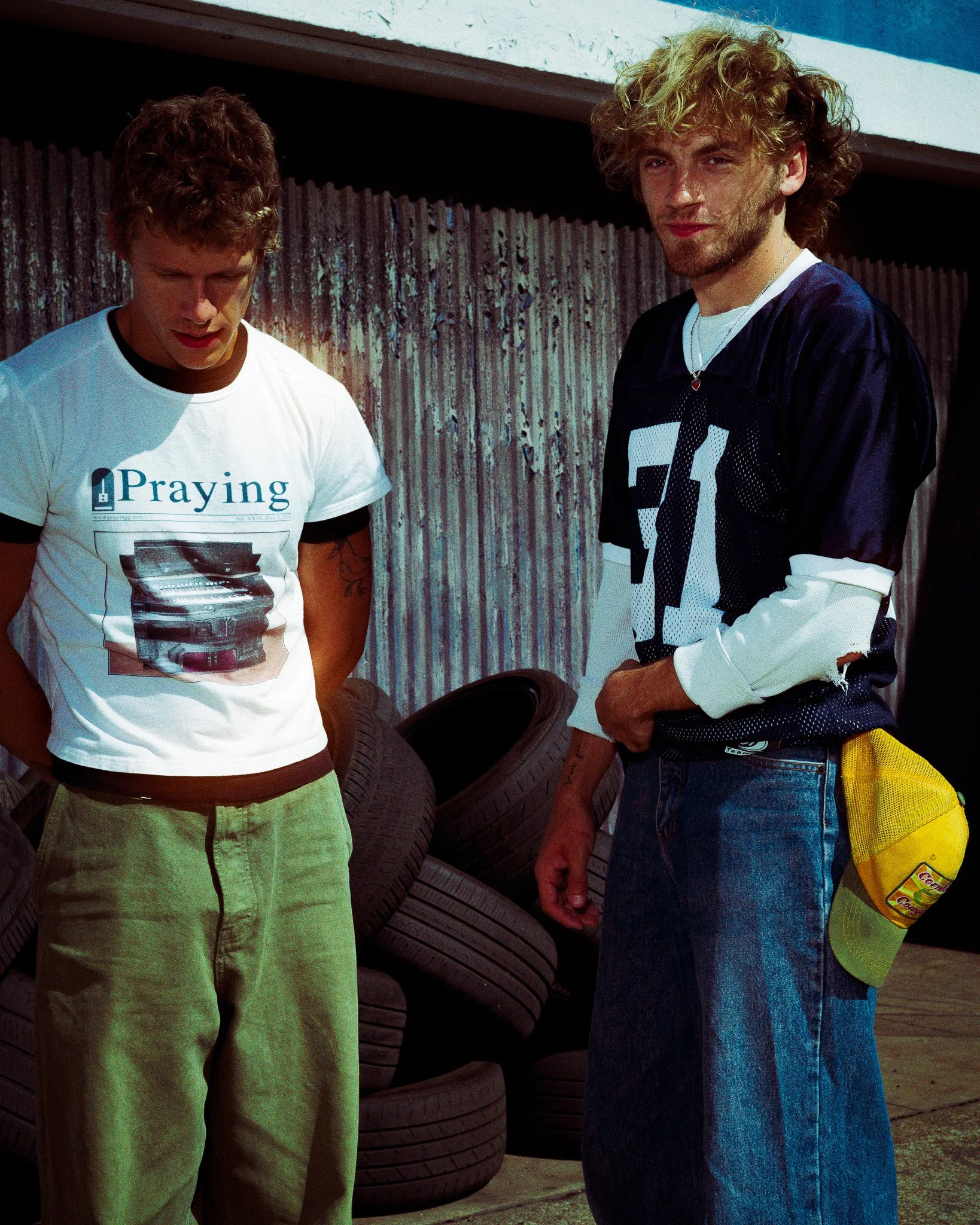
PHOTOS BY EMILY ENTZ
Saburnia’s music has quickly circulated through the Los Angeles scene, snaking its way through Spotify playlists and live audiences. One day, Cameron Thistle got high in his bedroom and wrote “April Shower” at 6 a.m., and before the song was even released, it had already picked up traction amongst house show habitués and had afforded them a considerable amount of attention from music industry executives. For months, the song had only been played live, but what is so remarkable about Saburnia is they can transform a song into a ceremony. Songs like “April Shower”, with its fluent and indelible hook, have a special tenacity. Because it primarily consists of the chorus, Saburnia said that an audience member can come to a show having never heard it and leave, singing it word for word. It’s songs like “April Shower” that took Saburnia to a Coachella stage in 2026. They gushed, first, about the surreality of being there in the Indio Valley with their loved ones and their artist wristbands — and then, they waxed poetic about seeing WHATMORE and Justin Bieber.
The Thistles described a rather dialectical creative process — where one brother introduces a lyric or a melody or a tempo, and the other amends it. Saburnia is the tender, osmotic mingling of ideas that rends something new. Or, as Cameron put it: “Enough yes ands and you’ve got a great song!” The goal is never perfection. “Justice” is scarred with string breaks, and freckled with exuberant whoops and hollers. There is a spare note at the end of “Even”, and “Run It Back” concludes with the crisp cessation of a pedal or a clicktrack.
“We love intricacies and the mistakes,” Devin said. “All of that give things personality that make it feel so human ... I think as creators, [by] putting your name on something you want to be able to say, ‘This is the thing. It's a perfect circle.’ But that's not what life or anything is about. Like perfect is almost starting to feel like a bad word to me.”