Romanticizing Music Again: Ritt Momney’s Return with ‘BASE’
After half a decade since releasing a project, Ritt Momney has come back with a full-length album, BASE, festival shows and a North American tour as his grand return. Pleaser had the chance to catch up with Ritt Momney, throughout our conversation he was relaxed, thoughtful and unguarded. There’s no rehearsed rollout energy, no hyper-polished promo cadence. Instead, he’s mid-thought, mid-reflection, still actively processing what this new album means to him. After five years between records, he isn’t chasing momentum, he is basking in his re-found love and passion for creating music.
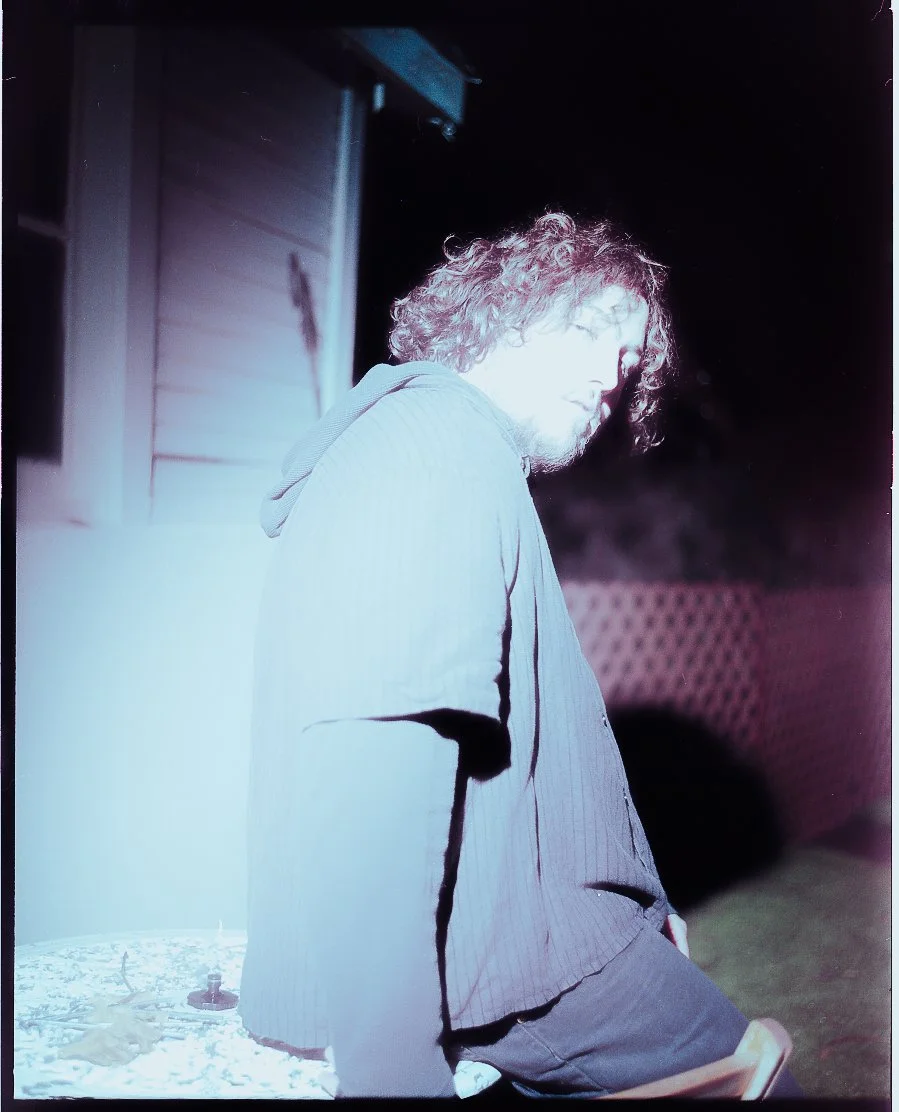
PHOTO BY SAM ANGELETTI
His gap between albums wasn’t due to a lack of material. In fact, the follow-up was supposed to come much sooner. “We were talking about this album three years ago,” he explains. “I even had a tour booked. I kept telling my manager, ‘Yeah, I’ll get it done.’ But I was burnt out. I wasn’t enjoying myself at all.” What followed was a prolonged creative stall, because writing had started to feel like obligation instead of instinct. “It felt like I was grinding through it just because I had to make another album,” he says. “Like we needed to capitalize on momentum. And once I started thinking about it like that, it just made me hate it.”
For nearly two years, he tried to push through. Some songs from that era survived, early versions of “LIGHTSHOW” and “BODY” found their way onto the final record. However, most of the material carried an emotional weight he couldn’t shake. “There were so many songs I just scrapped,” he admits. “They gave me anxiety. I couldn’t even listen to them.”
As time went by, he seriously considered walking away from music altogether. The pressure he had was elevated, though it wasn’t necessarily external. In many ways, it was internalized, a belief that success required constant output, strategies and navigation between art and commerce. “I thought I could make it work with that half-and-half mentality,” he says. “Be creative, but also be smart. Don’t alienate fans. Don’t miss the moment.”
On tour in late 2022, with no immediate commitments ahead of him, he had a realization. “I remember thinking, ‘I don’t have to make another song if I don’t want to.’ And right then I was like, ‘wait. I do want to make music. The problem isn’t the music.’” The problem, he says, was everything surrounding it: deadlines, expectations, the quiet calculations about numbers and sustainability. “If I’m just treating it like a task, like something I have to do for money, I might as well go get a desk job with more stability.”
“I had to take a radical approach,” he says. “I had to romanticize music again. Lean into that creative spirit and stop thinking about the intersection of business and art so much.”
Part of that reset meant diversifying his life. Hobbies, time away, learning how to be a person outside of being a musician. “You need something to write about,” he explains. Living, lately, has included an unexpected passion project, a truck from the 1980s he bought less than a year ago. What started as curiosity turned into YouTube deep dives and hours of work, “I was very solidly not a car guy,” he laughs. “Now I guess I am.”
It’s a small detail, but it says a lot. Learning something new and getting out of his comfort zone, making it a point to be passionate about something different outside of music. “It’s fun to learn something new,” he says. “And it keeps music from being my entire identity.” In his time away from releasing music, he also got married.
“If music is your entire life, you end up just writing songs about being a musician. There’s more to pull from when you’re living.”
Momney let go of the traditional “album cycle” mentality: Write, record, promote, tour, repeat. “That works for some people,” he says. “But you have to refill the creative well. I haven’t written in a few months, and the idea of writing a song right now sounds crazy. You need a breather.” That patience shows in the album itself. BASE is nothing short of a raw, honest, and addictive record. He describes writing from “below the ego,” resisting the urge to overwrite or craft the cleverest possible line. “If I just let it out instead of trying to be a cognitive poet about it, it feels more true,” he says. “The more layers of ego you add, numbers, expectations, strategy, the more sterilized it becomes.”
Collaboration played a big role in this album, too. Though the writing remained largely his own, bandmates were integral to shaping the sound. “It definitely feels like something the three of us made together,” he says. “I used to take pride in doing everything myself. But songs suffer without perspective.” The album is cohesive, with every beat, chord, sound—It all feels intentional. “I was more concerned with how it flows than telling a chronological story,” he explains. “The sound tells the story.”
Unlike past releases, there’s no spiraling anxiety hovering over launch week. The first single, “GUNNA,” arrives ahead of the album, a decision made after debating a surprise drop. Ultimately, he opted for something more measured. “It felt more enriching to let it sit as its own thing,” he says.
“And honestly, I have no anxiety about this release. I have no expectations.” That absence of expectation may be the biggest transformation of all. “The release feels like an epilogue to making it,” he says. “That was the real thing.”
When I ask what he hopes longtime fans hear in this new chapter, he pauses. “I just hope they can tell it’s honest,” he says finally. “That it came from a real place.” And for new listeners, those discovering him without the context of earlier albums? “I haven’t even really thought about that,” he admits. “I’m curious. I just hope it speaks to something real in them, the same way it came from something real in me.”
After five years of recalibration, Ritt Momney isn’t chasing the next big moment. He’s protecting the reason he started in the first place, and for the first time in a long time, that feels sustainable.