Q&A: Petey USA on reflections, stories from a dive bar, and the process behind new album ‘The Yips’
Petey USA, the moniker behind TikTok star and musician Peter Martin, brings us back to a nostalgic vulnerability in his album The Yips. Set entirely in a dive bar, Martin reflects on himself and society as a whole through the different people he encounters on his night out. Much like his wholesome and silly TikToks, The Yips serves as a mirror into the very real emotions behind our relationships with each other and society at large. Operating from a place of empathy and understanding that is not always present at the forefront of our world, Martin reminds us of the importance of imagining ourselves in others' shoes and finding a new point of view in our backyards–or in this case, our regular neighborhood dive.
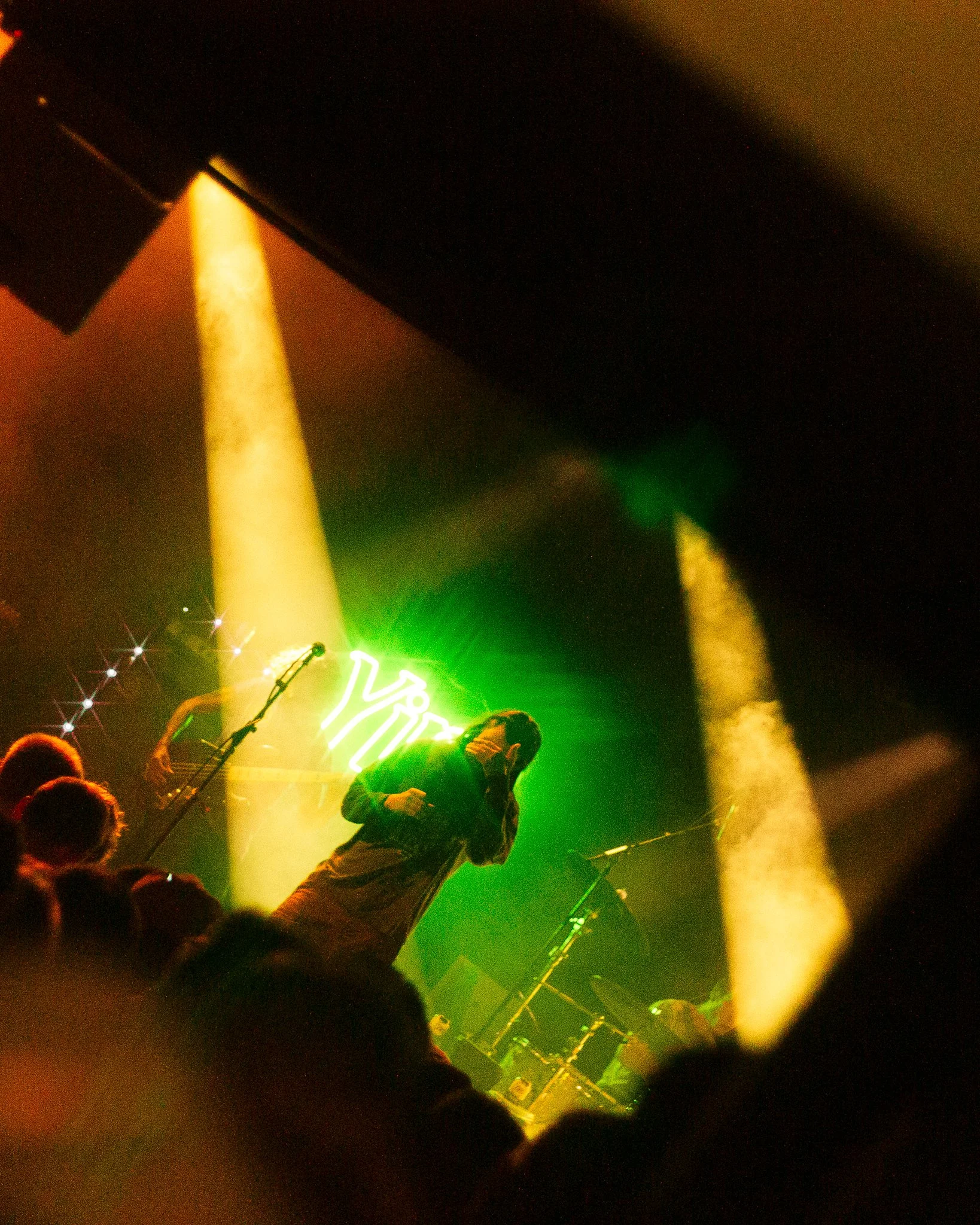
PHOTOS BY CHARLOTTE STRAZIS
Petey caught up with us after his album release stint, beginning in his hometown of Chicago.
Pleaser: How did it feel to open your string of release shows in the city you grew up in?
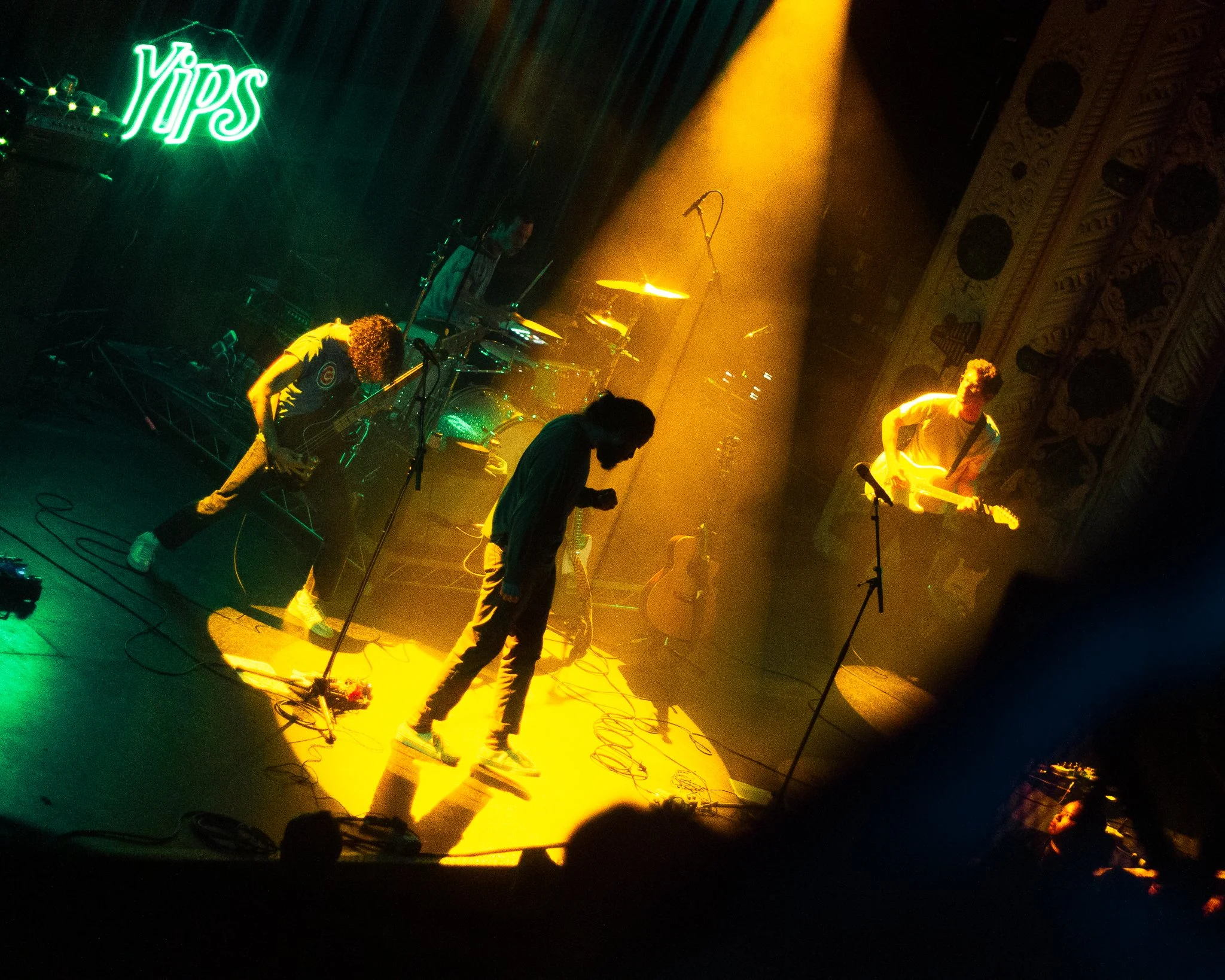
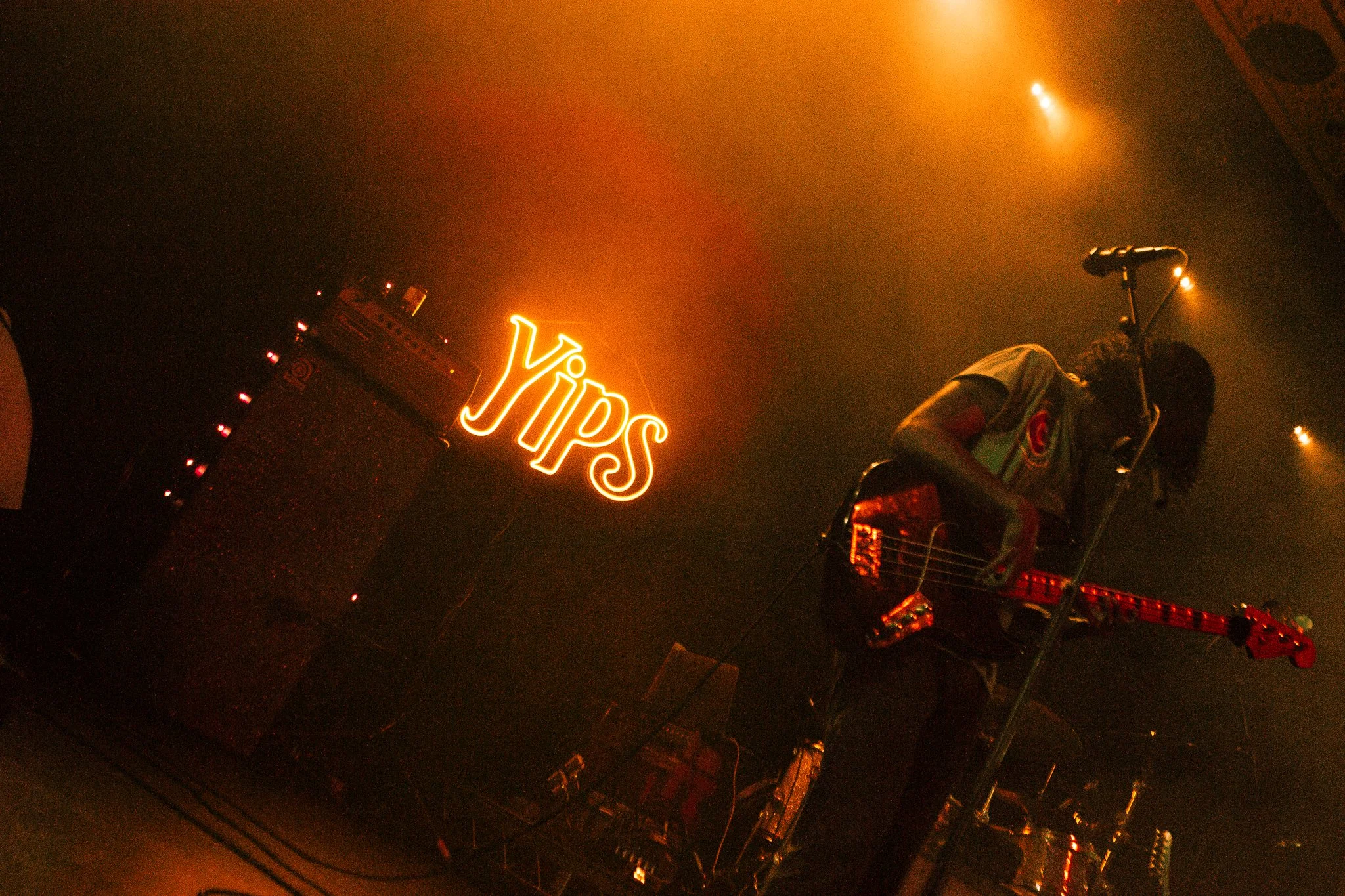
Peter Martin:It felt really awesome, and it's always kind of a no-brainer. With touring, you sort of have to play the game a little bit with some cities and don’t stretch yourself too thin by playing a city too much. It's nice to know that it just doesn't exist in Chicago. Every show we play there, the same people show up. They are so non-judgmental and everyone's really there to have a good time.
That was definitely one of my favorite parts of the show. The energy of the crowd and you guys feeding off each other was cool to see. And then seeing the full expanse of the album played live was awesome too. Could you elaborate more on the process of writing the album and what that experience was like for you?
PM: Chris Waller, from Death Cab for Cutie produced it and he's my favorite musician. Death Cab was my favorite band in high school. I saw them 17 times between Chicago and Milwaukee. They were the first band that I was mystified by, absolutely seeing them as fantastical creatures, so it was cool to be able to work with a guy who brought me back to that zone in music where everything felt mystical. Because when you start doing music for a living, the mysticism is like the first thing to go. To work with someone who brought me back to 2007 to 2010, as I was working on the album, was important because I think a lot of it sounds like that time. We were definitely speaking the same sonic language because he taught me mine. It was really easy to hand stuff off to him guitar-wise. It was a really special and easy experience.

Was there anything about writing these songs that was super difficult for you or challenging?
PM: I'm in general in the most comfortable, happy place that I've been in since I've been writing albums. Which makes it easier to write about more devastating stuff because you don't feel like you're really revealing any truthful or embarrassing or shameful information. This was sort of just like taking a snapshot of different theoretical conversations around a bar called the Yips. It was really nice to not necessarily have everything be autobiographical, but to use stories from my own life to inform how other people in this bar might feel. It felt like I was writing from the lens of an observer rather than more of a journal entry. Which made the lyric writing process easier and allowed me to write some more devastating lyrics without being worried about how I would be perceived.
What was your other favorite part about writing the album, or the process of making it?
PM: I wrote a lot of this album on the road because the touring cycle for my last album got unexpectedly extended by some late support slots. That was right about the time when I had to get serious about writing it. Some of it made me really nervous at first because it's not how I've written anything before. Usually, it's just been at home. Being forced to write this on the road was something I thought was going to be hard, and it actually made it easier. I realized I benefited a lot from the structure of the tour. Writing songs for me feels like schoolwork, so having that structure was really nice. It made it feel like a fun assignment. It was pretty freeing.
The first single you released from this album was “Model Train Town,” which is a song about being vulnerable to someone and not receiving what you've given to them back. Can you talk more about why you decided to release this one first?
PM: That song felt the most true to form for me musically and lyrically. That was one of those songs where I wrote the lyrics all at once in 10 minutes and really liked. The concept of it is something a lot of people experience. It's sort of just like the desire to have someone you love see the world through your eyes and be disappointed when you realize that they have a whole other set of external factors and history that shape their opinions about things that’s different than yours. And having that causes you a lot of anxiety. So then you have a fantasy about some apocalyptic event that wipes out the whole world, and feel like that might relax you a little bit, and also knowing that's horrible, and then feeling guilty about it. It's a very clear picture to me. I like that one a lot and it felt like the right way to begin the album.
The album is honest and vulnerable. When I was listening to it, it was like reading a letter from a close friend. And I found myself being drawn to those themes of existentialism, finding yourself, and forging those connections with others through these things. Can you talk more about these ideas and how they came together through the writing process?
PM: I always think about going back to your hometown and taking a snapshot of where people are in the local dive bar. There are a lot of different perspectives and narrators talking in the album. Some of them are the same. “The Milkman” and “I'm Not a Cowboy” are the same guy. And “Breathing the Same Air,” “Spirit Animal,” and “Stereoscope” are the same two guys. “The Yips” is me walking into the bar and seeing all of it. This idea of American male identity is so interesting to me. It’s so wrapped up in this idea of the suburban ideal and what it takes to provide. And historically, putting all your marbles into that and then realizing that that's not the thing you thought is super devastating.I feel like it's a snapshot of various stages of figuring it out, from complete denial to complete acceptance and everything in between.
You said you worked with Death Cab for Cutie on this album. Are there any other musical influences that impacted the process of making this album?
PM: I'm really into 80s music and chasing those synth sounds. I’m a huge New Order and The Cure fan. As a songwriter, I'm always going through the 2006-2010 Death Cab world, because that was my most formative stuff. Sonically, I think that’s the world that I strive to live in. I've got at least 20 different influences that I'm not even fully aware of as I’m writing. I naturally just put them all in every song and then fill in the gaps.
Your original claim to fame came from making TikToks during COVID, but music has always been a part of your life. How has it felt revisiting music as an art form since becoming famous for something entirely different?
PM: It's interesting because I made an EP and I got signed to an indie label in 2019 right before everything happened. And then I finished my first record, Lean Into Life, but we had to slowly release songs during the pandemic and not be able to play shows. In those first couple months of doing music full-time, the TikTok thing blew up, and that became way bigger than the music I was releasing. And it's been crazy. As soon as the world opened back up, I was playing sold-out shows, which was so cool. TikTok was just a tool I used, and I feel so lucky because of it. I became known for comedy on it. The music existed in an entirely separate world, but people who found out early on put the pieces together, and it made a really special community. It's been really weird and fun, and I can't believe it.
Yeah, that's very cool! My last question today was, where do you hope your music will take you in the future?
PM: One thing that's been consistently awesome about being a musician is that I do love the cyclicality of it all. I love the reward systems that I've built up for myself. It’s like if I work hard and I put out an album, then that means I get to do a whole bunch of fun stuff over the next year and a half. And that works for me. So it's like music has taken me everywhere. I look forward to being able to do it all again. I have reason to believe that every single time I put out a new record, I get to do a lot of fun stuff until I put out the next album. And that's enough to keep on doing it because it works for me.
Petey USA is about to hit the road to tour The Yips, and speaking from experience, it’s a show you cannot miss!