Petra Jarrar Isn’t “spiral”ing Anymore
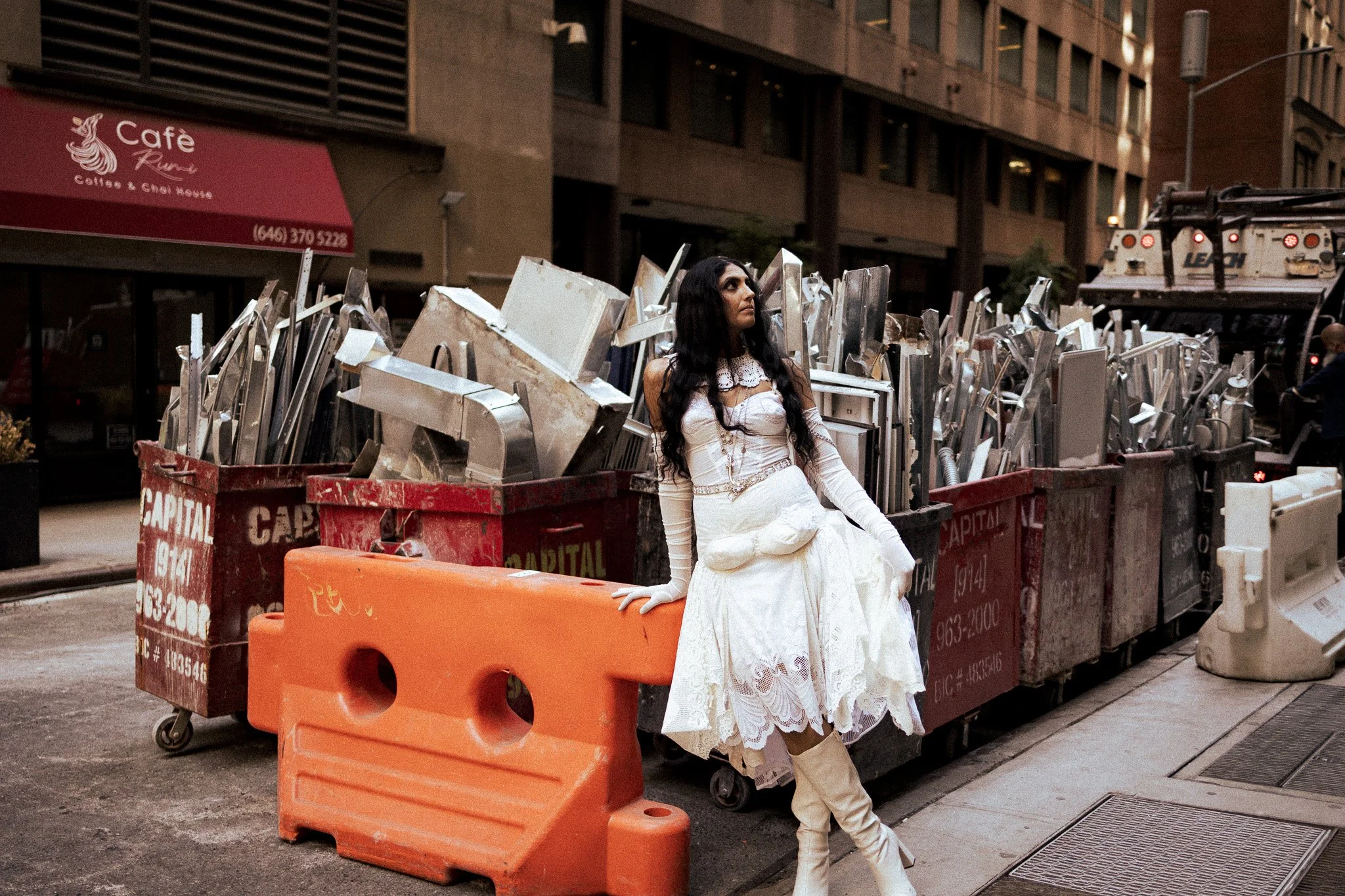
PHOTOS BY EMMA FISCHER
She’s making a come back on her own terms.
Being an artist, and thus, trying to make a living as such, is getting increasingly harder and harder as we descend further into this attention-economy fueled, social media ruled, late-stage-capitalistic world. Add to that being an independent artist, a woman of color, being over a certain age (see: not freshly 18) and you have a whole other set of barriers thrust upon you. What does it mean to be still chasing your dreams Under These Conditions?
Enter, Petra Jarrar. A classically trained, Connecticut raised musician making her way out of the corporate world and back into her independent artist journey.
PLEASER caught up with Petra over video chat to talk about her return to herself, and in accordance with her self-reflection, her return to making music exactly how she wants to.
Although Petra started her musical journey in the classical world, she grew up wondering how she might fare outside of that boundary that was initially imposed upon her. She said, “I always had a desire for something different because [Classical's] all I knew but what about everything else? I grew up [listening to] the radio, but so much of that time was on WQXR, the New York classical station, versus getting to listen to Britney Spears and Lady Gaga. That's what I wanted.”
I remember the first album that felt like my music. It was 2003, I was 8 years old, and I had birthday money to spend. My mom took me shopping and I bought brown gaucho pants, a Bobby Jack t-shirt, a crocheted hat that looked like a hipster version of a newsboy cap and, the album of the moment, Metamorphosis by Hillary Duff. I then went on to play that album top to bottom, sideways and upside down. When I try to remember what I felt like listening to Hillary sing “let’s go back, back to the beginning/back to when the earth, the moon, the stars,” [dramatic pause], “all aligned” - I feel like I’m floating.
Music, and more broadly, art in and of itself is pure self-expression - it is how we ground ourselves, how we make sense of the world around us. Petra knows this all too well and when she figuratively hit rock bottom, she had to go back to basics. She said, “[I’ve] spent the last 5 years rebuilding. [I had to learn] to trust myself as an artist again. [Figuring out] what it means to be a musician [again] , what my voice is, what do I like, what don't I want? My whole project kind of was born from that.”
PLEASER: So you're at this place where you're trying to rebuild and you're separating yourself from what people told you to be. Now, you get to decide for yourself what you want to do next. What does that process of rebuilding look like?
PETRA: Truly, the thing that helped me figure myself out was starting therapy. My dad died in 2016 and I tried seeing a therapist during that time, but a lot of them were very much religiously adjacent. And a lot of conversations I had about grief were [about] healing from it. And that was something that never resonated with me.
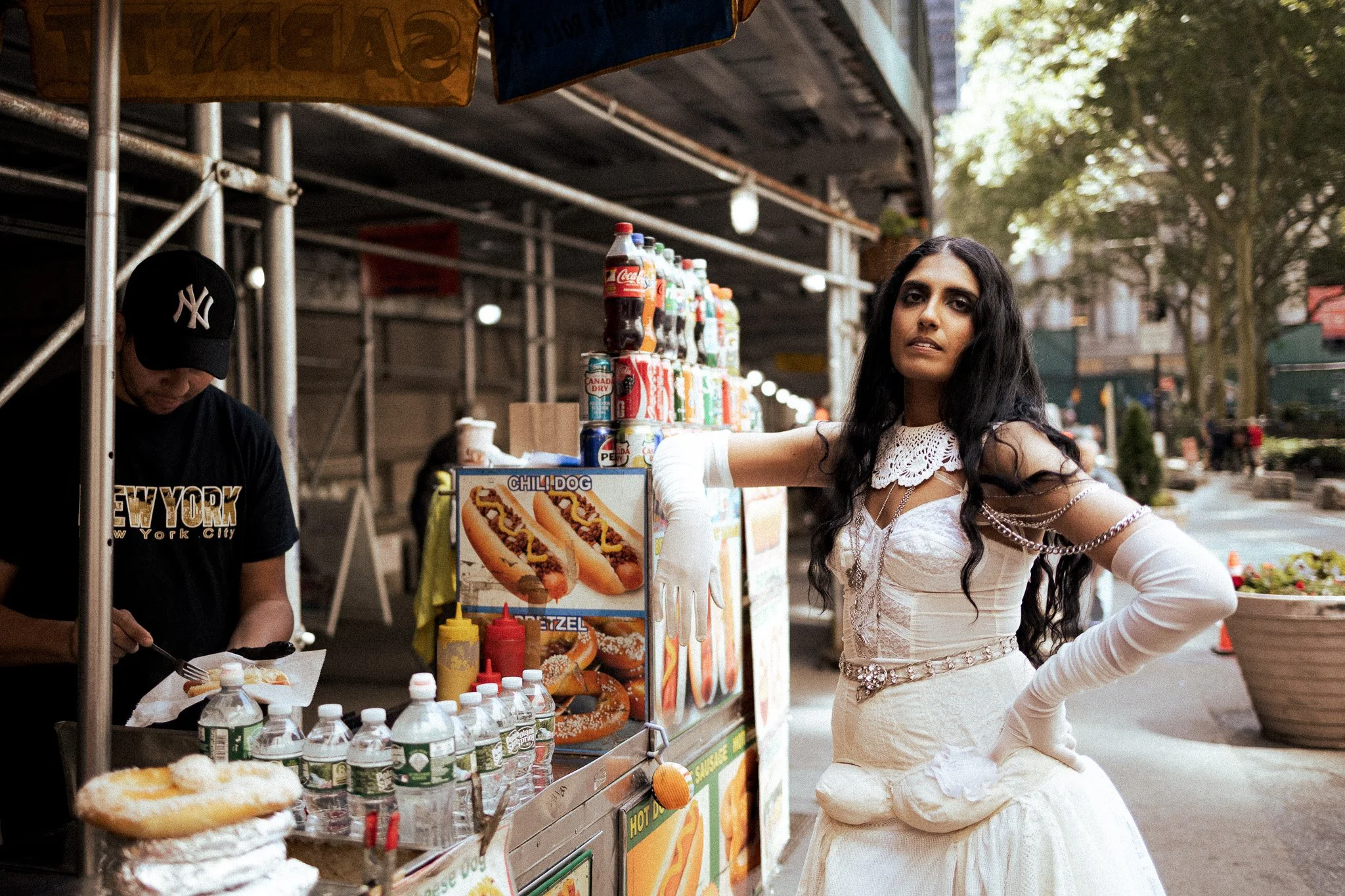
PHOTOS BY EMMA FISCHER
Grief is a prominent theme in Petra’s upcoming project. Her newest release, “spiral” “serves as the first glimpse into that project, which explores grief not as a single moment, but as a prolonged and often unsettling process of growth”, according to the artist herself.
Petra said, “‘spiral’ directly correlates to this experience I had in 2021 and coming home on this car ride and - it was weird, driving down streets that I grew up on. [Realizing that] oh my God, my perception of reality is so different after this one interaction. What do I do? And it was like a true spiraling out and there was no other way to describe it. I came home, I journaled, I started therapy for the 1st time, and I wrote this song from like a stream of consciousness.”
An emotional process that is so core to our human experience can often get convoluted, especially in a society built on avoidance and profiting off our ability to “suck it up” and get back to work. The effects of letting that grief fester, instead of treating it with the tenderness and attention it deserves, can be detrimental.
—
So maybe it was about taking the pressure off yourself, to stop trying to put yourself in a certain box or follow everybody else's rules. You go to therapy, you start journaling, you find meaning in the things you are writing, and then?
PETRA: I was living so much through the lens of other people. When my dad got sick, I was the one who became his caretaker in many ways. And my identity was being his person. And when he passed, I then was the caretaker for the rest of my family. But then when they moved on from their situations, I was left with all of this residual stuff of like, I don't even know who I am in the world anymore. So in a way - and I hate saying it this way - but it's like rock bottom is sometimes almost necessary because the only place you can go from there is up.
It's a very strong theme in like everything from my work now, but all of these emotions, grief, anger, resentment, joy. It's not linear. It's never linear. The perception the world gives us is ‘oh, it's just A to B.’ No, it's like A to F, then back to B, and then maybe to J, and then maybe back to A and then K. It's never [just] A to Z, ever. You know?
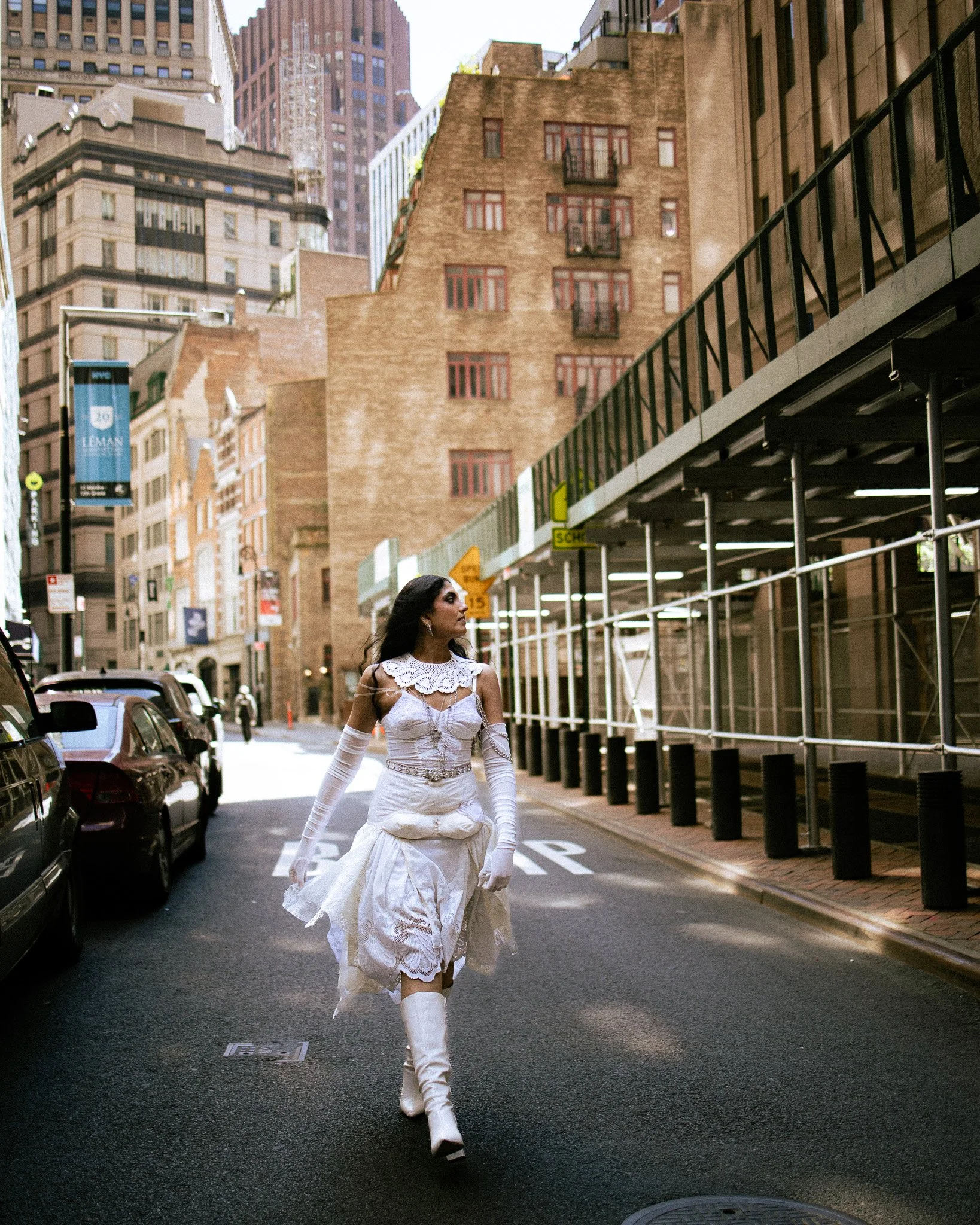
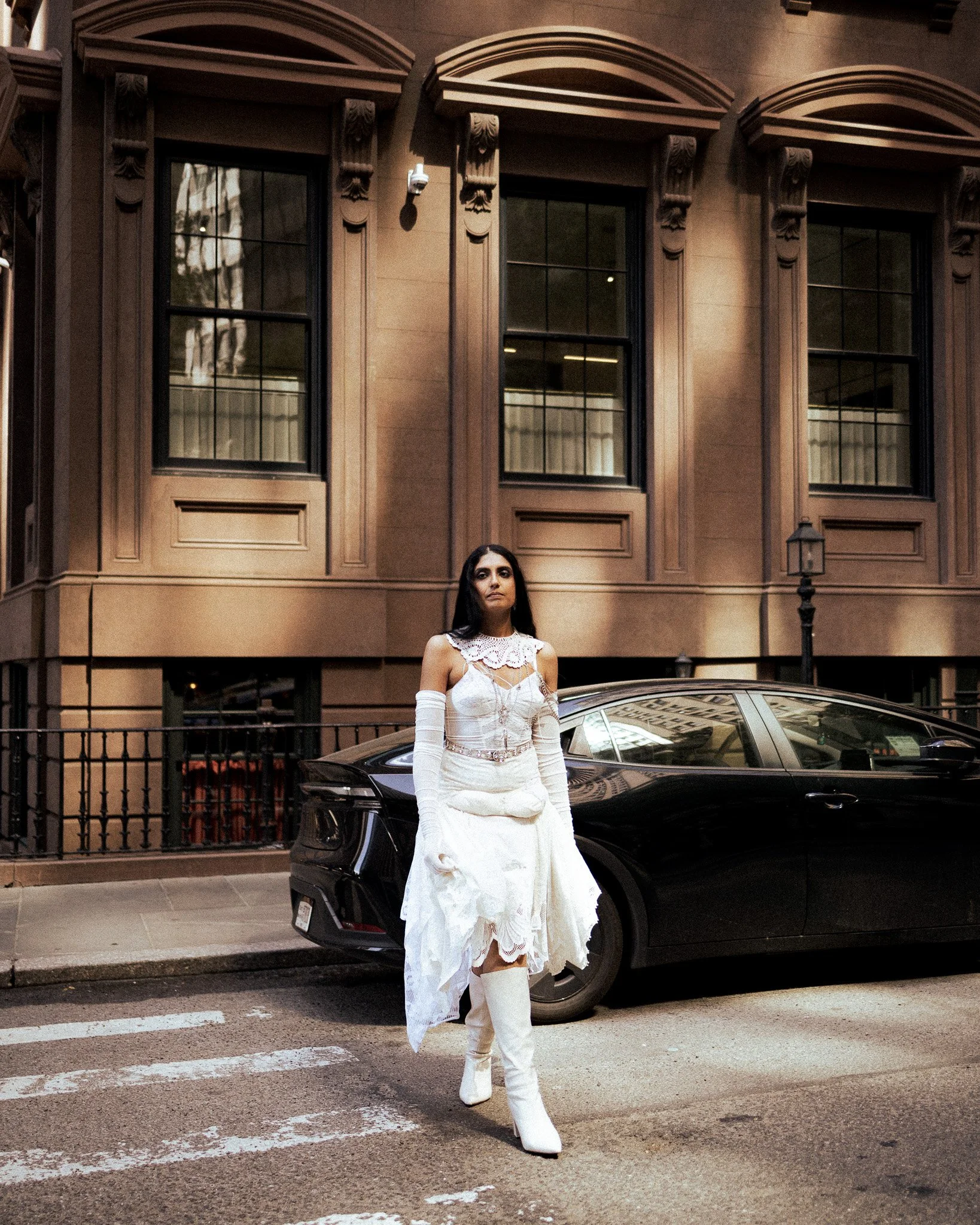
PETRA: In this process, finding normalcy and stability was also a very big part of this artistic journey. I'm not a traditional person. I am not [saying] I stay at home, I provide – not that energy. But I think there is an idea around going through a healing journey too, where a lot of people feel that the quiet and normalcy [isn’t attainable]. For me, stepping away and working a corporate job for five years was living a very normal privileged life.
Sure, and it was stabilizing for you.
PETRA: Stabilizing. So that idea of seeking that stability to then going wild to find that creative path again can also be very much a part of that journey as well. So I think the message is neither here nor there.
It's more about balance, right? And it's like figuring out which parts of all of that makes sense for you. Being normal and traditional isn't bad. And following the path less traveled is also not bad. It's just about being yourself.
PETRA: I'm just human. I'm human and I'm dealing with these things and, you know, sometimes you [have] to put in the work and deal with the ugly things before you can find the path you're supposed to go down.
Humanity is, at its core, messy and imperfect. Allowing ourselves to experience the full range of human emotion without passing judgements is how we reach true creative nirvana. Explore everything, even when it gets hard, and especially when it feels messy.
—
You can listen to “spiral” right now - streaming wherever you get your music. And you can watch the visualizer [here].
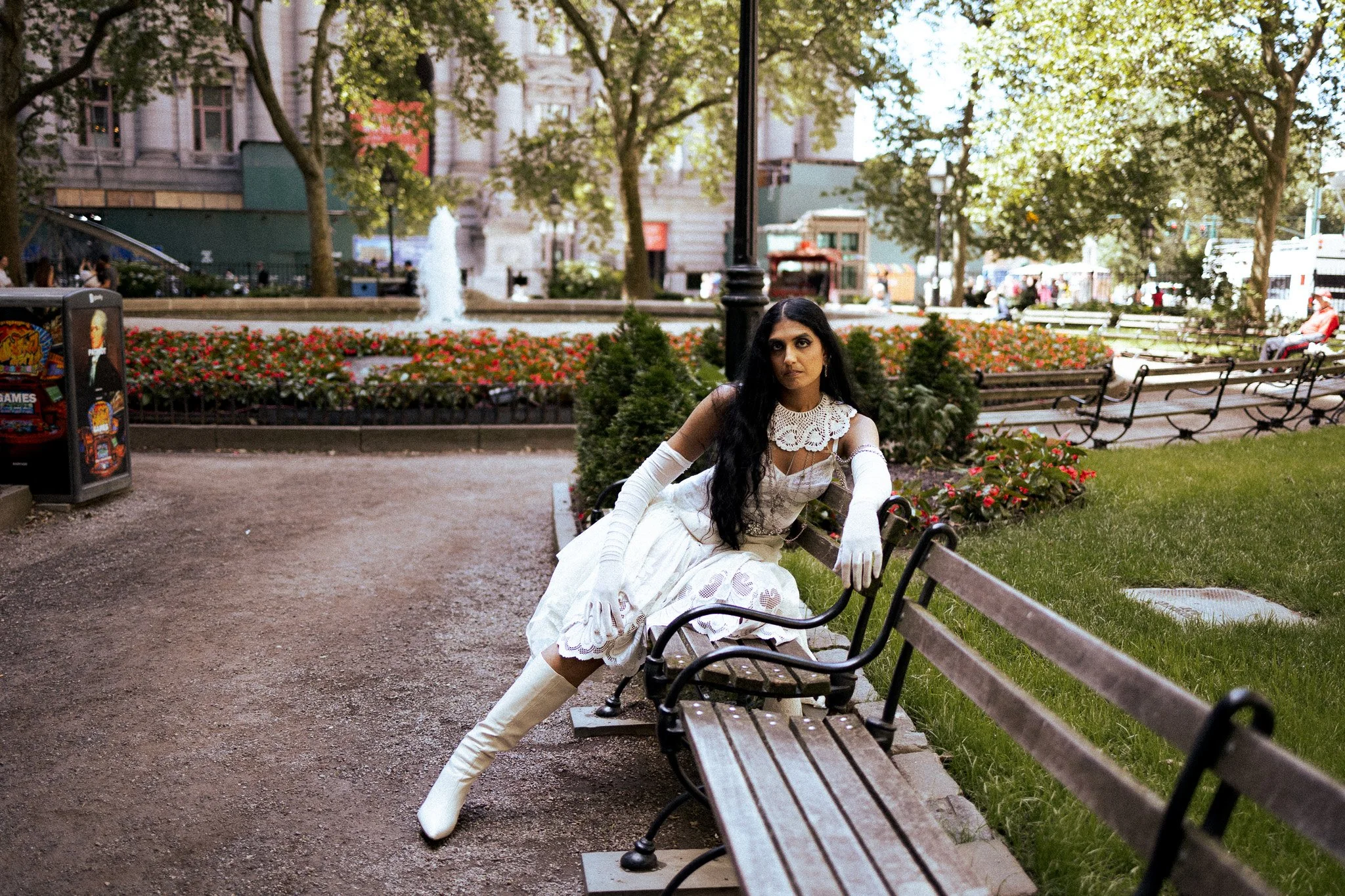
PHOTOS BY EMMA FISCHER
Stay up to date with Petra on socials for more!
<3, PLEASER