
Meet The Back Alley, a rising indie rock band and self proclaimed professional giggle monsters
Interview by Jenna PhillipsNew York City is a truly magical place, and we were reminded of this as Jenna and I arrived at Mercury Lounge to scout out an area to do a shoot and interview with The Back Alley, who we’d be seeing perform later that night. It was Halloween and we had stumbled across a community garden that was filled with whimsical energy, complete with someone burning sage around the property during the entirety of our time there as well as a DJ playing music in the background. We knew this would be the perfect spot to chat with the band as the vibes were good and the energy was high.
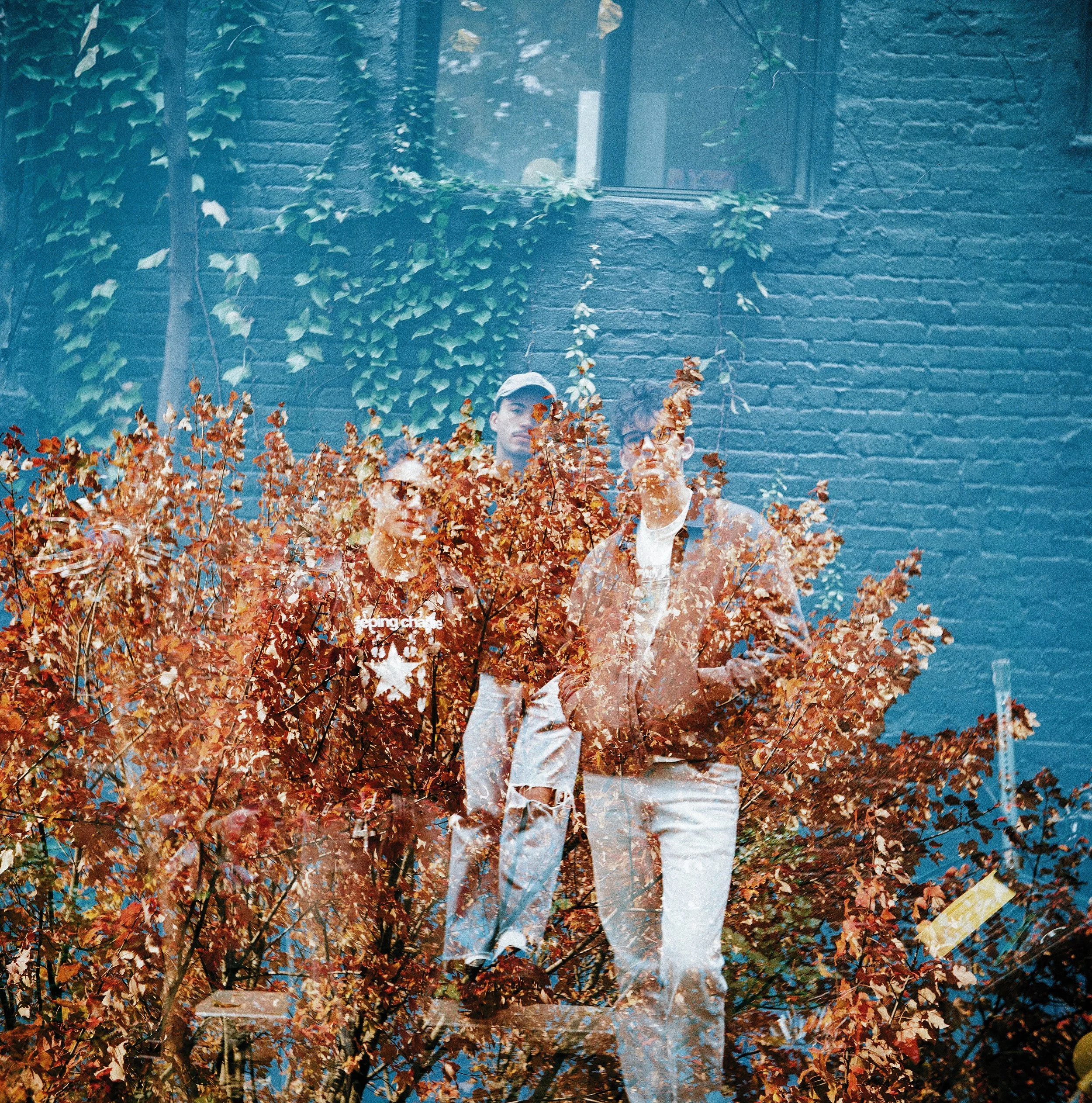
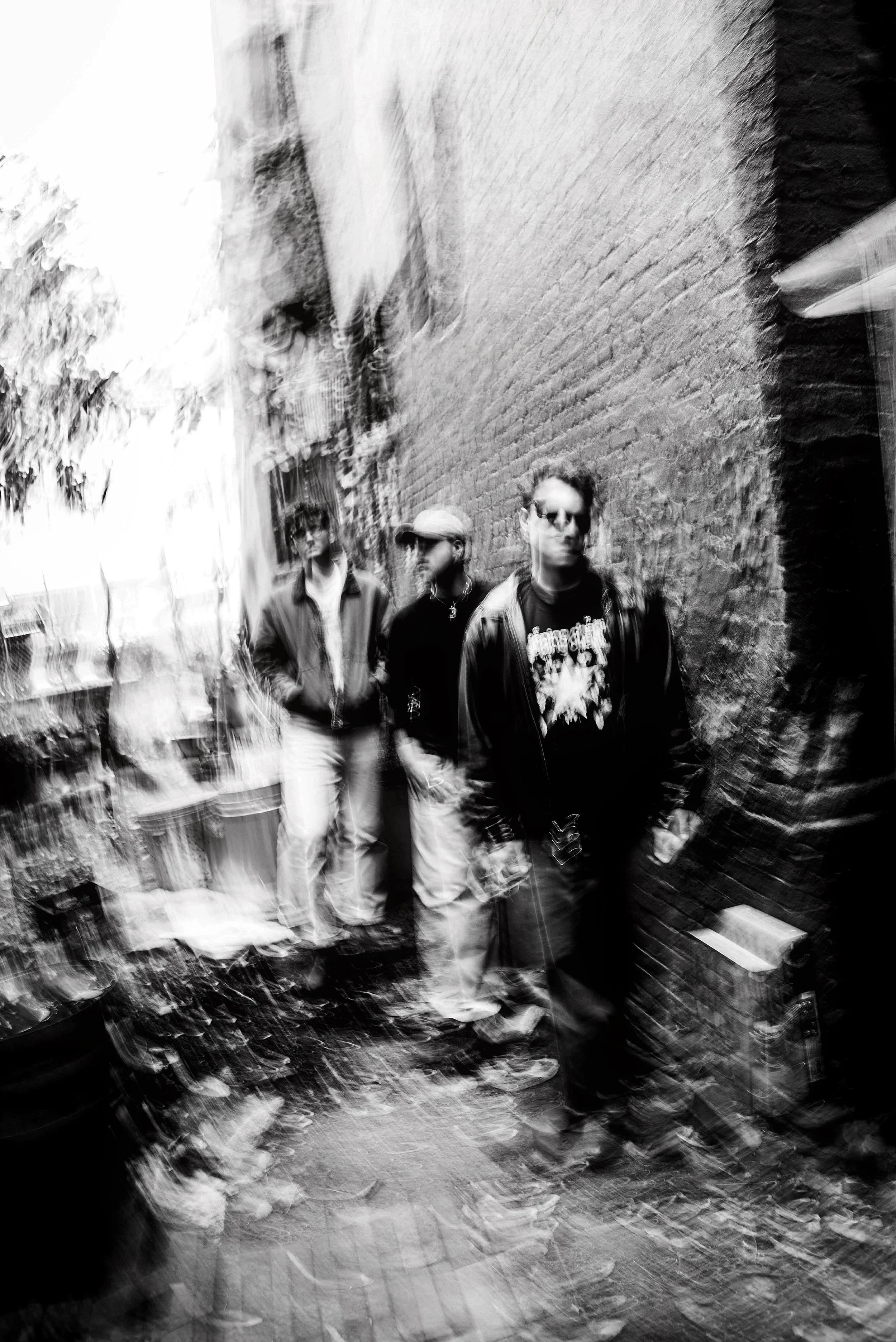
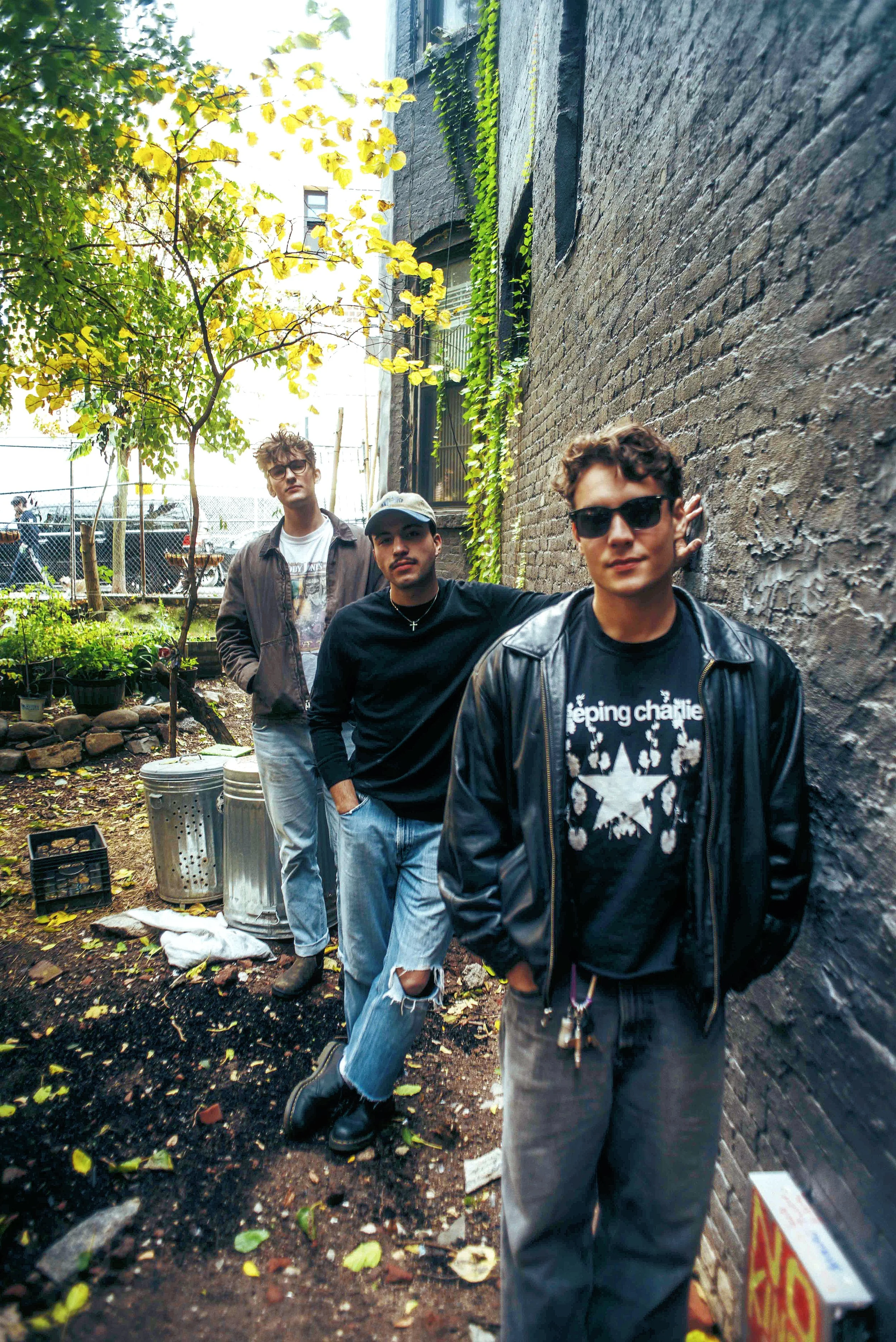
We arrived back to the garden with the band in tow, consisting of Ralph Porter (lead vocals), Ben Kremer (drums) and Jaden Cone (guitar). Usually, The Back Alley is a five piece, but the other two members, Salvatore Defilippis (guitar) and Hunter Olshefke (bass), were on a different tour with Ax and the Hatchetmen at the time. The band hails from Chicago, Illinois and have been putting out music since 2023, building a strong discography and solidifying themselves as an indie rock force. Pleaser sat down with the band to chat about instrumental experimentation, tour shenanigans, their hometown of Chicago and more!
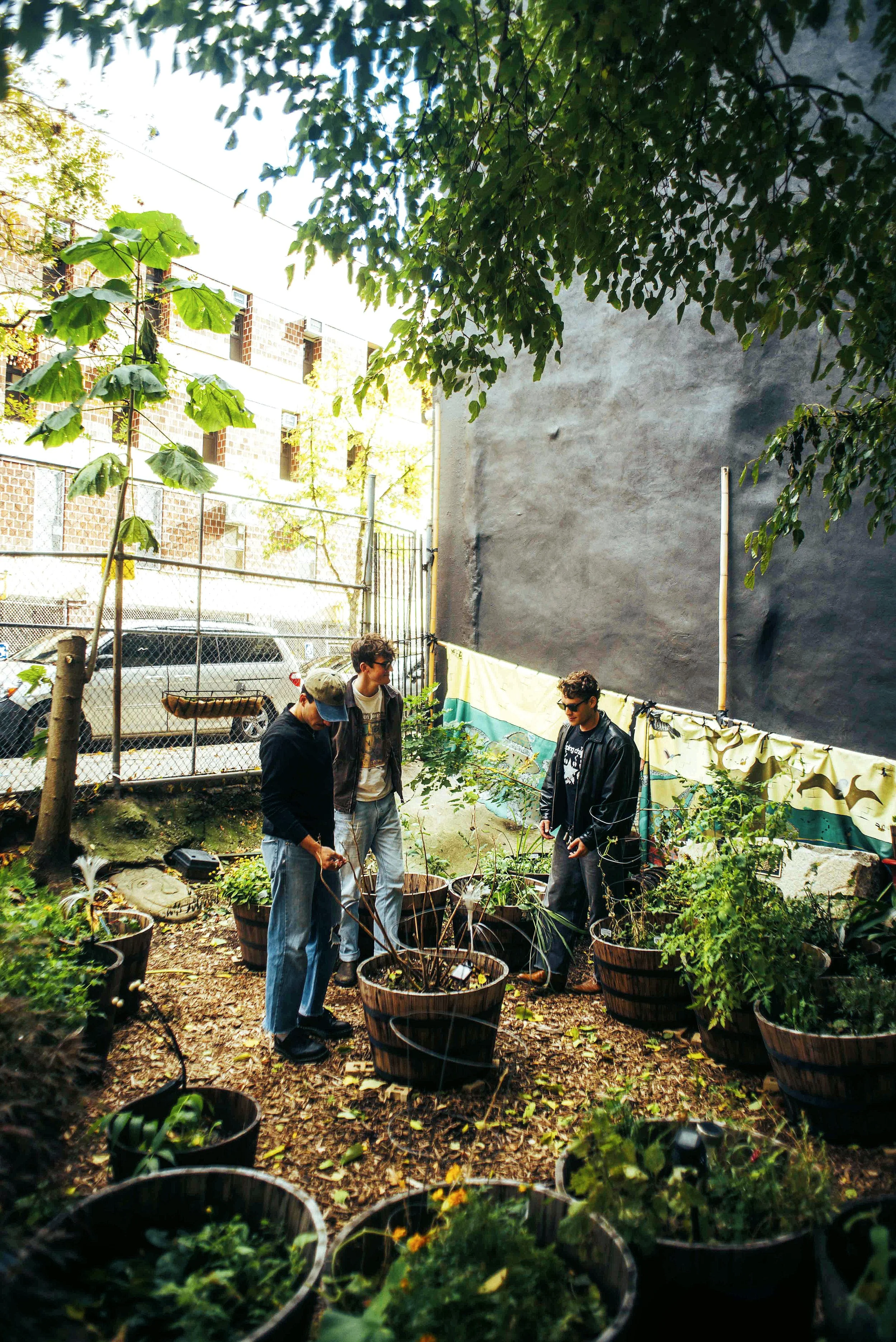
PHOTOS BY LINDSEY DADOURIAN
Pleaser: So let's go back to the beginning. Give us a little background, where you come from, how you started, etc.?
Jaden Cone: Yeah! This is kind of the same spiel we give every time when asked this, because I'm kind of proud of this story, but the three of us didn't know each other at all in high school. In middle school and high school, we did know of each other, but we all went to school together and never spoke. The whole time.
Ben Kremer: Seven years and we were never friends. Our high school was pretty big. We didn't talk until after we graduated. I mean, they started the band and I joined later.
JC: Ralph, about four years ago, before we started connecting, was doing his own work and releasing super cool music as a solo artist. At the time, I was messing around with music and starting to take it a little more seriously and reached out to him because we had grown up in the same area. I just said, ‘hey, I really love your music. Do you have a band? How do you record it?’ And he didn't have a band and he recorded it all himself with friends, essentially. Then it all kind of fell into place perfectly right at that time because he was going to school with Sal [Defilippis], our guitarist. Sal introduced us to Hunter [Olshefke], and we all kind of meshed. We were playing with a different drummer at the time, who was a killer drummer and helped us record and write some of our original songs, but we just ended up going separate ways based on goals with commitments and time and all that. That's when we brought Ben into the project and he's been great ever since.
Do you still have the same goals for your future that you did when you first started out?
JC: I would say we have not had the same goals since then. I feel like we work in tiers as a band. And this is funny, right away it came to mind, on one of our first rehearsals together as a band, we were getting pizza during a break. We were like, all right, let's go grab lunch. We'll come back and rehearse. I think this might have been Ben's first day with us.
BK: That day was their last rehearsal with the other drummer. And pretty much immediately after he had left the rehearsal space, Jaden called me and was like, ‘hey, are you free right now to come and jump in?’ It worked out because I had a home studio at the time and the client of mine that I was going to record with had just canceled the session. So I was like, ‘actually, I am free’, and I hopped over. It was crazy timing.
JC: Yeah, so that was the origin story of the first day with Ben. But then when it comes back to the tiered goals thing, we get super excited about stuff as a group. We love just speculating and manifesting and kind of, almost in a way, being drama queens about stuff. We just talk and we talk until it either happens or doesn't happen. So at this first practice, we were eating pizza and I was like, ‘guys, I'm going to get us a gig at Lincoln Hall in Chicago’, which was a dream venue for us. It still is to this day. Everyone was like, no way we're going to play there. I was like, just you guys wait. And I think maybe three or four months after that, we were playing Lincoln Hall for the first time, and we played it two times again that year. And, like I said, to this day, it's still a dream venue. We've played it three times, and every time we get the chance, it's amazing. We love it there.
So, at the time, that was a goal. We were like, Lincoln Hall, we have to do it. And then we did it. And then it was like, we have to do an out of state show. And we did it. And then we were dying to go on a tour and we booked our first tour independently. Then it was to get an agent, and we got an agent. And our agent helped us get our second tour. We're unbelievably grateful, we're pinching ourselves every day that we even have the opportunity to play in New York City. It doesn't make sense. There are so many incredible bands out there doing exactly what we're doing, wanting to do exactly what we're doing. They have the same goals and the fact that we get to do it is incredible. It makes no sense. We're so grateful for it.
Speaking of Chicago, how has the music scene there affected or impacted you guys as a band beginning and growing there?
Ralph Porter: I kind of want to speak for all of us saying that I think it started off with our families and friends’ support, and then as we emerged more into the social media scene and getting more content there, we saw more people from our hometown starting to notice us and come out to shows. I go out and play pool a lot, so I like to socialize at places where the indie scene might be kind of lurking. I love socializing with other bands and band members. There's always a common ground to find between local musicians.
At the beginning, it was just kind of like pulling every party trick out of your sleeve. So I would just DM every venue and band I knew to kind of put together any sort of concert we could. I remember one of our first concerts was at this DIY venue called Book Club, which is now upgraded into a full-size venue and they're run by local college students.
BK: As far as the Chicago scene in general, especially for newer bands, playing Book Club is kind of like a rite of passage almost. Every starting band has to play Book Club at least once. And now they've got a really cool, bigger room, which is awesome.
RP: It is pretty much like a checkpoint in a sense.
JC: Yeah, and to go off what they just said about that, I think another part about the Chicago music scene that we are just so lucky to have- I feel like, obviously every major city has their DIY scene, but the fact that Chicago has a place that is willing to give every single artist who wants the opportunity to step on a stage the chance to do it. Whether it's a Monday night at an open mic or a Saturday night at 9 p.m., and everything in between. The fact that we had a place like Book Club to start out was huge because back to the tiered goal things, at the beginning, we just wanted a gig. There was this band called Totally Cash that headlined our first show in Chicago. They packed the room and we brought a bunch of people and it felt so special. It was only maybe an 80 to 90 person room, but it felt like we were on top of the world. We were so lucky to be able to do that for our first show in the city. It seemed like we had made it just because we did one show.
BK: The Chicago community is super strong. I feel like everyone in general is trying to put everyone else on to opportunities or just collaborating and playing shows together. It's a really fun scene to grow up in. During high school, there wasn't a time where I wasn't in a band. Even as a high schooler, I had played Book Club, and there were dozens of DIY spots before COVID shut down a lot of them. I had met so many people during high school in their high school bands that are now people who I would consider really close friends and have done extensive music work with. So it's cool how tight knit it is and how it goes back pretty far.
RP: Yeah. I will second Jaden in that I feel like Chicago being a Midwest community- for me, I feel like Midwest people are always some of the kindest and most open hearted people. It kind of gave me a sense of how important community is. I remember our fourth show, this band called Arcy Drive, had sold out this local venue in Chicago called Schuba's Tavern. It’s one of the well known venues and it's like a checkpoint again, like Book Club. It showed us how important the local scene is, just opening up that show. It was already sold out before we even accepted and people bought our merch, and it really just taught us what could be and the relationships that we could form with people in Chicago.
JC: Yeah, that Arcy Drive show definitely taught us to open for more bands that are going to sell out the show without even us being on it. That's another one of those shows that felt like at the time we just had zero business being a part of it. We were so lucky. Like, why us? Why not any of the other 50 bands in Chicago that make indie rock music? That was insane and still to this day one of the coolest shows we've ever played.
When planning out and prepping for a live show, do you have any moments that you try to include during the set? What goes into the prep?
JC: The Back Alley is always trying to do better on stage. We always want to do what we can to give the crowd the best show possible and have the most fun on stage. So that takes planning. We'd like to think that, you know, we're quote unquote cool enough to just go out there and do it, but it also takes a little bit of planning so that we can give the crowd the experience they need because they're paying $20 to see us on a stage.
BK: I think a lot of what is very prominent in our set and something that people point out all the time is that we just look like we're having fun, and that isn't something that is planned for. We just are having the time of our lives. And I don't know what it is about, especially when we have our full band set, we just can't stop giggling on stage at each other. We do a lot of our rehearsing, and then there are inside jokes made about a thing that a person's playing or what someone's doing on stage or in rehearsal. And then that comes out when someone's just doing their thing and then we think back to it and can't help but die laughing on stage. And our set ends up that 85% of it is us just cheesing on stage at each other.
JC: Yeah, a lot of that plays into, like Ben said, thinking about how we are in rehearsal and in the van, and in our heads we're like, we are so silly and nerdy. Like, why are we up here? Why are people watching us play music? And we just laugh and it's a really special feeling. We have so much fun. It's amazing.
RP: Yeah, me personally, I'm always trying to break loose on stage and kind of like, fulfill my inner child almost. An example of us dying laughing together would be a concert that we had in Milwaukee where I got off the stage and went into the crowd for a nice intimate bridge and, you know, I didn't really stretch before the concert. I tried to get back up on stage, but I slipped and I was like, I'll just stay out here. And for the remainder of the song, Ben and Jaden were just crying, laughing, trying to hold it together as a band.
BK: It was at the back half of the song and it was the build up into the last chorus. And Ralph is trying to get up and then he falls and has to stay out there and for the rest of the song. Me and Hunter could not stop just, like, dying. It almost messed me up drumming.
JC: I'm really glad Ralph brought that up because that is a perfect example of being ourselves and having fun on stage that is totally not planned. It was a high stage and I mean, the crowd loved it. He was killing it. He went out for the bridge and he was dancing with them, and then tried to get up and yeah, it was awesome.
What's something you do to keep stamina up on tour, or any rituals you have that keep you going?
RP: I mean, we are definitely professional giggle monsters at heart. I feel like the inside jokes do run deep and they definitely can tire us out. But I do feel like the extra activities that we do in every city kind of just keep feeding that fire. Whether it's getting breakfast with each other every day or when we’re in the van, we definitely slow it down sometimes, everybody naps and that fire then just comes back up again.
BK: Everyone seems to be on the same clock too, as far as knowing when to wind down, and then all of a sudden there's a huge burst of energy out of nowhere.
JC: Yeah, there's one thing I am super proud about this group is that we, I mean, to start, we're not like seasoned touring vets. We don't know how to keep the stamina throughout a long tour, we're still learning. But I've always been super proud of this group because contrary to the popular belief that you go on the road and you just party and eat like shit, these guys are all super conscious about the importance of getting good sleep and eating healthy, and going for runs when we can. When we're stopping at a gas station, we all choose to try to find a healthy snack instead of something not so great. I'm just proud of the group, I feel like we make each other want to do better. We all look around and say, how can I be a better person for the band? Because we want this to be the best it can be.
BK: Just one specific thing that tends to lift our spirits, this happens at least once or twice during every tour, we can't help ourselves but make the shittiest songs. We just like to make them in the van and sing them, and sometimes even record them and then they never see the light of day. It's purely for our own enjoyment.
JC: With the one we wrote yesterday in the van, we went online on Instagram live and played it to a crowd of people. I mean, like Ben said, on the last few tours, there have been songs that we’ll properly whip out the computer and record vocals and they're on our phones somewhere. They're insane. I hope no one ever sees them. But yesterday we wrote a country song and I can't even lie, it's good. Like, I like it. It's catchy. I'm not usually one to call our music good, but it was a jam. We were driving through the mountains in Pennsylvania and it looked like fall and yeah, just know it was incredible.
BK: People that were on the live were like, ‘when is this dropping?’ We're like, this was born and is dying in this van.
What is your favorite part about making the music? Is there anything that inspires you when creating?
RP: I feel like we're definitely proud of the songs that we have out, but we're quick to acknowledge that we're still learning. It is a constant learning process and we are trying to figure out different ways to write every time we do. And with the schedule restraints that we're on, it's always been a tricky scenario, but I think inspiration-wise, we're always looking to emphasize a new sound in the project. And I think that's what pushes us to want to create more music and get together more.
BK: The way we write music, or we have most commonly written music, is just us five getting in a circle and just jamming.
What usually comes first, the music or the lyrics?
BK: Always the music. The lyrics come about 30 days before it's released. We all try to pitch in a bit for the lyrics. Personally, especially as a drummer, actually, I think anyone could relate to this, I really like the act of jamming and playing off of what other people are playing. It really does, as corny as it sounds, feel like a nonverbal conversation with your friends. It's a really enjoyable experience to share ideas and communicate with each other without actually having to say anything. And then it's over and you're like, oh, shit, maybe this could be a song that we cut down to three minutes and hopefully people want to listen to it.
JC: I think I can speak for the entire band and say that there's not something out right now in our discography that, I don't want this to be taken the wrong way, but that we're completely satisfied with. And I think by that, I don't mean that we don't like our music. Obviously, we're so proud of it and we're so grateful for the reactions our music gets from the fan base. But every time we release something, we move on from it and we look back and say, ‘how can we do better than that?’ And as a group, we're constantly looking at other bands. Again to name drop bands from Chicago, whether it's The Braymores or Pretoria, or then you get into the realm of bands outside of our hometown, like we talked about Arcy Drive. There's this band Winyah, and also Penelope Road who we’ve toured with. And all those bands, we are always listening to their music and thinking, wow, this is incredible. Let's make music just as good. So I think never being satisfied with what we're writing is going to hopefully keep us motivated, like, we got to make better stuff.
Are there any different instruments you’ve experimented with in your music?
BK: We recorded an alternate version of our song “Grey Skies” just to kind of embrace a little bit more of the energy of how we play it live, which is a pretty decent contrast to how we recorded it. It's very different from all of our other stuff on our discography. And it started off with us wanting to make it sound more like how we are on stage and then we got a bit ambitious and we added piano to it and I had these glockenspiel bells that we added on there. They're really cool textures that we wanted to get in there. There's one of the prechoruses or something, we kind of muted the acoustic guitar a little bit and went super high up on it to almost sound like a mandolin. It doesn't sound like just an acoustic guitar.
We record all of our music at my recording studio. I'm an audio engineer, so I find a lot of satisfaction in finding new ways to mic up something. There was a piano track that we did, and hanging above the piano, I had one of my acoustic guitars. So instead of throwing a mic up into the room, I stuck the mic inside the acoustic guitar to see how it resonated with the strings and everything. So along with the fascination with using alternate instruments for a track, I like to find different techniques for actually recording what we end up doing. That's super fun for me.
You have a Live From Picture-Minded Studio EP released, do you prefer your music live versus recorded? Is there a big difference?
JC: Yeah, so that EP was done live in the studio with no overdubbing. We just played it as if we were on a stage and then it was released, kind of like an AudioTree thing. And actually, the reason we did that wasn't because we necessarily liked that more, it was because we had just become a band and we were getting these show opportunities and we were like, ‘what the heck? We don't have any music. Like, we have to get out music now. Our Spotify looks ridiculous’. So we put together all the money we could and that was the quickest, most efficient and cheapest way to record five songs and put them out opposed to doing that many songs over dub style that would take us a week plus.
BK: That one was done at my home studio before I was even in the band. That was with the other drummer, and it was my second time meeting Hunter and Sal, but it's just a funny situation that I was engineering their stuff and kind of doing all the work for the recordings and then a little bit later ended up actually joining the band.
Do you record all the music there?
BK: Yeah, at my new studio, we record everything there and I do most of the engineering, mixing, mastering, everything like that. It's really fun to keep it in house.
JC: And then the live versus just being in a studio sitting there and layering tracks, I think we kind of do a hybrid because Ben and Hunter are super big on recording together so that you get that energy from the bass and drums. That can shine through in the recording. I think Ralph and I are more like, I want to experiment. I want to see how we can make this sound in a studio version. And I know Ralph really digs Flipturn and the way they do their vocals is incredible, their production is huge and Ralph really likes that.
RP: Yeah, that is on the money. I look at bands like Flipturn and Hippo Campus, who use kind of that experimental aspect to express that extra, you know, boom. Whether it's a bunch of delay or like a cool EQ, Burnout Days by Flipturn is a really good example of what I'm looking forward to experimenting with those kinds of effects in a way.
Make sure to keep up with The Back Alley here!