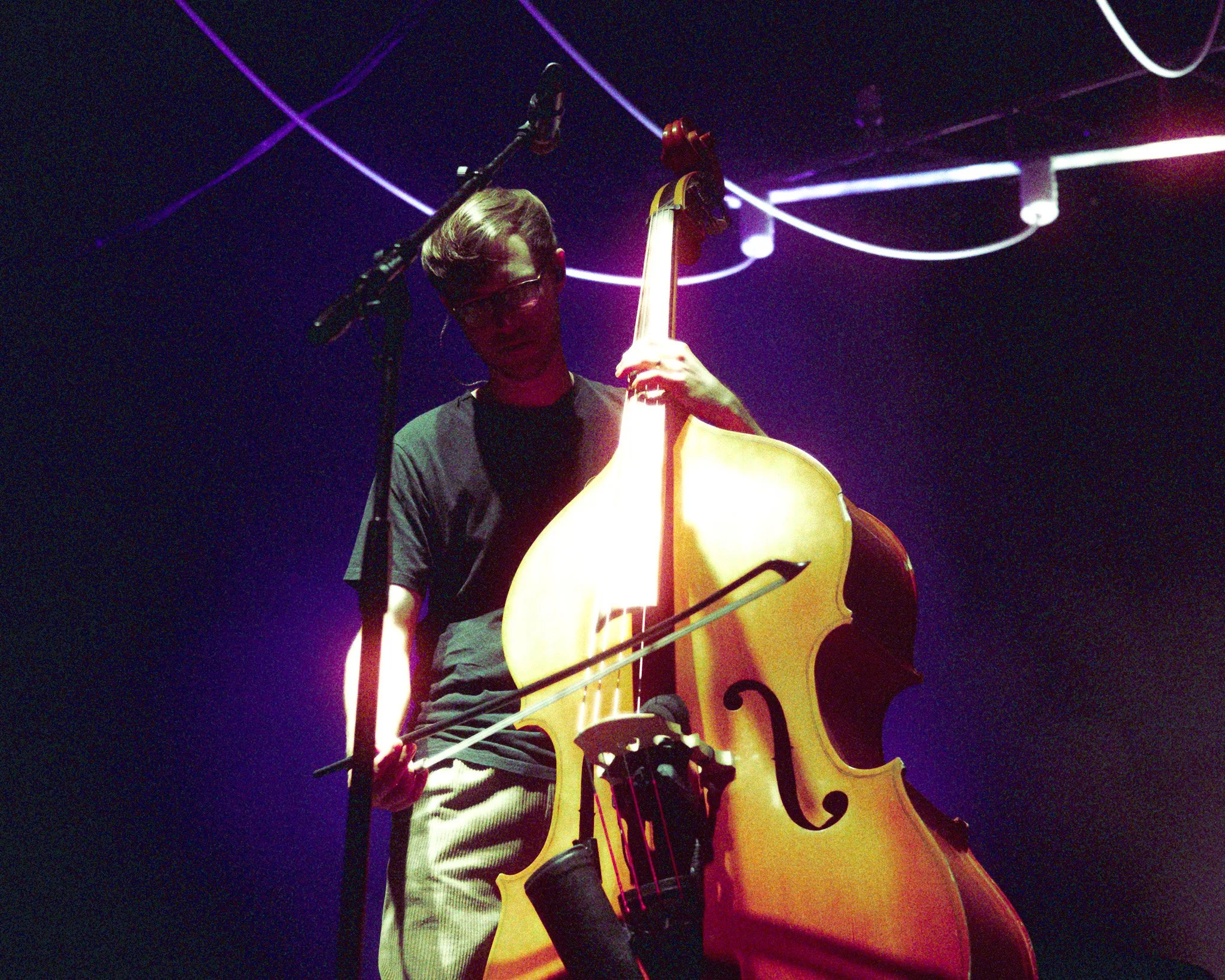
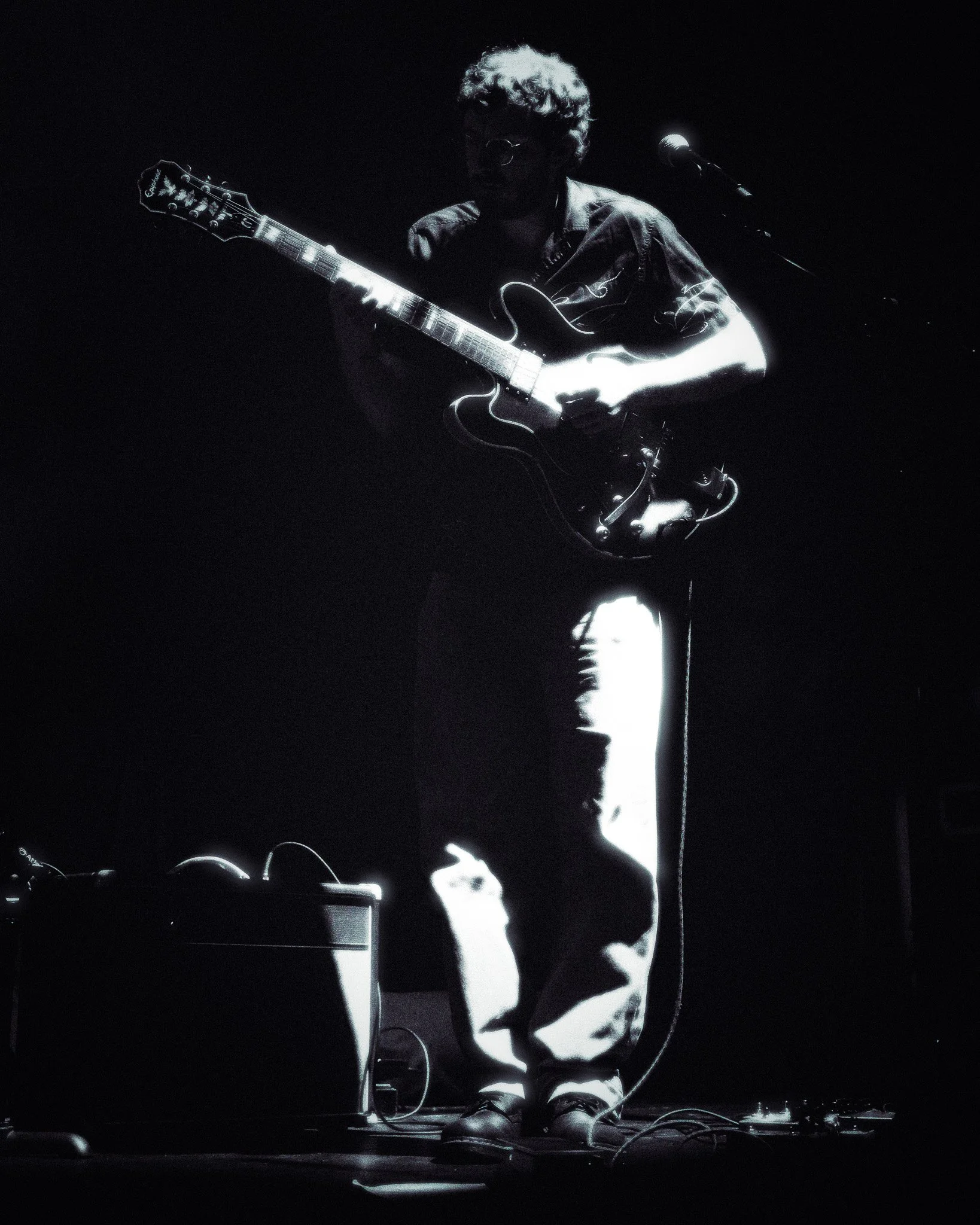
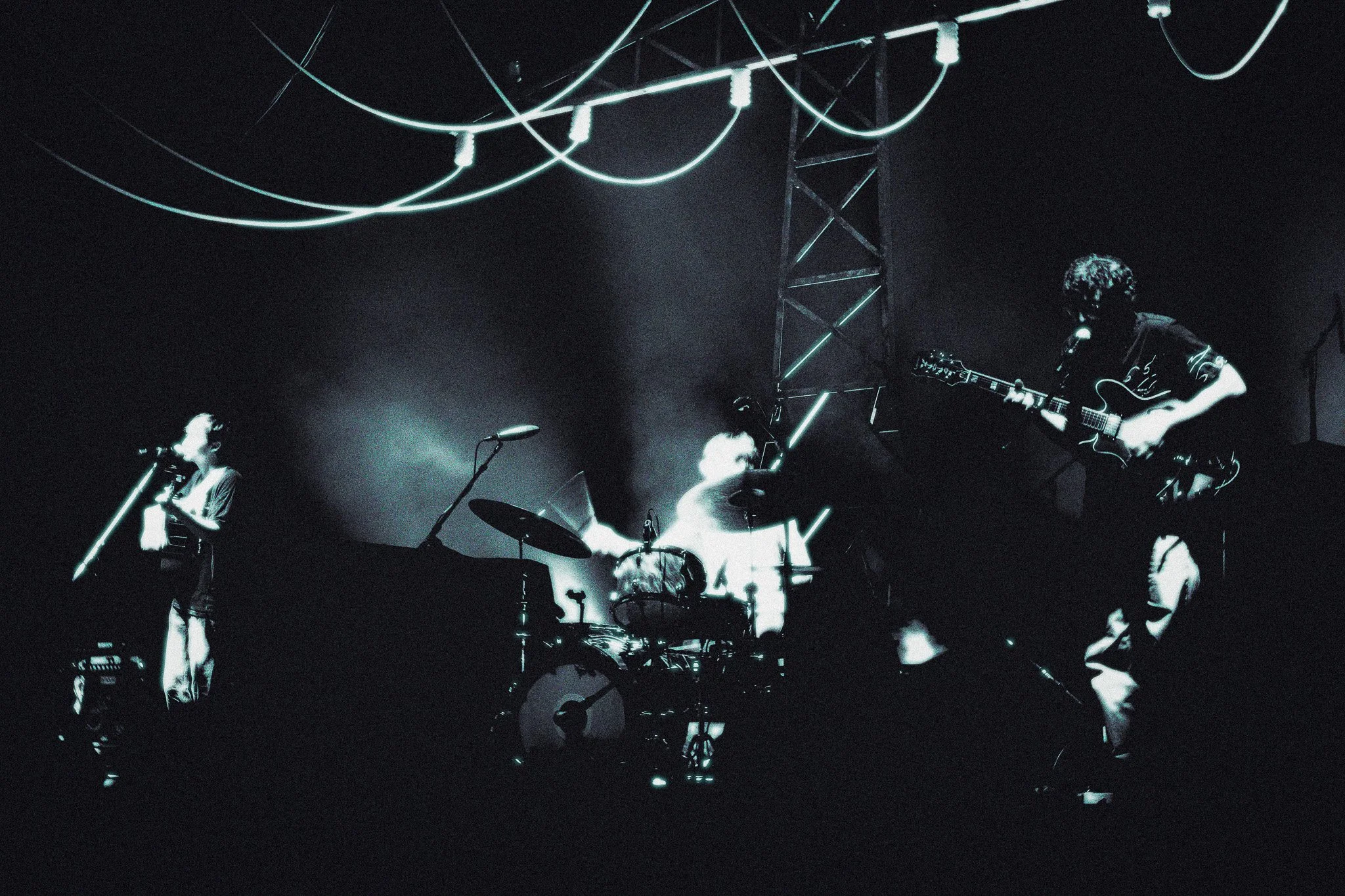
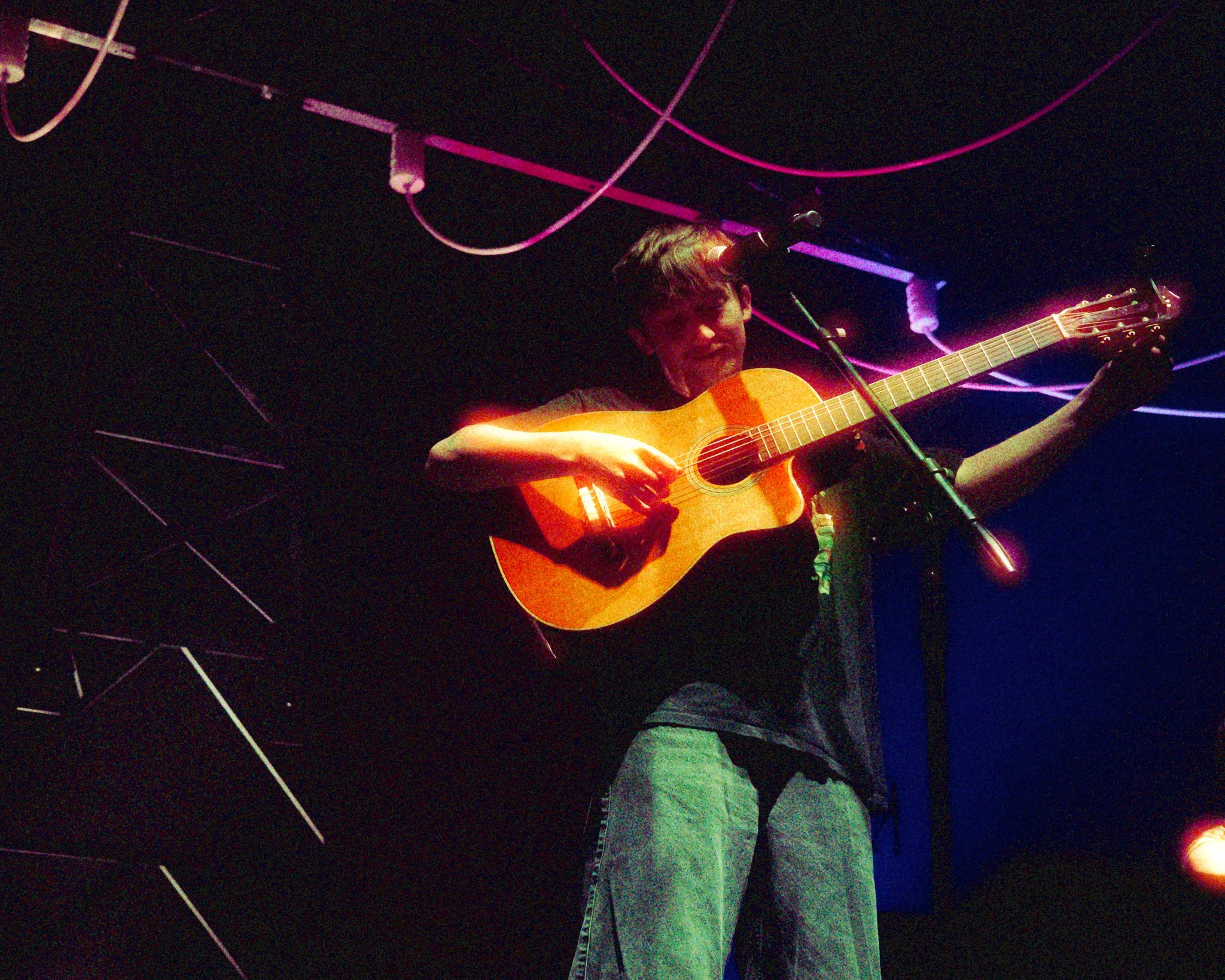
Atmospheric soundscapes and a heavy band elevate his signature guitar, as he explores a dystopian storyline that hit startlingly close to home, especially to Americans.
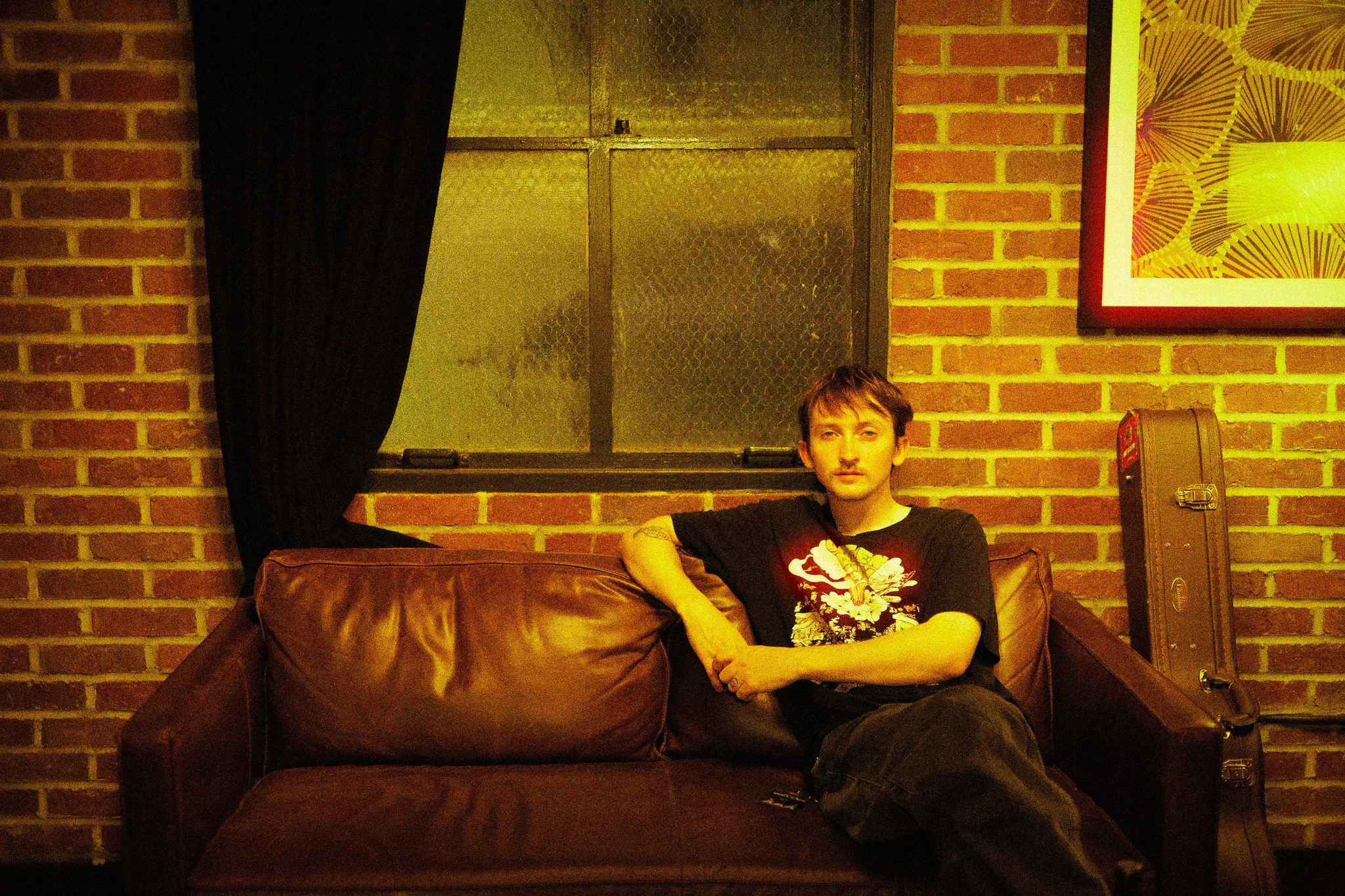
About this time last year, Hudson Freeman had his first taste of sweet virality. Standing in front of a cornfield somewhere in middle America, Freeman posted a no-frills clip of him strumming the riff to his song, “If You Know Me.” Although a passing tumbleweed would’ve been the cherry on top, the video stopped scrollers in their tracks, beckoning guitar heads to offer their own attempts at the riff, even compelling John Mayer to share his take.
The algorithmic approval is always an appreciated garnish, but Freeman’s latest project fulfills his craving to go beyond what is catchy. It’s a record that tells Freeman’s story before we knew him, in a way that he truly feels proud to share. The concept album, titled Doom Country, invites listeners on a “post-apocalyptic road trip.”
Freeman met up with Pleaser on a makeshift coffee shop patio in Brooklyn to detail the sounds, sights, and stories that sit between the lines of Doom Country.
Pleaser: You've previously described this album to be “in the vein of Illinois, Nebraska, and Ghosts of the Great Highway.” In what way do these records trickle into Doom Country?
Hudson Freeman: The main route in was that they’re conceptually oriented around travel, so that road trip trope was probably the big lead. Sonically, I’ve always been hugely into Sufjan Stevens. In my early music, before I went more indie-rock, I wanted to have it sound as big as possible, with strings and horns making it cinematic and theatrical. That was a big task with this record— trying to take this twangy grunge thing and put it into a cinematic space. I’ve been getting into low-fi recordings and recording on cassette tape, which Nebraska was recorded on a four-track cassette recorder. It’s probably my favorite Springsteen album. It's weird and dusty. Then for Ghosts of the Great Highway, Sun Kil Moon was one of the reasons I started playing nylon string guitar. It’s not as present that much in that album, but a lot of the songs on it inspired me as a songwriter. “Turning Green” and “Celebration City” on Doom Country are inspired by Mark Kozeleck’s style.
Was a lot of this record actually written during one chunk of time on the road, or has it been pieced together over a longer period?
HF: This is the most consistent chunk writing I’ve ever done. When “If You Know Me” got big on Instagram, my guitarist and I started talking about the sound of the song using the phrase “doom country.” It was a sonic descriptor for us, referring to the almost doom-metal-level slowness, put with twangy country music. Doom Country is not really a country record, but I started thinking of the album from that title, then started thinking up this world for it. I started writing songs and piecing it together from October of last year to April and May of this year.
I never actually thought about the word “country” in the title in the sense of genre. It didn’t align with country to me. Lately I feel like “country” gets slapped onto slightly twangy takes on rock and alternative music.
HF: It’s more like slowcore a lot of times. I saw some interview with Nate Amos of This is Lorelai. He was talking about how a lot of that “indie twang” is just slowcore with a twang accent, which is pretty true to me. I feel much more inspired by like, Duster, than I really know country music. But the more I was conceptualizing the album, it was less about that initial genre descriptor— if you could call “doom country” a genre. Doom Country started to lean more and more into this apocalyptic narrative. It took on a whole new valence when I started thinking of it that way.
From the first few seconds of the record, on “Left Behind,” you plant the emotions of uneasiness and impending distress. It starts with windchimes clanking and dated, reversed recordings. What are these recordings of?
HF: In the second part of the song they’re forwards, in the first part they’re backwards. Because this is a road trip album, I wanted it to sound like you’re dialing in a car radio throughout it, like it’s a radio transmission. Whenever “If You Know Me” came out, there were all these comments that said it reminded people of The Last of Us or Fallout, these apocalyptic video games, and old radio recordings are a feature of Fallout. I also kind of wanted the album to feel like it’s from the past, so we went and pulled from AM radio. It felt appropriate with all the religious themes— most of AM radio is just preachers.
If somebody wasn’t really picking up on the concept, the recent video for “Fell Ass Backwards,” definitely illustrates it. Tell me a little more about that song and its music video.
HF: It’s kind of a silly song for me. There’s not really a whole lot of thought, it’s mostly wordplay and trying to be fun. Whenever we started recording it, it took on this carnival-like sound. It feels a little queasy and shaky, so we brought that jerky and disorienting look to the video.
I got this really bad haircut like two days before the shoot, so I thought, what if I have a head wound?— as if I literally fell ass backwards before we started rolling. It was just to cover my bad haircut, but it became a key part of the visual.
There’s a quality to the song that felt immediate, so that was why I picked it as one of the singles. I like my music to feel overwhelming and disorienting, and “I-40” and “Fell Ass Backwards” were the best to put forth to show that.
And this will be the first record you’ve put out with a label [Mom + Pop Music]. You’ve expressed hesitations in the past about signing to a label in general, but was it helpful in bringing a project of this nature to life?
HF: I don’t really come from money. So, this was the chance to have a budget for some of the production costs or to make videos, and then to have institutional connections to support the record from a publicity standpoint— of course it’s been hugely helpful. It’s a label that has a roster I am excited by, like underscores and Magdalena Bay, who I think are really forward thinking, and tasteful artists who push forward. I’d like to think I could bring some of that.
Another enhancement to this record are your wife, Sophie Brown’s contributions. Beyond lending her voice to many of the harmonies and her likeness to the cover, how else has she been a key player in the creation of Doom Country?
HF: She has written all but two of the songs with me. This is our first time being a writing team on an album, so she has been absolutely integral. We come from similar backgrounds; we were raised in the same evangelical denomination and we both had parents who moved us overseas as missionaries in our childhood. Part of being missionaries, at least in the denomination we were from, is traveling around. When you’re not away, you’re going around fundraising for your mission work, so a lot of Sophie and I’s childhood was traveling with our parents. The themes have to do with our religious upbringing and the apocalypticism that we grew up with. It’s a very personal project to the two of us, and important to me for her to be on the cover to visually take this record off of my character. To have her be the avatar kind of opens it up.
My personal favorite contribution of hers is on “10.08.22”, when she chimes in right at the end. That was a doomsday song to me. I’m hearing heartfelt vows between two people, imagining them having coffee in the kitchen while the house tragically crumbles around them.
HF: That is a song I wrote for her for our wedding. I released a demo of that the day before it that you could find, but with the album being close to us and our story, having that anniversary song as an actual thing was so cool. It does feel tragic. For me, making the vows “onto death” has this beautiful yet hopeful yet tragic quality to it. I don’t know, It’s hard to talk about it.
In a lot of dystopic or doomsday-centered media, there’s an image of a brightly burning sun over leveled ground or decimation. As to say, there’s a distorted beauty to “the end.”
HF: I think so.
To me, what is compelling about the "post-apocalyptic road trip,” and part of why it’s such a compelling media thing, or [why] it makes for good stories, is that it’s weirdly a f*cked up fantasy. You get to live in this world where all of a sudden, you are the kings. There’s something cathartic to me about imagining us being bad-asses, thriving in that kind of world.
Are there any further elements of fantasy or fear on Doom Country that you think are important for the listener to pick up on?
HF: There’s a big unspoken thing hanging over the album. On the title track, “Doom Country” and on “Western,” I house the ideas in a more direct way. I was trying to explore how I felt about America and being an American. It’s a weird thing for me to think about as someone who lived overseas as a kid, and now basically my whole adult life has been oriented around Trump’s America. When I was a kid, I was raised with a paranoia of the world ending. As an adult who has moved on and is not a part of that ideological world anymore, I still have that fear and paranoia.
This record imagines that end in a farcical, f*cked up way, which is kind of like talking about America and the despair that exists here right now.
I like the idea of a slowcore album about America, because everything feels so sludgy and literally everything’s getting hotter. We feel like there’s nothing we can do and we’re slowly trudging toward this apocalypse…I’m putting it together in a way that I can’t quite articulate that well, but to me it all feels like one piece.
Do you feel like these are thoughts you’re able to articulate through the album, but maybe not in plain sentences?
HF: Yeah, I think it’s a little abstract and the album is my way of getting my hands around it all.
I hear what you mean. When I was overseas recently, I met a man from Germany. When he heard me speak he asked if I was American, to which he said, “I’m sorry.” Nothing more. I was so taken aback, I didn’t know what to say.
HF: I was getting that in Europe all the time. It’s easy to see when you’re overseas, even when I was a kid. It’s like we were born into Rome right as it’s crumbling. It makes me feel like those evangelical ideas about the end of time are really talking about the decline of American power— which is scary because we still have so much power. I have a lot of anxieties about this.
What about anxieties about your artistry? Recently you posted a story saying, “Releasing music is humiliating.” Although your posts tend to be humorous, that crosses a lot of artists’ minds. Are you hesitant about sharing projects so personal to you?
HF: Even before I had any eyes on me, I didn’t know how to feel when I released music. I didn’t know what the goalposts were, or what metrics I’m looking at. A year ago, I had this crazy media thing happen, and now I don’t know how to gauge my success in comparison.
Anytime I share work, I’m always caught up in if other people think it’s good, but at the end of the day, if it’s for me it only has to be good to me.
HF: Yeah! I think these songs are really strong, so when it doesn’t hit, I feel like I took a giant swing, missed, and went off thinking, “I should’ve hit that ball.” It’s an ego thing…I might actually not have anything that helpful to say to this.
You’ve been putting out albums for a long time though, so do you find yourself looking back on previous works wishing to do them over?
HF: I think the old music’s terrible. But I was finding it. There are glimmers, but I always look back and think I could’ve done it better. One thing that is embarrassing is maybe how profound certain things have felt in the past. I think the more albums that pass the better, so I have to keep making more albums.
Do you think that with Doom Country, you’ve found “it”?
HF: Yeah, I think this new album is awesome. I’m really proud of it. The next thing I do will probably not be with acoustic guitars, I’ll go electric. But right now, this is the culmination of the sound I’ve found over the past few years.