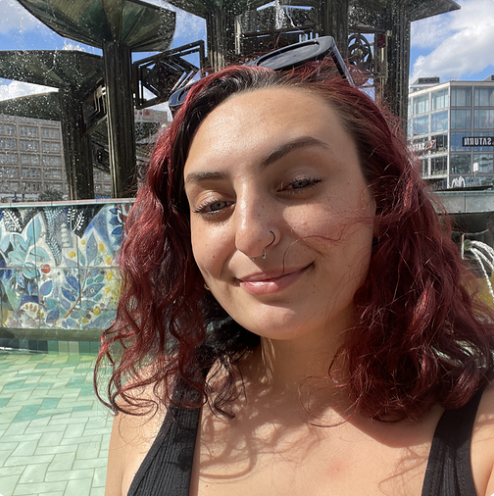
Eliza Mclamb’s Sophomore Album Finds What Comes After A ‘Good Story’
As she picks apart a self-created narrative, Eliza Mclamb gets free
in the space beyond words
Eliza Mclamb’s thoughtful lyricism is a trademark of her work, which confronts hard feelings, slippery time, and love in its many forms. But her latest album, Good Story, takes a leap that proves an even more masterful writing, by parsing through the need to create a “story” and telling a new one in the process. Or maybe, telling many stories that don’t always agree with one another — representing her own belief about separate parts of the self that are in conversation with each other, blurring the narrative that songwriting often relies on.
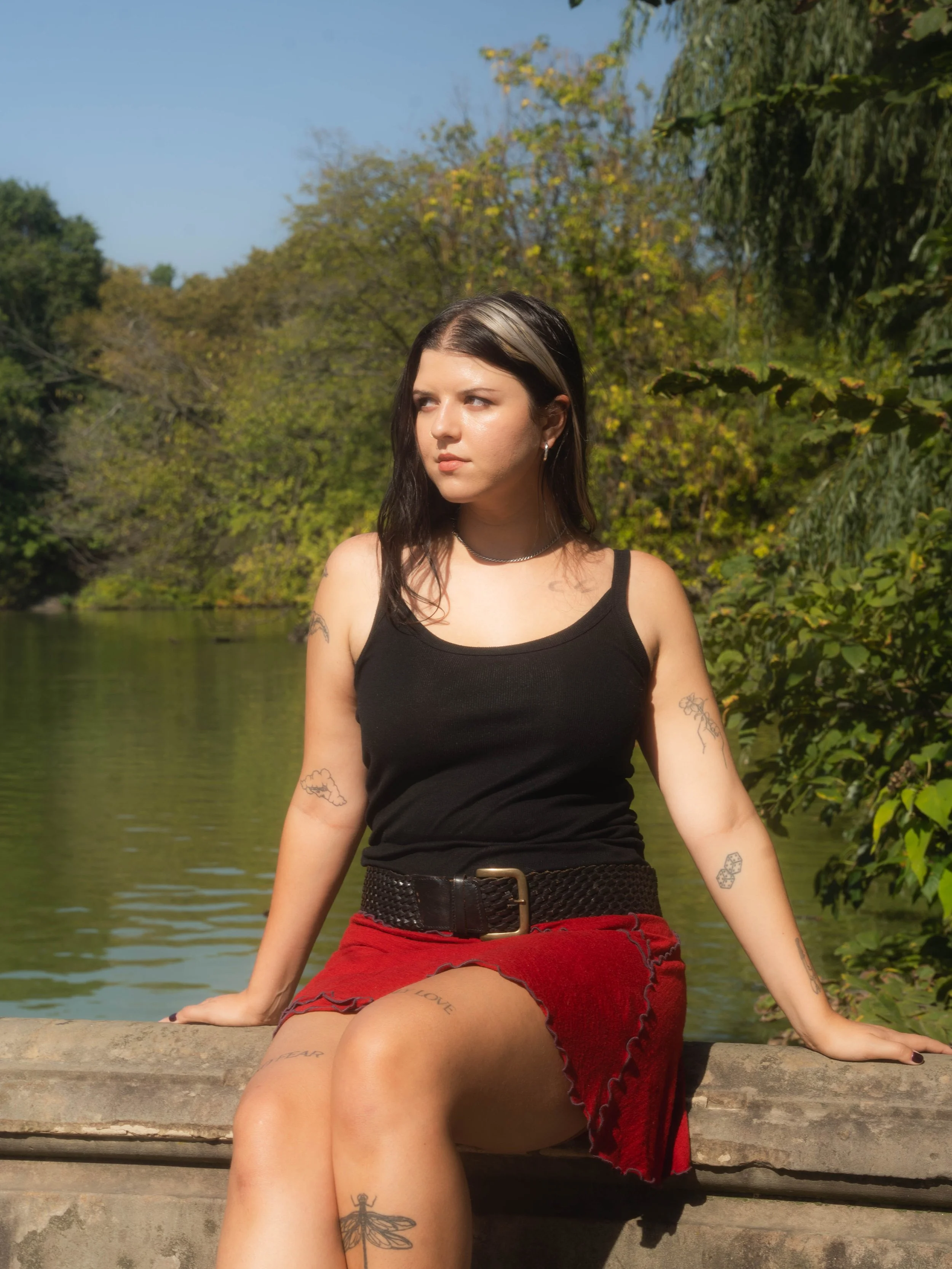
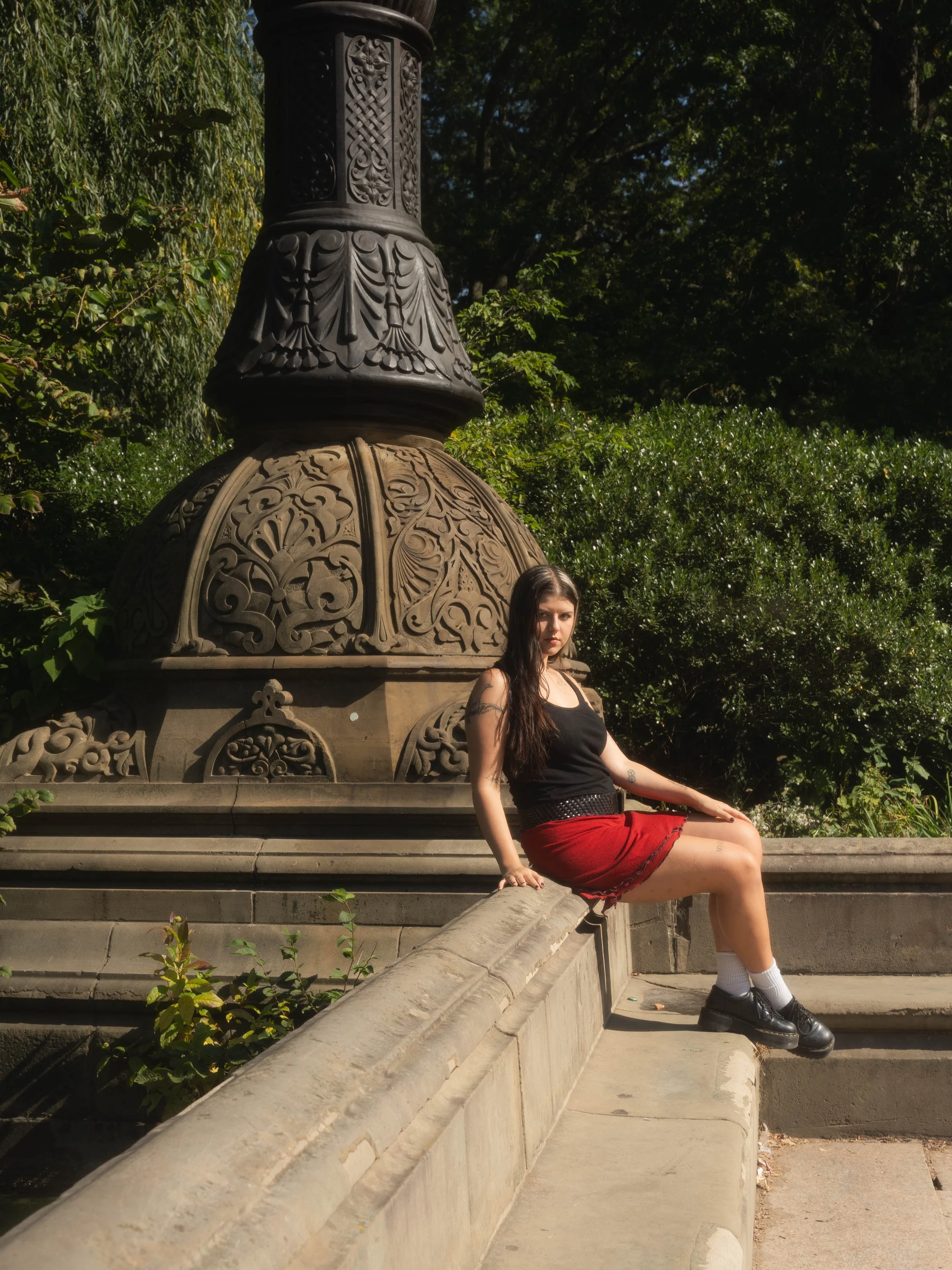
PHOTOS BY NIAMH MURPHY
In an interview with Pleaser, Mclamb tells us the album grew from questioning why building a narrative felt so important for her, and where “making sense” of things took her writing.
“I kept having the question in my mind of, okay, now I have made narrative sense of all the things that happened to me and what I feel has affected me, but what does that do for me? Beyond validating myself or making order of my life, what use is there for it?”
With each project, Mclamb’s music takes up a bigger sonic space. And while always lyric-forward, her latest album stands out with several tracks opening up into the sound that comes after there’s nothing more left to say of a story. She even lays this sentiment out aptly on the last line of “Talisman,” singing, “What is there to do / Except to write it down / When I’m through there’s nothing left / Nothing but the sound.” Her choice to complement refusing a “clear” narrative on this album with a deeper focus on instrumentation is a choice which brings each of the 13 tracks to life, taking listeners on a full journey.
The opening song, “Better Song,” begins on solitary metallic guitar chords, with her first line “I have trouble with memories” setting the stage. But, after it invites the rest of the band in, it builds and builds until it finally cascades into a full-bodied, rock instrumental that is clearly ready for the stage. In fact, Mclamb tells us that the live factor heavily influenced her instrumentation choices for this project. It adds the meaning to tracks like "Mausoleum" and “Water Inside the Fence,” but it also simply makes the creation more fun.
But, of course, in a story about stories, these moments are also part of the tale. In the case of "Mausoleum," the instrumentation is a first-take, organic response from each band member hearing it for the first time. It’s a gentle song about the construction of stories which keeps one held within them, constructed for safety before the experience and feelings are even underway. The inclusion of real-time direction, inter-layering counts, and the cacophony as the band follows the repeating lyric “It’s the only thing I have,” down a spiral is what truly spills the emotion.
“It’s sort of a deconstructing of, getting out of, this verse, chorus, verse, chorus, bridge,” Mclamb says. “It’s this area that just allows the music to take over and lets me escape from the need to put words to what’s happening.”


Many songs on the album do exist in a classic pop song structure. The first single, “Like The Boys,” begins with just a few chords and her voice, but picks up quickly into an upbeat, pop-rock track — though the lyrics tell a deeper story. In what feels like a spiritual successor to “Punch Drunk,” from her first album Going Through It, Mclamb twists the title to show the tether goes deeper than just seeking male approval. She sings, “I like the boys like the boys like to shoot their guns / Something I can hold in my hand pretending to be someone.”
These lyrical turns guide listeners through not only narratives being pulled apart, but also that sense of internal conflict between “stories.” No one is more real than another and all able to be rewritten, as she sings about in the titular track, “Good Story.”
“A song is a very convenient structure to narrativize something that you’re feeling,” she says. “[In] the songs I’m sort of fighting with myself. ‘Good Story,’ especially is such a contradictory song. Like, ‘there’s no mystery to me,’ but then later saying ‘I can change anything I want about this story.’”
More than once, Mclamb has sung about her perception of time as something circular, rather than a straight line, which makes an appearance again on this album. In dissecting memories from the stories that surround them, a kind of time travel itself by revisiting the past, she emerges with tracks like “Talisman,” where she sings, “Going back in time / I see everything’s fine / Maybe that’s why I’ve been making stories my whole life.”
Again, the impulse to craft a clear story is exactly what Mclamb sought to understand when writing this album — even if turning the exploration into structured songs could feel contradictory itself. But in doing so, she found telling a story is not only sometimes necessary, it can even be something to be fond of when kept around, though not held captive to.
She tells us the heart of the album lies in “Every Year,” where she sings, “My stories kept me safe but now I understand / A story is a lifeboat and sometimes there is land / You can get out, tie your story to the dock / Now there’s so much more you can think about.”
“I think where I landed with how to relate to this impulse to build the narrative about things is that it’s okay to do that, and it’s meaningful to do that,” she says. “And it was useful particularly when I felt it to be in a dire place, but there’s a way to keep that in my life without holding onto it in a way that limits me, that keeps me in this little lifeboat. Versus being able to keep it around, be fond of it, being in relationship to it, but not be attached to it.”

The album works through Mclamb’s internal conversations, and by nature of the fact she says she wrote the album nearly in chronological order, builds each song forward off the last. It wanders through “California,” a ballad thanking her previous home even after it stopped feeling like home. She laments on her years in California, writing better songs as she grew (in a lyrical callback to the opening track), building new strength, and finding love. She refrains in the chorus, “Fucked around with Hollywood preachers / Feeling saved, believing in it / Keep my freedom,” a sentiment that comes back in the album’s synthesis.
She delights in the truth of “Suffering,” which starts with a tinkling, lullaby-like piano and transforms into a pop-rock song taking proud ownership over self-sabotage. The first verse paints a picture of pain so simple it absolves one of any responsibility. But then, she admits her secret, “I get off on suffering / It’s my favorite thing / If I’m without I can’t figure out the point of anything.” It’s a proclamation no doubt her fans will scream along to live, mirroring the freedom in it.
“I had come to a point in my life where I actually had to reckon with the fact that I choose situations that hurt me because I like to be hurt. And once you take the shame out of that equation…It’s actually pretty freeing and fun, in a way,” she says. “There was actually something euphoric about knowing myself in that way.”
On the B-side, the ‘90s-esque pop track about past selves, “Forever, Like That,” looks forward to a life of looking back with more understanding, returning to her thematic time travel. Like the very opening line of the album establishing a trouble with memory, this song happily knows forgetting — lessons learned, stories told — is something she’ll do forever, and maybe that’s the only way to go ahead.
Together, the songs culminate in “Getting Free,” the final bright light she chases through the album, reveling in her past and her proclivity for change, with the knowledge earned throughout the previous 12 songs. In the end, it’s not so much of being free from the stories, or even the drive to sort time and memory into clearer pictures. The freedom she chases across the album comes in the acceptance of it all.
“I would never want to cast aside any story that I told myself to survive. That’s so important and I’m so grateful for that,” she says. “It’s a difference between feeling like you need it and feeling like you are at a place where you are comfortable to keep it around without needing to attach to it.”