Amouri: What it Means to Be A Creative
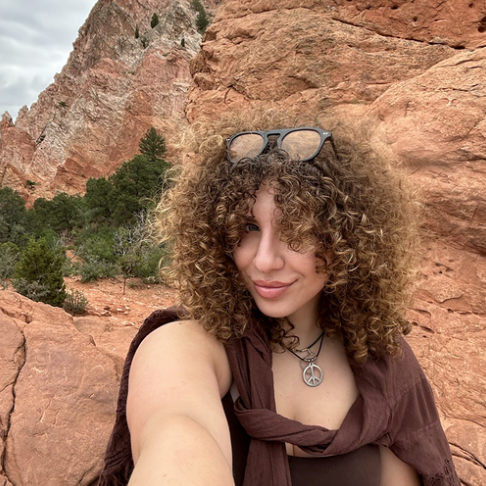
Amouri Edwards, known as Amouri, is a multifaceted animator and musician from Brooklyn, NY. By chasing curiosity, creating for the sake of creating, and prioritizing authenticity, she’s building a world all her own. Her story in itself is the construction manual.
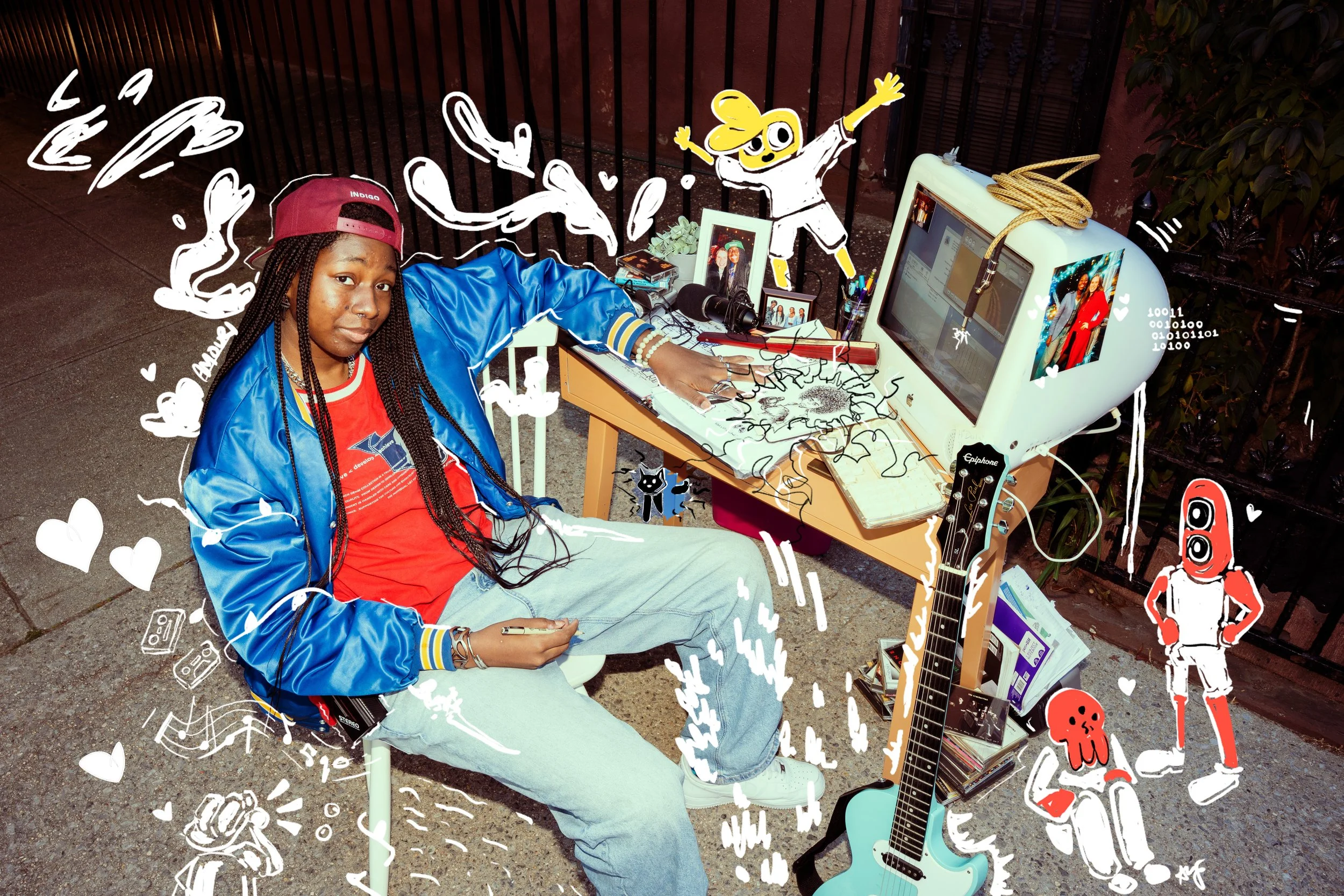
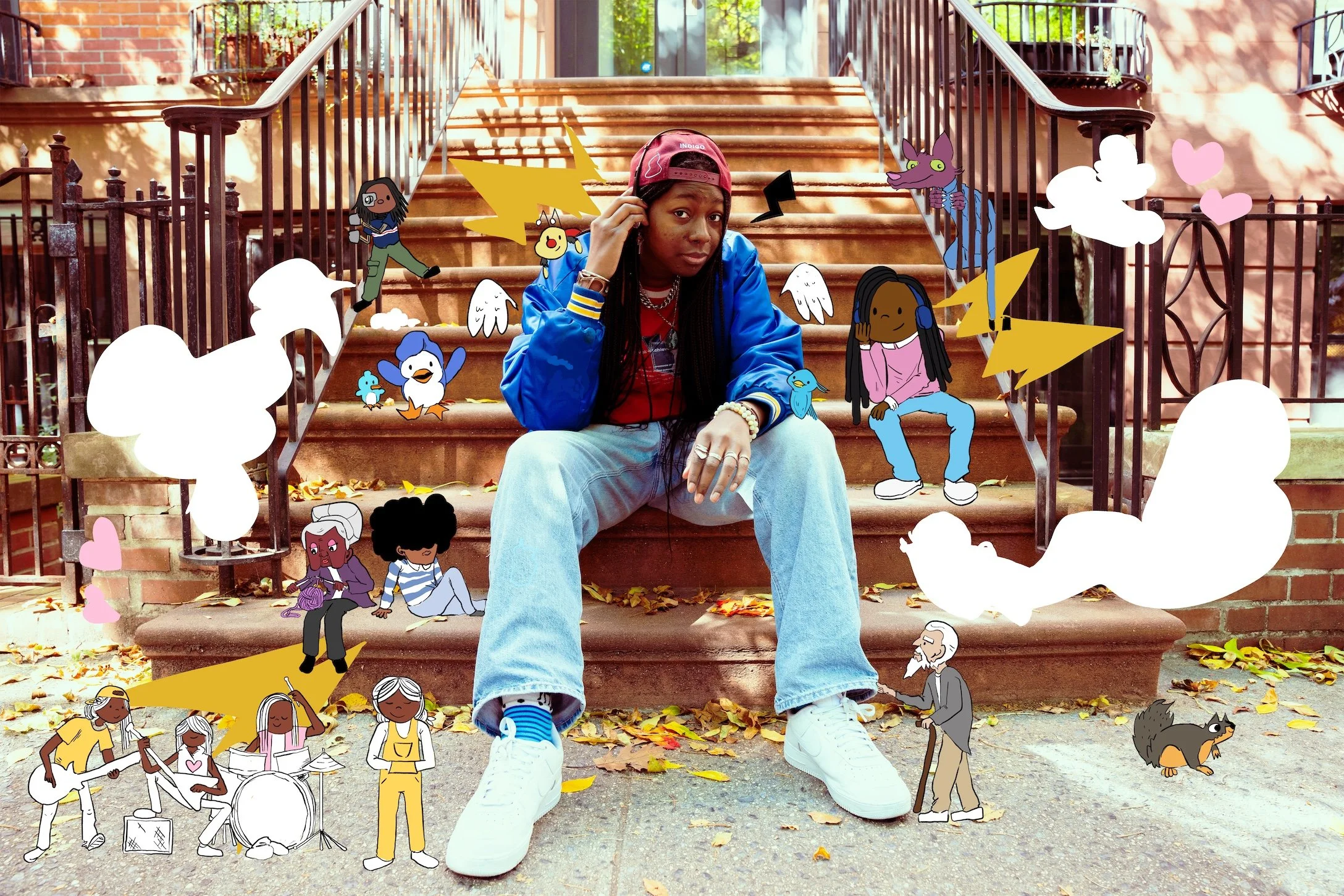
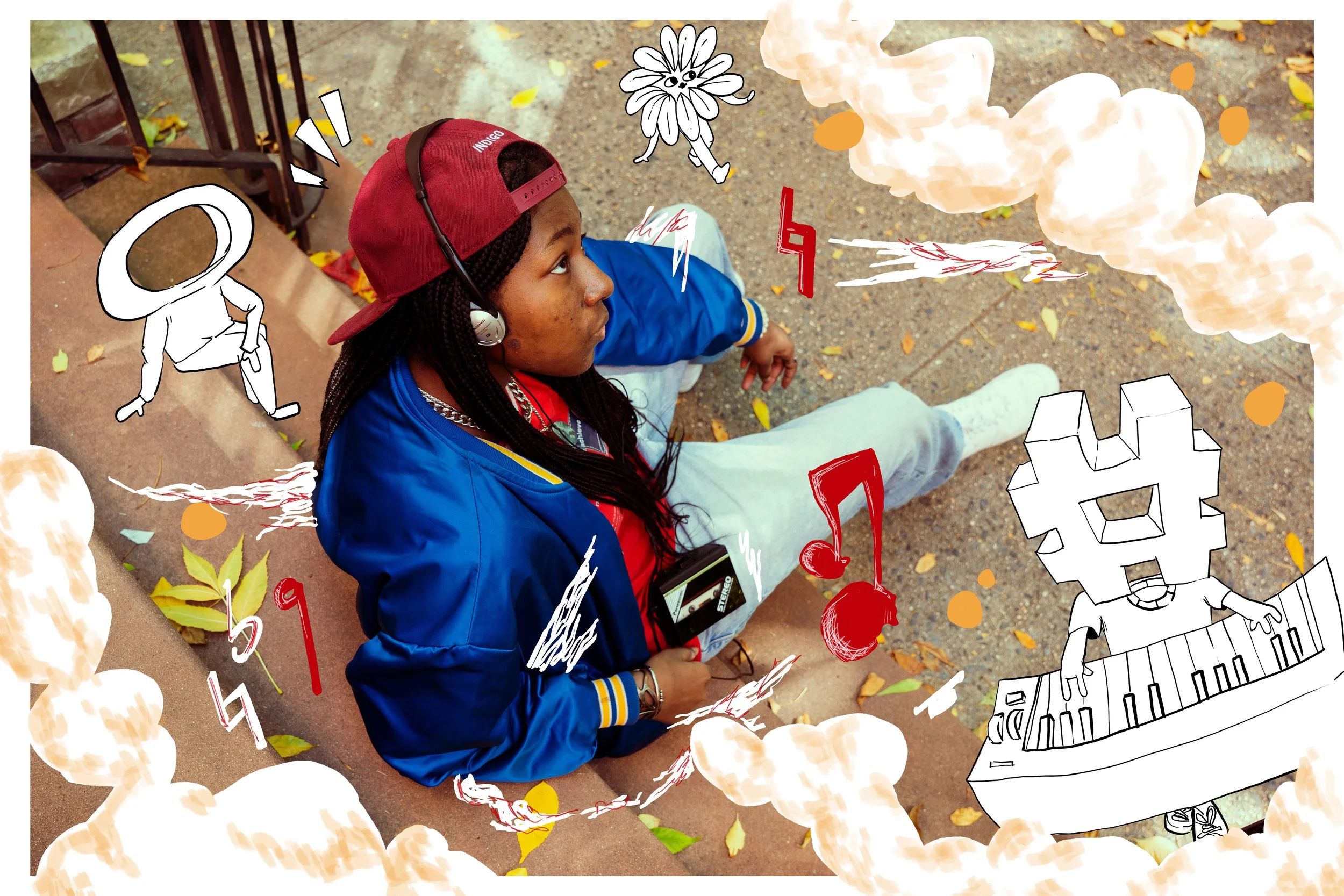
PHOTOS BY OLIVE JOLLEY // ARTWORK AND EDITING BY AMOURI
Not every artist is a creative. While an artist inherently possesses traits of creativity, there’s an on/off switch that separates mindsets of production and play. For a creative, curiosity and aspiration are omnipresent. There is a flickering light where their brain should be that reignites desires to observe, feel, mold, ponder and pursue with every pulse. If artists make the art, creatives are the ones constructing the museum. Amouri herself could fill one.
From building beats and writing songs to crafting animations and directing music videos, there are few imaginative skills that Amouri hasn’t tried her hand at. When not creating for herself, she’s developing the visions of others, primarily through her production company, Indigo Studios NYC. Out of all her talents, the most remarkable is the way in which she fuses animation with music.
Amouri’s discography often draws from the foundations of bedroom pop: soft guitar and tender approaches to themes of relationships and mental health. Smooth vocals and contemporary beats elevate her sound, adding the dimension of alternative R&B.
Many of these songs are brought to life through animated visualizers shared to her social media pages that coat already intimate works with an extra-personal finish. They feature bright colors and expressive characters, playfully cartoonish in a way that feels like a comic book has grown out of its pages.
I first met Amouri through an outburst of extroversion. After catching her set at an artist showcase, I was eager to introduce myself. Although mostly brief, we’ve shared a few exchanges since our initial meeting. Comically on brand, they’ve all been in some sort of musical or artful setting, from sidewalk photoshoots to Geese pop-up concerts.
It wasn’t until I read this conversation between Charli xcx and Yung Lean that I was able to put into words what exactly was so striking about Amouri to me. Charli xcx says to Lean, “I feel like we both have that thing where creating things makes us feel alive and normal.” I think it’s safe to assume Amouri has that “thing” too.
We set up a video call with the intention of compiling a Q&A-style interview. Instead, it became more of a classroom. I inquired about artistic origins, balancing creative energies and how passion transfers to career. In response, Amouri (unintentionally) devised a lesson on how to build a world, but not fall into it. I present to you my notes.
The Prelude
From the time Amouri could hold a pencil, her papers were covered in decorative doodles. There was never a day when she “chose” to follow a path of artistry. Rather, it had been whittled into the grains of her identity from the very start.
Born to a voice actor/comedian father and a Doctor of Literature Studies mother, the bricks of Amouri’s childhood Brooklyn home were grouted together with expressive tendencies. She specifically credits her mother for instilling a familiarity and a flourish for language and identity.
“[From my mom] I learned a lot about conveying emotions through words as well as articulating my thoughts in interesting ways … One of the things she had me do every week was go through the dictionary and write down 10 or 20 words and the definitions, as well as if they were an adjective or noun. I’d take that physical dictionary (that one people used to use!) and I’d put together a notebook, basically note-taking about different new words.”
Beyond the walls of their home, Amouri’s parents took an interest in developing her creative inclinations. She remembers starting her first official art class at 4 years old: Saturday children’s programs at the Brooklyn Museum. Around that same time, her parents also enrolled her in piano lessons.
When a young Amouri wasn’t creating, she was actively consuming. A smile fills her face as she recalls the first piece of media she owned for herself: Season 1 of SpongeBob SquarePants on VHS tape. Watching it on the family’s box TV over and over again, she knew from then on that animation was something she wanted to pursue.
Absorption of music has always been a constant, beginning with the soulful voices of Lauryn Hill and Jill Scott swirling through the family living room. Later, Tom Mitsch, Tyler, the Creator and early Brockhampton blasted through a teenaged Amouri’s headphones. Eventually, Bedroom- and alt-pop favorites like Los Retros and TV Girl shuffled their way into rotation.
Amouri’s first official go at producing her own recorded music was to fulfill sentiment rather than achievement. Towards the end of her senior year of high school, she gathered her friends together to record a song as a sort of audible memento. That song, “Green Blues,” now lives on Amouri’s first album, Crush.
While Amouri went on to pursue a BFA in 2D Animation and a minor in Film at The Pratt Institute, she also began to devise her sophomore album, My Name Means Love. The 2024 release follows a budding relationship, from root to bloom, and was accompanied by crafty music videos for “Orbit” and “WATCHIN” featuring Kenji. In the era of My Name Means Love, Amouri truly found her flow for blending elements both sonic and seen.
As for the present, visual work has demanded a large piece of Amouri’s attention this year— she’s dished out projects for Indigo Studios NYC, other musicians and of course, personal contexts. Still, there’s never a point in which a passion gets pushed aside completely.
In 2025, she managed to release 5 singles. Most recently, Amouri put out “GO MODE” featuring rivan (she also painted the single’s cover art) and squeezed in an appearance on hip-hop artist Trick James’ album, Rehab in Paris.
Trading Perfection for Perception
Having so many passions working in conjunction is equally a strong suit and a setback. Amouri notes that she’s constantly thinking of flowing one project into another, making it hard to decide where one should end and another begins. She’s got a stash of music videos that almost got made, save for a few shots, and plenty more imagined plans for songs, animations, or other works of art that haven’t had the chance to take physical form.
“I have the largest immersive world that I love to build … Sometimes I get held up on it, and therefore don’t give myself enough space and time to develop other ideas and let pieces live as their own body of work … If you want to build a world, you want to do the music, you want to do the animation, [then you must] understand you have to sacrifice in that it can’t all be as perfect as what’s in your head. A lot of artists start to get caught up in that and never finish anything.”
For Amouri, where she sacrifices depends on her priorities at the given moment, whether that’s producing the best reflection of a message she wants to convey or focusing on the work that will be most valuable to her career. Applying a forgiving mindset also helps her to release a grasp on perfectionism and remember that her art is just as worthy in standalone form.
“Learn how to play and explore without immediate criticism. Sometimes it’s OK to not know what you want and to create for the sake of creating. I think a lot of people have lost or forgotten that as an artist.”
To remind herself of this, Amouri has returned to carrying around a sketchbook, doodling and drawing as the urge strikes. It’s a sort of appeal to the inner child whose hands lurched in excitement at the thought of dragging pen to page. Re-activating that sense of play in a musical sense, she’s taken to sampling, toying with drum beats and fiddling with pairings of influence.
“I think a large part is being perceptive. I started thinking about my perception of the world again and meditating in the space around me—recognizing a lot of people are wearing a certain kind of shoe, questioning why all the ads feature faces that look a certain way or wondering why these seats are designed how they are. Once you start picking and pulling at the world around you, it reinvites that aspect of play. A large part of play is curiosity.”
Applying Authenticity On-Screen
When I ask Amouri for her thoughts on social media, specifically TikTok, as someone building a creative career, she hesitates briefly, collecting her words before she shares them. She disclaims that it would be unfair to “diss” TikTok. Posting on the platform, alongside Instagram, opens so many doors that would otherwise require a key.
For one, social media extends Amouri’s reach in business, launching opportunities to direct and animate music videos for other artists, like the recent production for Raydeo’s “Silly.” It also forges connections with new collaborators, seen in action with N’shai Iman’s feature on the song “MISSING.” Despite having a few resources that strengthen creative careers, keeping up with social media can feel like hauling deadweight.
“On the days I don’t post [on TikTok] or don’t post consistently, my numbers go down. It’s not necessarily about the numbers for me, but I don’t want to lose the progress I’ve built. It's a bit draining, a bit dystopian to be recording 6 different videos at a time, sitting away from my tasks to edit a video.”
She elaborates on the frustrating uncertainties of content creation; quick-take clips of dancing in front of the camera might garner more likes than a time-consuming animation to pair with music releases. For those who aren’t absorbed in analytics and racing the algorithm, keeping up with social media becomes a strain on the creative brain. But Amouri is rather analyzing her experiences than complaining about them. She’s still eager to continue rolling out projects and promoting them across multiple platforms, holding her socials to the same standards as any other medium of her work.
“I definitely think sometimes I over-exert my energy … [But] I want people to look at my Instagram page and think, ‘Wow, this is full of color, this is highly designed and curated. I can see what this person is doing, the style they have,’ rather than it being a hodge-podge of mediocre work.”
A priority for inclusivity is a signature marker of these quality standards. Whenever applicable, Amouri includes closed captions on her TikToks and videos, ensuring that those who have a hard time hearing or understanding the content have an easier experience. I’m heartened to hear that Amouri’s leading concern is not the scope of reach her work has, but for any and all content to resonate with exactly who finds it.
“It’s always been about authenticity to me. I first started posting with my ALRIGHT EP. It was very mental health-centered. I was sharing pieces of myself in the hopes that it would connect with people so that they might feel less alone. I was posting to bring an audience comfort in their experiences, because I know those are things I would’ve wanted in my deepest moments with my health.”
Letting Go of Impressions
“If there’s something holding you back, especially fear of people’s criticism or that people won’t get it, don’t allow that to hinder your ability to express yourself.”
Anyone who makes art, whether professional or for pleasure, knows imposter syndrome is the grim reaper of creativity. It makes me wince to even think of how many unique or progressive ideas got too caught up in impressions to ever become real creations. In order to reach the finish, you have to first cross the starting line. As well-rehearsed in her own creative processes as Amouri is, she too hesitates to take that first step, but in retrospect, there’s never been a time when pushing through the initial slug of a first draft has produced anything short of productive.
“There were days when I was about to submit [my first album], and questioned if it was a good representation of me. Everyone else had higher production value or a larger fanbase or had promoted their work more. But if I didn’t put out my first project, I wouldn’t be able to look back on it, now on my fourth project, and hear what I was trying to get at. I can now understand the parts of theming, songwriting and production that needed to grow.”
The Postlude
After signing off our video call, I revisited Amouri’s social media pages to reassess my interpretations with my newfound context and connection. I stumbled across a caption from earlier this year that struck me, and one line in particular made me want to kick my feet with glee: “Since I was a kid, I dreamed of a reality where I could pursue all my passions, being equally involved in all the things that make me happy.”
If there was ever a time in which a space to learn a new technique or explore a new form of expression was not provided for Amouri, she made her own. That reality she hoped for so badly as a kid exists because she made it, driven by optimism, eagerness and authenticity— the spirit of a true creative. Amouri doesn’t just make her art, she lives it.