PHOTO BY DAVE JENKINS
Created over five years, Odette’s forthcoming album Blink represents a journey through her most transformative moments, piecing together moments of rage, grief, absurdity and revelation into an album that is both euphoric and deeply human. Across its contrasting songs, Blink becomes a patchwork of experiences, each track contributing to a story of healing and reclaiming her own power. In conversation with Pleaser, Odette reflects on the five-year journey behind the record, the freedom and urgency of creating outside the major-label system and the strange, almost instinctual process of turning emotion into music.
PLEASER: Blink has been created over four years. How does it feel to be releasing this body of work into the world and let go of something you’ve been working on for so long?
ODETTE: Weird. Good, I think? I haven’t really put too much thought into it yet. I don’t think I’ll fully process it until it’s fully released and people don’t think it’s trash. It’s been an intensely strange five years that I don’t even know how to put into words.
You’ve already released a few singles, how has that reaction been?
O: Really great, we got a lot of radio support and people are really loving them. It’s nice to know that people are listening and resonating with what I’m trying to do.
How has your relationship with the songs changed as you've grown alongside them? Did you find yourself returning to the same songs and reinterpreting them as your life changed, or did you generally leave the emotions of the day intact in the recordings?
O: I write music so I can process my emotions, so everytime I’m singing a song, it almost feels like I’m still processing things. Listening to and revisiting this music takes me to a new place, but it feels like a never-ending process of creating.
What is your creative process when making music? Do you journal or do these emotions come up in studio sessions? Do you think of a lyric first or a melody? Walk me through what that looks like for you.
O: I think music has always just come to me. I don’t journal as much as I probably should, I’m actually taking a break from journaling right now because I’m quite an obsessive person and can get caught in my head a lot. Sometimes journaling gives me a place to ruminate on those thoughts. I find that I need to stop being constantly in my own thoughts, even though I understand the catharsis that comes with it. Music is my journaling in a way.
I feel like I know when I need to write a song. I can feel it under my skin. I get really agitated, and if I don’t have access to a piano, I'm going to find somewhere to sing. Hopefully I get access to one before I go crazy. Then, it just happens. My best songs almost feel like I’m possessed, I don’t even think, it just comes to life. My role as an artist is to translate what I feel already exists somewhere. I just have to be able to do it justice in a physical way when I’m materializing it.
Blink is your first album as an independent artist, following your departure from a major label. Did stepping away from that structure change the way you approached making music?
O: I suppose I’ve been a little bit more uninhibited. When we were making the record, there was an urgency and almost a desperation behind the music-making. I’d spent so long without access to a room with a piano, which is my reason for being alive. I met Kiah Gossner after a couple of years not being with a label. He said to me, “Let’s get in the studio.” By that point, so much was happening in my personal life that he picked up on it and told me “Just go. Do what you need to do.” He facilitated the space and amplified what I was trying to do in such a beautiful way. He’s such a genius human.
There was a lot of gumption behind this record, and I think you can hear it in the music. It’s quite dense, but still euphoric and transcendent. There’s a lot of urgency behind it. There was just so much I had to process, and so much had built up over many years, I felt like I needed to get into a room and let it all out.
Some of the piano writing is more complex than anything I’ve ever written before, which is proving quite difficult when it comes to relearning everything for the live shows. The pressure is on! I’ll be playing something thinking, “Wait, how did I do that? I don’t even remember writing that.” For the next record I’m going to make something minimalist. I’m going to play one note and scream. I’m going full Yoko Ono.
BLINK ALBUM ART
You have a show in Sydney before the album comes out. How are you planning to bring this new set of songs the audience hasn’t heard yet to the stage?
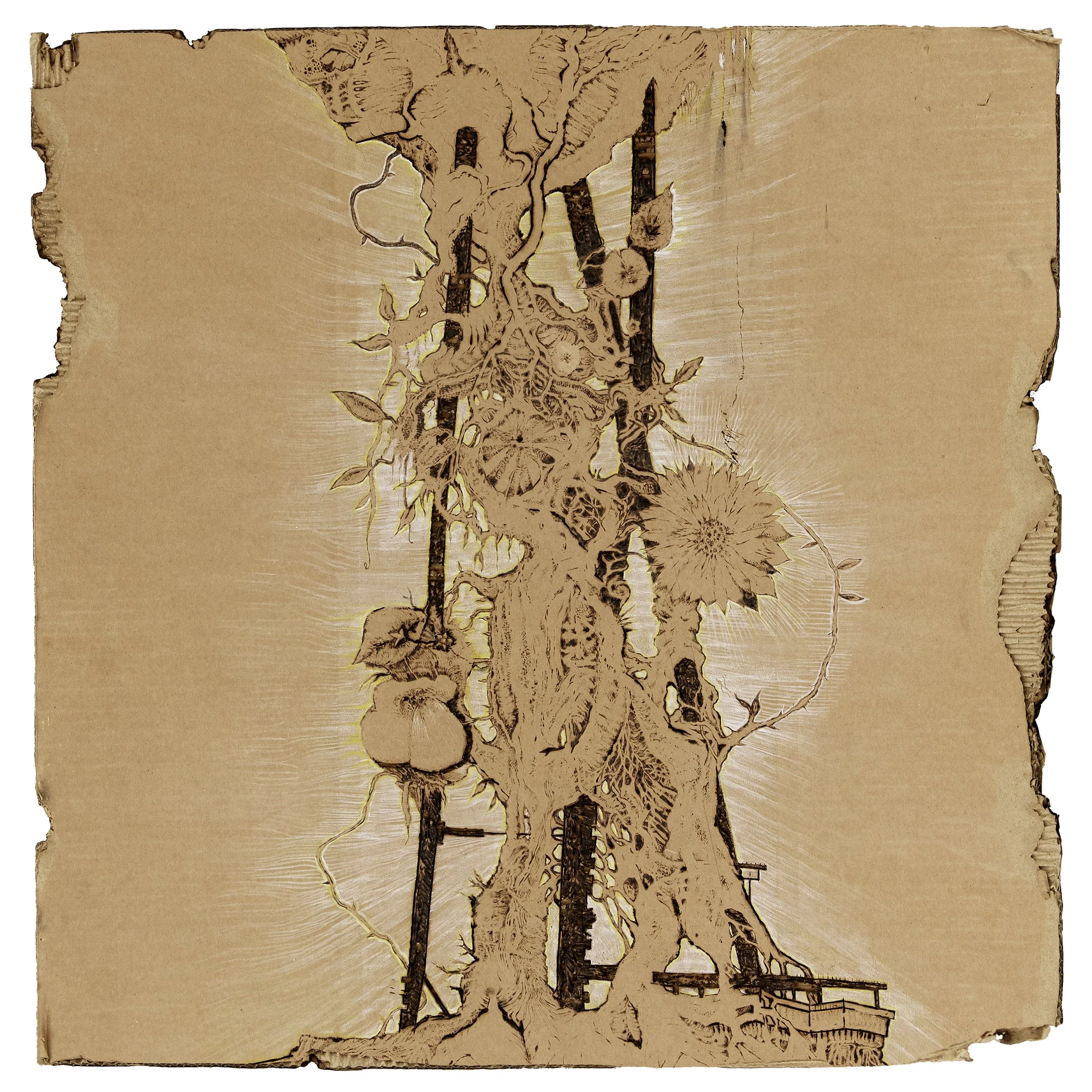
O: It’s going to be a little early show for the album release. I made my stage set out of cardboard because the actual album art is made of cardboard. I wanted to incorporate that as much as possible. The show is just my band and I, Dave plays drums and Ben plays clarinet, guitar and keys. The rehearsals went so well, it was my first time playing these songs live. I was a bit nervous going into it, it’s one thing to record a song but it’s another to take it to a live stage and hope that it translates. I was really happy with how everything turned out.
You’ve performed on some pretty large stages in Australia, like the Opera House and Splendour in the Grass. Do you still get nervous before stepping onstage? Or is it just pure excitement for you?
O: I usually don’t get nervous, mainly because I’ve been volunteering for as many stages as I can since I was little. That’s my goal in life, if there is a microphone I want to use it.
But this show feels different, this album is so much of me, without a big team or all the machinery of a major label behind it. This whole project was put together by my tiny independent label – they’re the best – Kiah, who works with the label and is my producer and my PR team. They’re all amazing, and we’ve worked very hard for all of this to come together.
You've described the stage design as incorporating patchwork and cardboard. You've also described the album as each song being a piece in a larger patchwork of disasters and epiphanies. Does that reflect what the album means to you?
O: Absolutely. I think everything is linked, and everything needs to be telling the story. I also grew up with set designers. My parents are both in the film industry, so I feel like it's just as important to visually represent what I'm singing about. The set looks quite decayed and ruined, but it's all about finding new life amongst ruin. I feel like that reflects my personal story, but also how everybody is feeling right now. It's that feeling of, "What is going on, and why is it so difficult to feel like a human being right now?" I think that's genuinely something we're all working through.
I'm 29 and coming into my 30s, so I'm learning what it means to be an actual adult.
This album is about maturing, but not necessarily perfecting it. We're just trying to harness the reins a little bit and put something light out there.
I'm trying to put something nice into the world, even though there's so much weight everywhere.
When you first started creating the album, did you have a clear idea of what you wanted it to be? Given that it was made over such a long period, was it more of a patchwork of different ideas? Were there songs in the vault that you had to pull from?
O: Oh my God, the vault. I don't even want to think about the vault. Do you know how many songs we have? We've got about two other albums sitting there. It's about finding the songs that most represent what I'm trying to say with this record. We lost some good ones, including songs that actually belonged on this record.
But it also comes down to budget. We didn't have any money. We're not a label with resources, and I'm not a resourced artist. I'm fully self-funded, so it comes down to what we can afford at the end of the day. I think we've done an incredible job of honouring these beautiful songs. Honestly, I'll probably just leave the other ones where they are.
How did you go through the process of choosing which songs would make the album? I imagine that would be incredibly difficult.
O: I think it was easier than you might expect. It sounds really wanky, but it's kind of not entirely up to me. I have this understanding that there's a great project that already exists. I just have to use my human skills to create and curate it. That can be difficult because I get so attached to so many songs. But at the same time, I understood that this was for a bigger reason than simply honouring my own writing. It's supposed to be a unified piece of work, and sometimes that means making hard choices.
PHOTO BY CAROL OS
You've already released two singles from the album that feel quite different musically. Was it intentional to put out two contrasting singles ahead of the album?
O: Yes, I think so. To be honest, though, it is chronological, even though they're very contrasting. "Reverence" is about dealing with condescending men throughout my professional experiences in the music industry. It explores the feeling that there was an entire world of business being kept from me because people assumed I wouldn't understand and that I should just be an artist without thinking about those things. That really shot me in the foot because I ended up in all these other situations that I'm still trying to get out of. So it's about the rage associated with that, but also acknowledging my own power.
"Sea Horses" is much more cartoonish and tongue-in-cheek. I was going through something very terrible. I reported something to the police, and they didn't take me seriously. They asked me to do all these crazy things in order to make the report. I thought the whole situation was so absurd that I couldn't help but find it almost funny, even though it was a deeply traumatising experience. I ended up writing a song because I realised that these systems that are supposed to protect us are actually just some guys. They're just some dudes, and they don't get it. It's not going to work. It's almost a two-dimensional experience going into a police station. I remember sitting there making this report and thinking, "This is insanity."
I think it's all about taking back my power, reframing things and finding a way to move forward. I'd like to think of myself as an intelligent person in my own way, although I'm also incredibly stupid. I think I need to rely on reframing events to accept that they've happened, move past them and process them. Music is all about processing and overcoming.
Do you feel like most of the songs on the album represent turning points in your life? Given that the record was created over so many years, I imagine each song has its own story attached to it.
O: Definitely. While all these songs are little moments, they also exist within the greater context of the record. There's this overarching theme of gurgling down a sink and feeling that existential fear of, "What's going to happen? Where am I going?" Then the album ends with "Blink", which comes out tomorrow (November 6th), and I'm so excited about the actual song. It's about putting your best foot forward and celebrating the mundanities of life. I've come to realise, especially through my sobriety and having stopped drinking, that my life is such a privilege. It's so wonderful to experience life in the small ways.
I think once you've gone through a lot of trauma and start to heal, you begin to appreciate things differently. I almost feel like this is what being elderly will be like. You slow down, go on little walks, smile at kids and think, "Wow, what a wonderful place to be." Everything is chaotic and terrible, but it's happening, and I'm here. This record is me healing and stepping into that mindset.